Skip to content

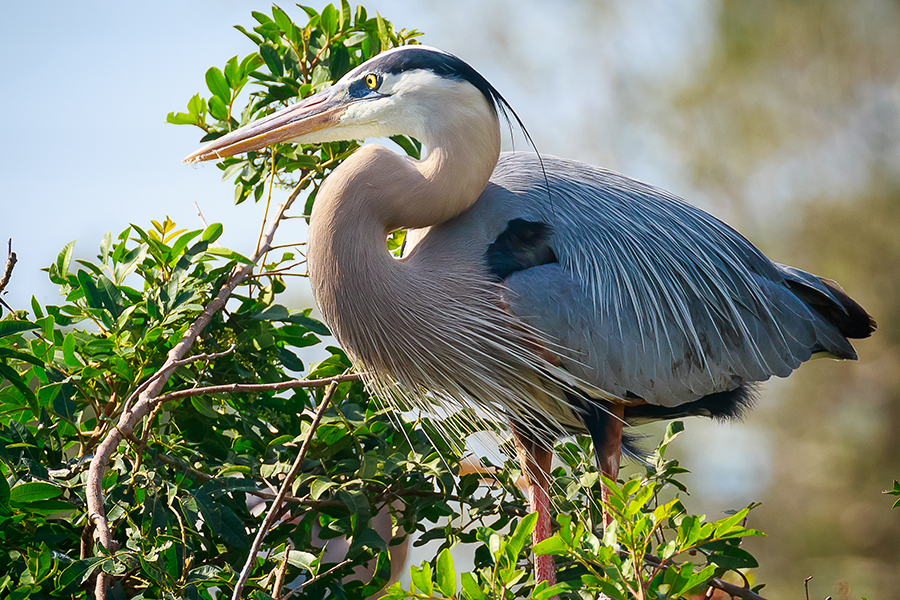
The statuesque pose of our continent’s largest heron is a familiar site along many bodies of water.
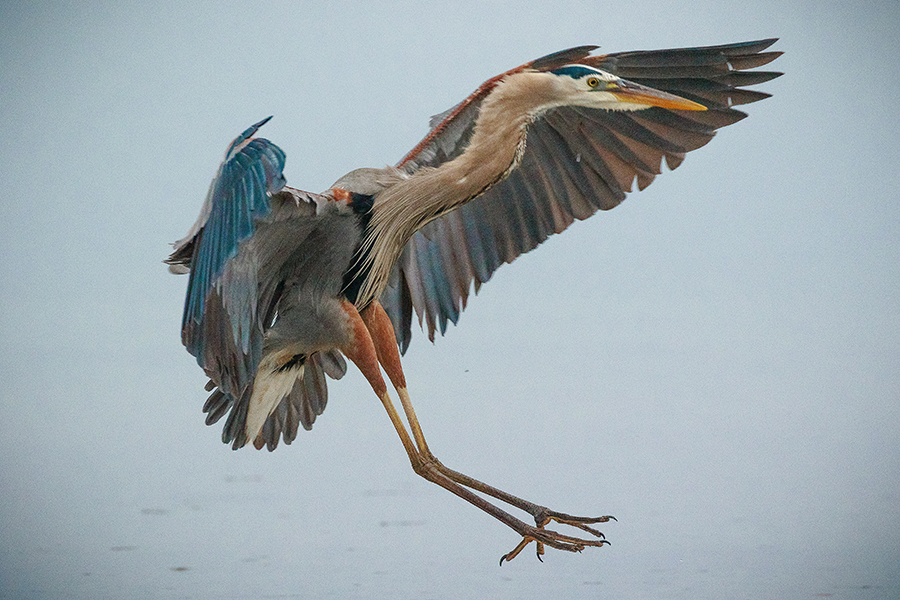
Standing almost five feet tall with a 6½-foot wingspan, the Great Blue Heron is hard to miss. They are also a contradiction in velocity. Wading through the water – slow motion steps. Flying through the air – slow motion wingbeats. However, when it’s lunchtime – lightning-fast strikes.

The Great Blue Heron will “eat nearly anything within striking distance” (reptiles, amphibians, fish, insects and more). They grab their meals or impale the larger “dishes” with their sharp bills.
During a recent camping trip about 100 yards upriver from a heronry (nesting colony), this veteran birder learned something new about the Great Blue Heron. For decades I had pictured this stately bird as quiet – even silent. As it turns out, they have a lot to say when they get together!
Fun Facts
The oldest Great Blue Heron fossil dates to 1.8 million years ago. And, the oldest known living bird was (at least) 24½ years of age.
Herons have specialized chest feathers that they comb with a specialized claw to make “powder down.” This cleans and protects them from oils and slime found in ponds where they hunt.
How to Identify a Great Blue Heron
Look for the blue-gray statue of this bird along shorelines and watch the skies for its signature flight shape: An “S” shape neck, legs trailing behind the tail and an “M” shape wing beat.
Great Blue Heron Habitat
Fresh and saltwater, isolated swamps and other bodies of water particularly with forests nearby.
Conservation Note
Although the challenges continue with human disturbances around nesting sites and chemical pollutants in water, the numbers are stable and increasing for the highly adaptable Great Blue Heron.
ABOUT THIS SERIES:
“Birds of the Blue Ridge” showcases frequently seen and rare birds across the southern Appalachian region. For over four decades, Angela Minor has traveled with binoculars and field guides across the continental U.S., Alaska, the Caribbean and seven European countries. She is a contributing editor with BRC magazine and a freelance writer, penning travel and nature feature articles for several regional and national print publications. Angela created and authored the state park birding series for Bird Watcher’s Digest.
Read More by Angela Minor: BlueRidgeCountry.com/AngelaMinor