Skip to content


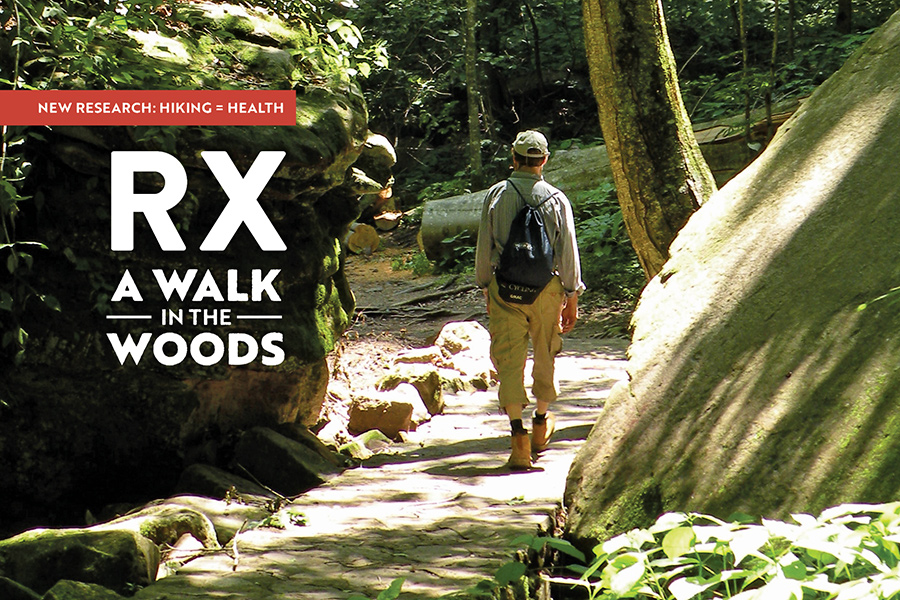
From the hips and knees to the brain and the attitude and lots of places in between, new research makes a strong and positive distinction between just walking and hiking.
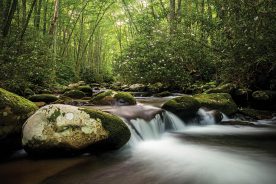
Photo Above: The uneven terrain of a trail requires you make hundreds of tiny adjustments to your gait, enhancing your brain power as well as your leg muscles.
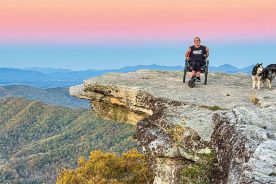
The air along the trail feels tender, damp with a licorice scent of crushed weeds. As my husband, Bruce, and I scramble over an ancient rockslide, we spot a slice of the New River way below us. We climb our favorite section of the Appalachian Trail up Pearis Mountain for over an hour, our pulses thudding in our throats. At the summit, we sprawl across Angel’s Rest rock, feeling we’ve done something great for our bodies and our souls.

The latest scientific research agrees—we are doing something very beneficial for ourselves when we hike. While trotting the treadmill is good and walking the neighborhood is better, hiking in nature is the best exercise for our brains and leg muscles, some neuroscientists and exercise physiologists say.
Walking and hiking may seem like the same exercise. Though the scenery may vary, the body mechanics seem the same. But they’re actually very different. Research shows that your joints, heart and lower-body muscles perform in very distinct ways while hiking compared to what they do during a stroll around the block.
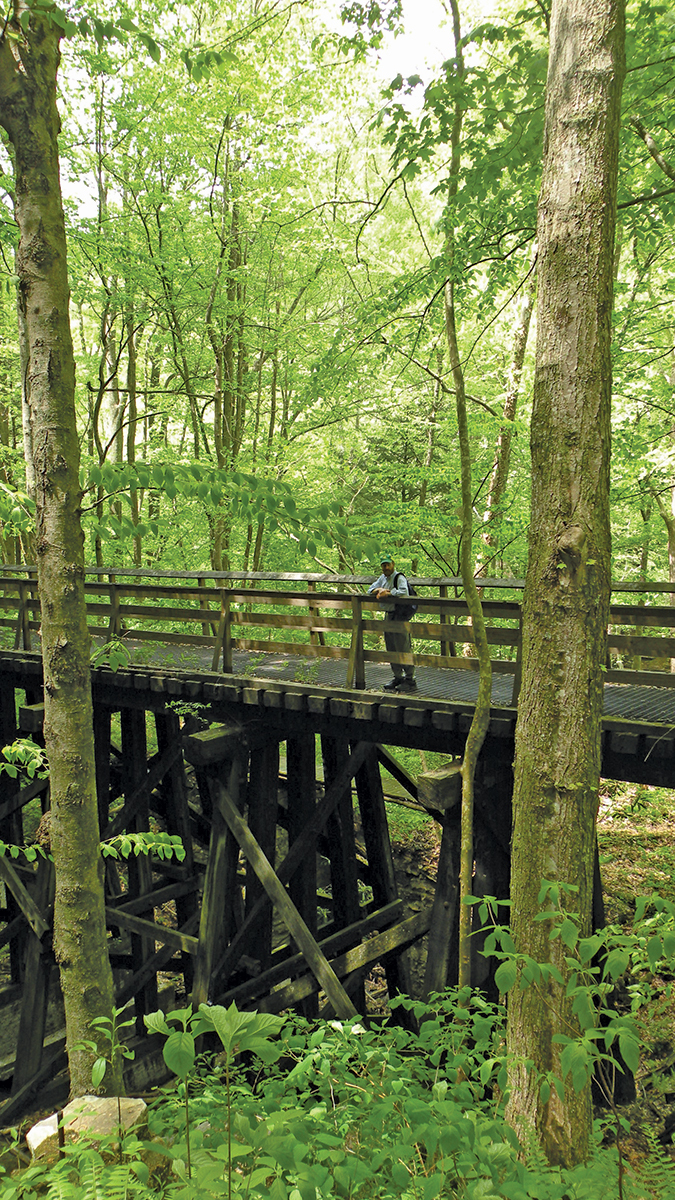
©Su Clauson-Wicker
Your walking stride on the flat, smooth surface of a sidewalk is like the swing of a pendulum. Thanks to gravitational and kinetic energy, once you start that pendulum swinging, it’s going to keep moving back and forth without much additional energy on your part. But when you walk on uneven trail terrain, a lot of the rhythmic energy transfer is knocked out. Each step is different. Your heart rate and metabolism go up, and you burn more calories.
In fact, hiking on irregular surfaces increases the amount of energy your body uses by 28% compared to walking on flat ground, biomechanics professor and hiking researcher Daniel Ferris found in a study he did at the University of Michigan. Your leg muscles lengthen or shorten during the action of navigating rough, uneven trails, and these shifts increase the amount of energy you’re expending.
But the benefits of hiking extend way beyond the extra calorie burn.
Hiking uneven ground recruits different muscles from those you would use on flat, man-made surfaces. You’re strengthening muscles in your hips, knees and ankles that normally don’t get much use. This improves your balance and stability.
Newer findings assert that hiking also strengthens the brain. As Daniel Levitin explains in his 2020 book, “Successful Aging,” hiking works the retrosplenial cortex and the hippocampus, which aid in memory as well as navigation. Slippery rocks, uneven terrain, overhanging branches, and wildlife skittering across your path—all of the things you might encounter on a trail—require hundreds of micro and macro adjustments to your gait, foot pressure and body positioning. Without your conscious awareness of the process, these adjustments are stimulating the neural circuitry of your brain, particularly the seat of memory storage and retrieval in the hippocampus. This is why so many studies show that physical activity enhances memory.
California neurologist Scott Grafton is a big believer in the healing power of the outdoor exercise.
“Take old people out of a complex environment and they age quicker,” he says. “The brain doesn’t just need physical activity to remain vital, but complex physical activity—the brain needs this to stay healthy and engaged.” Something as simple as walking in a new environment provides this critical brain input.
According to Aaron Sussman, co-author of “The Magic of Walking,” walking in nature is the “fountain of youth that is no legend.” He also declares it the “exercise that needs no gym, the tranquilizer without a pill, the therapy without a psychoanalyst.” Hiking has been documented to lower the likelihood of developing osteoporosis, diabetes and some cancers.
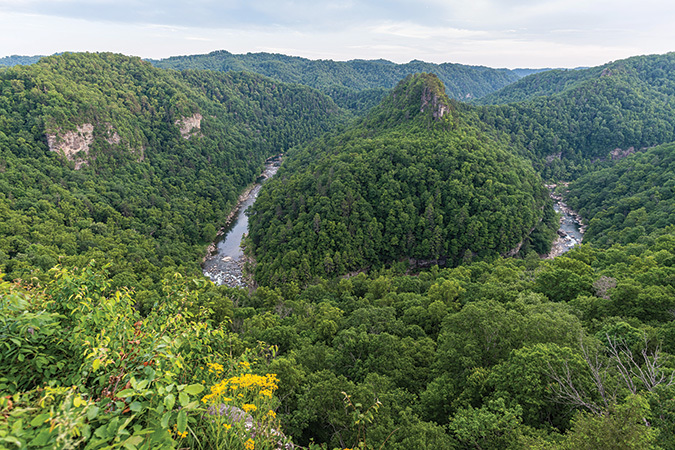
©Don Sniegowski
Hiking is also an aid to clear and creative thought. Scientists suggest that muscles in action keep the brain awake and drain away emotions, leaving the mind free to think. Thomas Edison, Abraham Lincoln and Albert Einstein were just a few of the world’s great minds who did their best cogitating on foot. Not long ago, Utah psychologist David Strayer found that young adults showed marked increases in creative thinking and problem-solving after spending three days hiking in the wilderness.
In addition to the physical benefits of hiking, the sights, sounds and smells of nature may be performing a magic alchemy in your brain. A 2015 Stanford University study found time spent in natural environments (as opposed to urban settings) calmed activity in a part of the brain that research has linked to mental illness. In a similar Japanese study, participants walking in a forest experienced less anxiety, hostility, fatigue and depressive symptoms than urban walkers. Hanging out with Mother Nature also seems to reduce the mind’s propensity to “ruminate”—a word psychologists use for negative, self-focused patterns of thought that are linked with anxiety and depression.
Hiking—and other exercise—is just plain good medicine. Researchers at the University of Virginia say hiking and muscle building exercise may reduce the risk of acute respiratory distress syndrome, a major cause of death in patients with the COVID-19 virus. A study by Zhen Yan of the UVA School of Medicine indicated regular aerobic and weightlifting exercise can reduce the severity of COVID-19 symptoms by increasing the body’s production of a powerful antioxidant that protects body tissue and fights disease.
Atop Angel’s Rest, I wasn’t thinking about antioxidants or science. I was enjoying the golden afternoon light, the breeze through the laurels, and the earned relaxation in my muscles. All the things that troubled me at the bottom of the mountain—anxiety about coronavirus, petty annoyances, small resentments—had blown away with the breeze. Life is beautiful.
7 Great Starter Hikes
While the hope is that many of you have read this piece and experienced a little jolt of celebration at your hikes habit, there may be others who’d like to start. Herewith, a few starter hikes.
Georgia: Desoto Falls. Hike this 2-mile trail north of Dahlonega through leather-leafed rhododendron to explore a pair of waterfalls. Legend holds that the piece of metal armor found at the falls is thought to be from the 16th-century expedition of explorer Hernando de Soto. atlantatrails.com/hiking-trails/desoto-falls-hiking-double-waterfalls-in-georgia/
Kentucky/Virginia: Breaks Interstate Park Loop. This 4.5-miler near Elkhorn City treks through stunning rock formations and vistas of the 5-mile-wide “Grand Canyon of the South.” For a shorter hike, take the Geologic and Prospector’s Trail sections of the loop. breakspark.com/activities-recreation/activities-recreation/
North Carolina: Crabtree Falls Trail. The 2.5-mile loop can be strenuous in spots, but rewards you with stunning scenery. The pinnacle, 70-ft Crabtree Falls, has bench seating in the spray zone. Located at Blue Ridge Parkway Milepost 339.5 nps.gov/blri/planyourvisit/crabtree-falls-trail.htm
South Carolina: Winding Stairs. Its gentle grade and easy footing make Winding Stairs trail near Mountain Rest one of the best beginner trails in the Southern mountains. Hikers pass three waterfalls within 3.5 miles. discoversouthcarolina.com/articles/winding-stairs-perfect-for-beginner-hikers
Tennessee: Bays Mountain Fire Tower Trail. This mostly easy 5.5-mile loop above Kingsport meanders through the live animal exhibit and around a lake before striking up the slope for a panoramic view from the fire tower. baysmountain.com/programs/hiking-biking/
Virginia: Falls Ridge Preserve loop. Two trails, the red trail and the silver, form a 3-mile loop in the woods around the ever-growing travertine waterfall that is the centerpiece of the Nature Conservancy’s Falls Ridge Preserve. Trails follow the stream that tumbles from the 80-foot waterfall, then veer away for views of the water. The preserve lies 7 miles west of I-81’s Exit 128. hikingupward.com/OVH/FallsRidgePreserve/
West Virginia: Hawks Nest State Park Rail Trail. A tram ride into New River Gorge from Hawks Nest State Park lodge ($3) kicks off this leisurely 2-mile hike to a small waterfall. The rail trail leads through the remnants of an old mining area along a rushing stream. wvrailtrails.org/rail-trail/hawks-nest-rail-trail/
Beginner Tips
- Know the lay of the land, which calls for buying a map and carrying a compass.
- Hiking boots give good support on rocky terrain, but break them in first to avoid blisters.
- Water, snacks, sunscreen, bug spray, cell phone, and a basic first aid kit are good to carry.
- For every hour of hiking, drink at least a pint of water; do it before you get thirsty.
The story above appears in our September/October 2020 issue.