Skip to content

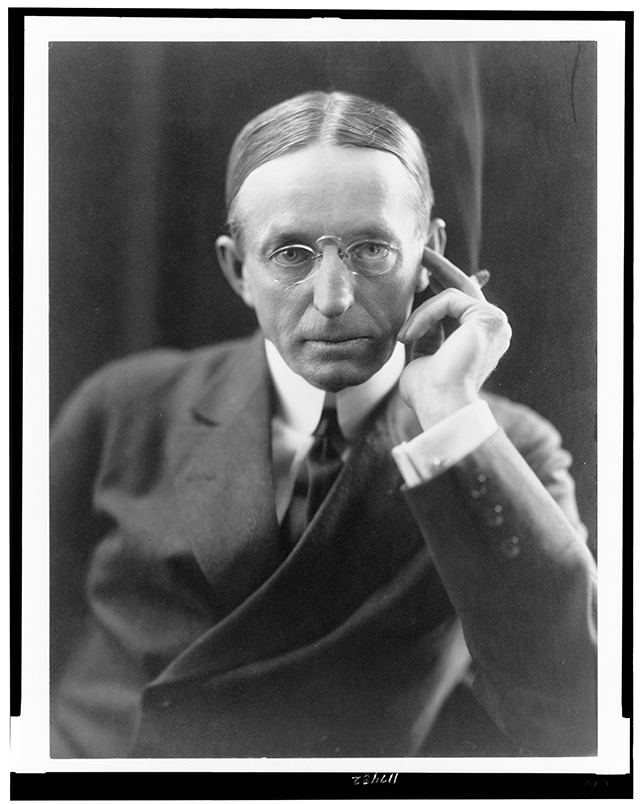
Friend of Theodore Roosevelt, husband of opera diva – to the extent there was national fame back in the early 1900s, “Lonesome Pine” author John Fox, Jr. had it.
If you’re familiar with the name John Fox, Jr., it’s likely because you’ve been to Big Stone Gap, Virginia, where the John Fox, Jr. museum, in the author’s one-time home, and the long-running outdoor drama “The Trail of the Lonesome Pine”—based on one of Fox’s most successful novels—help keep his legacy alive. (The book was also adapted into at least four films, including a 1936 version starring Fred MacMurray and Henry Fonda—the first-ever cinematic release to be filmed outdoors in full Technicolor.)
Or, maybe your travels have taken you through Kingdom Come State Park—atop Pine Mountain near Cumberland, Kentucky—which was named for Fox’s 1903 novel “The Little Shepherd of Kingdom Come.” A blockbuster of its time that secured Fox’s status as an author of note, “Little Shepherd” was one of the earliest American novels to sell a million copies.

Though Fox was inducted posthumously into the Kentucky Writers Hall of Fame earlier this year, few today have read deep into his canon of nine novels and 25 short stories, all of them set in the Appalachian Mountains.
Perhaps fewer still know the intricacies of Fox’s own life story, which itself reads—on some levels—like a novel, one that saw a Kentucky boy at the turn of the century rise to achieve national fame, cover two wars, build a long-term friendship with a future president, and marry the country’s most famous opera diva.
A writer is born
Both Virginia and Kentucky claim Fox as their own—and rightly so. His devotion to both states was deep and lasting. (He often said that his home in Virginia’s Big Stone Gap was the only place he could really write; and yet he insisted that he was to be buried in the family’s cemetery near his Kentucky birthplace.)
Born in December 1862 in Stony Point, near Paris, Kentucky, Fox grew up studying Greek and Latin under the tutelage of his schoolteacher father. At just 15, in 1878, he moved to Lexington to attend Transylvania University (then known as Kentucky University) before ultimately transferring to Harvard in 1880 as a sophomore. There his father’s insistence on classical education paid dividends.
In a postcard home dated Oct. 17, 1880—accessed from the University of Kentucky Special Collections’ extensive holding of Fox family papers—the young Fox wrote in crisp penmanship about his academic success at Harvard: “In my examination I was the only one of the new candidates (25 or 30 in number) that passed successfully in Latin. Am studying Latin, Greek, French, Italian and English.”
Fox graduated Harvard cum laude just a few months shy of his 21st birthday, in 1883. Then followed short stints as a reporter for two New York papers, a failed attempt at law school, and periods as a private tutor, punctuated by sudden illnesses and periods of convalescence that would plague him periodically throughout his life. (In “John Fox Jr., Appalachian Author,” Fox biographer Bill York writes, “He seemed to be almost constantly sick . . . and one is tempted to suspect hypochondria.”)
A major turning point in Fox’s life came in 1882, when his love affair with the mountains—and their people—took hold. That summer, he visited his half-brother James’s mining operation in Jellico, Tennessee, and was awestruck by the mountaineers and their ways.
In a “personal sketch” written in 1908 —published for the first time in a 1955 collection of papers compiled by his sister, Elizabeth Fox Moore—Fox waxes poetically about the people he met and came to befriend in the mountains: Uncle Tommie, Uncle Billy, Old Hon, and a beautiful, young milk maid. “Without knowing it, I began now gathering material for the work I was to do,” he wrote.
His love of letters helped him cultivate intimate, lifelong friendships with many of the most noted regional writers of the time, including James Lane Allen, Thomas Nelson Page, and James Whitcomb Riley.
Still, Fox didn’t become a published author himself until he was nearly 30. His first short story, “A Mountain Europa” was published in serial format in Century magazine in 1892, and for it he received a princely sum of $262. (He was so proud of the check he had it photographed.)
In 1890, Fox had moved along with his entire family—including his parents and younger siblings—to Big Stone Gap, Virginia, where his eldest half-brother, James Fox, had established mining and land development interests. The family expected to find their fortune there.
But by 1893 or so, Big Stone Gap’s anticipated real estate boom had gone bust, and Fox was forced to turn his full attention to writing. (The economic fallout of the bust would plague Fox’s parents for the remainder of their lives. In letters preserved at the University of Kentucky, Fox opens nearly every missive home—following the commercial success of “The Little Shepherd of Kingdom Come” in 1903 until his death in 1919—with a note of how much money he’s enclosing, often $150, $200, or more. By April 3, 1904, he was promising to send a minimum of $150 per month, and by July 2, 1908, he advised his mother to simply “go to the bank and transfer the balance of any account” to his own.)