June’s Mountain Wildflower: Mountain Laurel

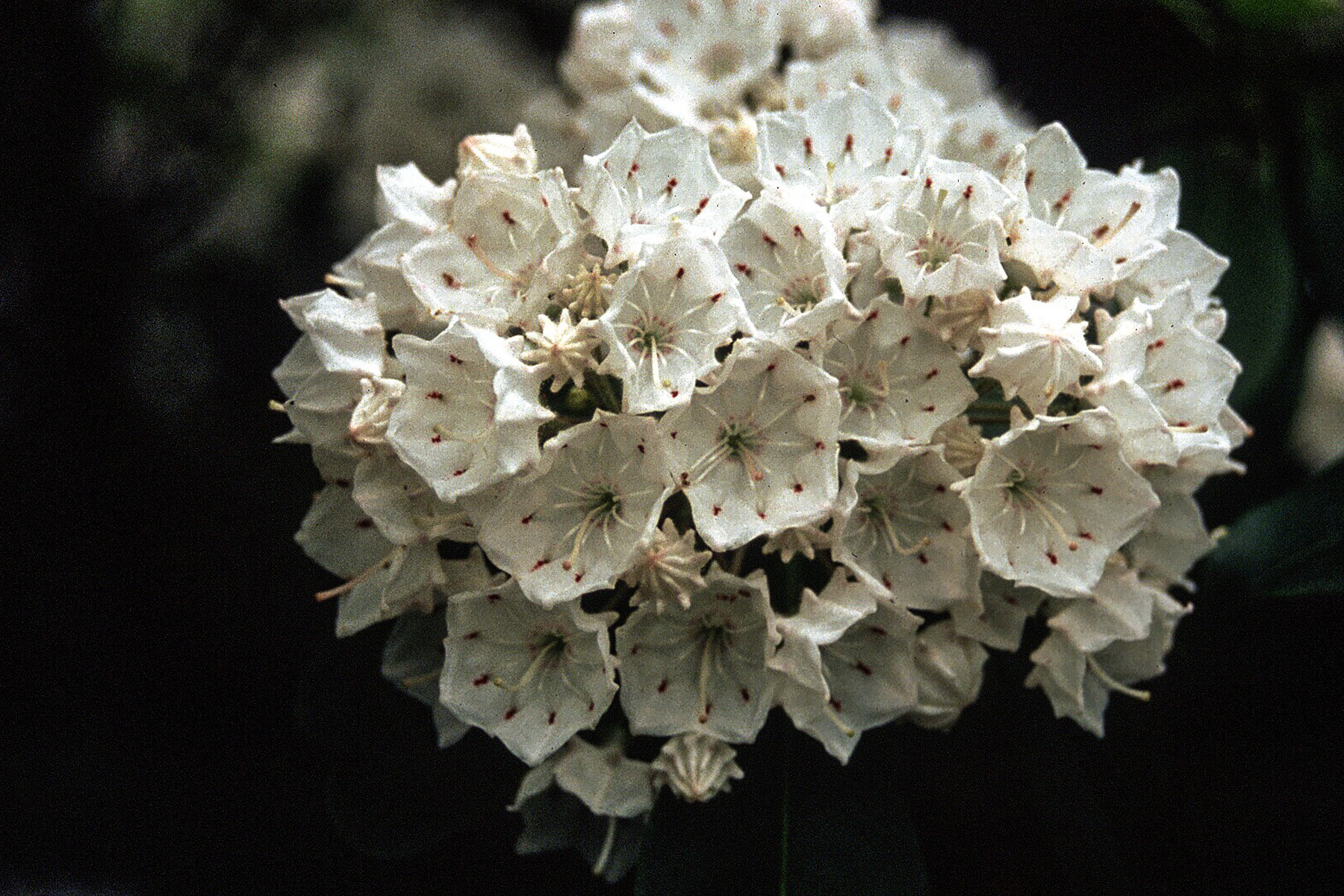
Mountain Laurel. Credit Leonard M. Adkins

If you are out in the fall, stop to examine the small capsules on the mountain laurel; these were once the plant’s flowers in May, June, and July.

Photo Credit Leonard M. Adkins

Take a look at the individual blossoms of the mountain laurel (Kalmia latifolia) and you will find a most ingenious pollination mechanism. The five petals (each with two small notches) are connected together to form a shallow bowl. The 10 stamens growing from the center of the petals are tucked inside the notches. A single pistil rises to the outside of the petals. When an insect visitor (usually a bee) arrives to gather nectar, it brushes against the bent-over stamens. This moves them around enough to cause their tops to break free of the notches, spring upward, and toss pollen from the anthers onto the insect’s body. Moving on to the next flower, the insect can’t help but brush against its pistil, thereby depositing the pollen and ensuring fertilization.

In addition to the usual way plants propagate themselves, mountain laurel reproduces by sending up new shoots from its spreading root system, or, when branches touch the ground, by growing new roots, which radiate outward and, in turn, send up shoots of their own. This is how mountain laurel is able to develop into the dense thickets that you see.

If you are out in the fall, stop to examine the small capsules on the mountain laurel; these were once the plant’s flowers in May, June, and July. Break one open and you will see what appears to be a brown powder. Each speck of dust is actually a seed of the mountain laurel—a seed so small that it would take thousands of them just to fill a tiny thimble.

Flower Fast Facts

FLOWER: Growing in clusters, the nearly 1-inch, cup-shaped flowers vary from pink to white. Radiating from the center, the flower’s 10 stamens create a distinctive spoke design.

LEAVES AND STEM: The shrub usually grows 5-10 feet in height, but can, on rare occasions, reach as high as 35 feet. The evergreen leaves are sometimes confused with rhododendron leaves but are smaller and more slender.

BLOOM SEASON: May-July


About This Series

“Mountain Wildflowers” features a wildflower from the Blue Ridge region each month from March to October. Leonard M. Adkins has written for Blue Ridge Country for more than two decades and is the author of 20 books about travel, hiking and nature. His Wildflowers of the Appalachian Trail, which received the prestigious National Outdoor Book Award, provides the photographs and some of the information he writes about in each “Mountain Wildflowers.” It and his other works may be obtained through his website.
You Might Also Like:

Mayapple. Credit Joe Cook and Monica Sheppard

May’s Mountain Wildflower: Mayapple

Despite its name, the fruit, which looks more like a yellowish-green, egg-shaped berry than an apple, usually does not begin to develop until early to mid-summer.
Trout Lilly. Credit Joe Cook and Monica Sheppard

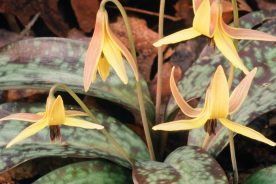
April’s Mountain Wildflower: Trout Lily

Like its western relative the glacier lily (Erythronium grandiflorum), trout lily (Erythronium americanum) is often found pushing its way through a blanket of snow in early spring.
e1b70596-05c8-11f1-92e0-1248ae80e59d-3-2026rueanemone--credit-Joe-Cook

March’s Mountain Wildflower: Rue Anemone

A member of the buttercup family and found in the open woodlands, rue anemone (Thalictrum thalictroides) has long, thin stems that tremble in the slightest of winds—prompting its other common name, windflower.
ec3b964c-5201-11f0-968d-1248ae80e59d-9-2025spottedjewelweed--credit-Joe-Cook-and-Monica-Sheppard

September’s Mountain Wildflower: Spotted Jewelweed

Seek out spotted jewelweed growing beside a stream or along a moist area and you will have a good chance of getting to watch one or more ruby-throated hummingbirds flit from flower to flower.
b278bbc8-5202-11f0-9ff6-1248ae80e59d-10-2025butter-and-eggs--credit-Joe-Cook

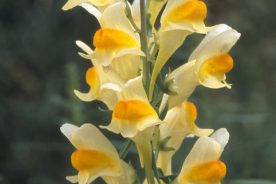
October’s Mountain Wildflower: Butter-and-Eggs

Originally a native of Asia, butter-and-eggs (Linaria vulgaris) was introduced into the United States by way of Europe and can now be found in temperate zones throughout the world.
aafec0b2-51fe-11f0-9b55-1248ae80e59d-8-2025turk_s-caplilly--credit-Joe-Cook

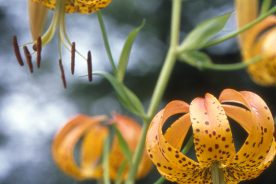
August’s Mountain Wildflower: Turk’s Cap Lily

Its species name of superbum means “superb” and is an acknowledgment of the plant’s glamour and charm.
6a4d3a0e-51fd-11f0-9a83-1248ae80e59d-7-2025columbine--credit-Joe-Cook-and-Monica-Sheppard

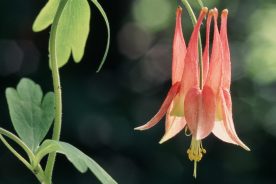
July’s Mountain Wildflower: Columbine

When the sun shines on columbine (Aquilegia Canadensis) flowers at just the right angle, they can take on the appearance of interestingly-shaped Japanese lanterns.
121fc91e-51f8-11f0-b6de-1248ae80e59d-6-2025catawbarhododendron--credt-Joe-Cook-and-Monica-Sheppard

June’s Mountain Wildflower: Catawba Rhododendron

Blooming in late May and into June, Catawba rhododendron (Rhododendron catawbiensis) has pink to deep purple clusters of flowers that are so lush and awe inspiring that they have attracted people from around the world.
ca6fd290-2753-11f0-8efc-12163087a831-website_5-2025smoothsolomon_sseal--credt-Joe-Cook-and-Monica-Sheppard_1_

May’s Mountain Wildflower: Smooth Solomon’s Seal

Because these plants cannot tolerate direct sunlight, you will not encounter the Solomon’s seals until the tree canopy has begun to leaf out.
ae8df4ae-0fec-11f0-9860-12163087a831-4-2025serviceberry--credit-Joe-Cook

April’s Mountain Wildflower: Serviceberry

Early springtime drives on an otherwise dull and monotonous four-lane highway can be transformed into wondrous trips by hillsides covered with splashes of white serviceberry (Amelanchier arborea) flowers.

CALENDAR OF EVENTS