Skip to content


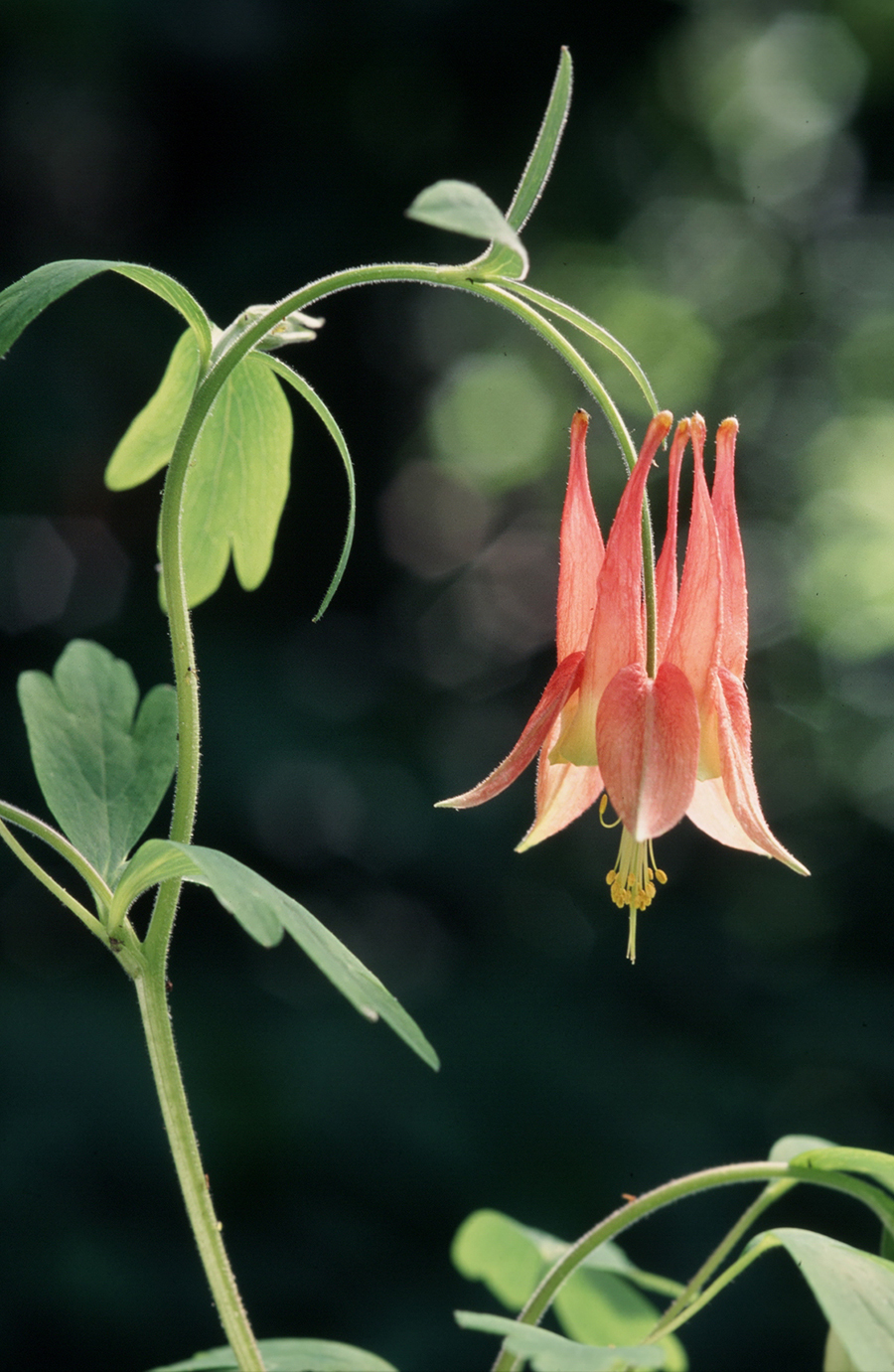
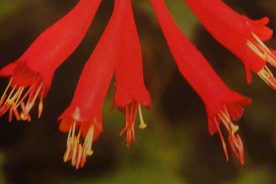
When the sun shines on columbine (Aquilegia Canadensis) flowers at just the right angle, they can take on the appearance of interestingly-shaped Japanese lanterns. Swaying to soft mountain breezes, the fine texture of the blossoms seems to soak up the light, causing them to become almost luminescent and looking as if they are constructed of the finest of rice papers that is saturated with rich, hand painted water colors.
Look closely at the spurs and you may see tiny holes in the tips. Most bees and many other insects are too large to gain access to the nectar by crawling into the spurs; they simply nip the tip and steal the nectar without collecting any pollen. But the flower’s red color entices hummingbirds, whose needle-like bills and long tongues enable them to reach the nectar at the base of the spurs, making them the columbine’s most efficient pollinators.

In the past, the juice from a fresh columbine plant was given to those suffering from jaundice to help reduce the size of a swollen liver. The leaves and flowers were also believed to cure measles and small pox. Columbine may not have cured these ills, but since the plant does contain prussic acid, it may have had a narcotic and soothing effect which helped ease sufferer’s pains.
American Indians mixed the plant’s seeds with tobacco that was smoked in council meetings as it was believed the aroma facilitated amiable feelings. In the same vein, young men rubbed ground seeds onto their hands as a love potion in anticipation of caressing their mates.
Other common names include culverwort, meeting houses, Jack-in-trousers and rock bells. The latter is in reference to the environment the flowers most often grow.
Flower Fast Facts
FLOWER: The columbine’s flower is a nodding red and yellow blossom one to two inches in size, with five petals curving upwards as hollow spurs.
LEAVES AND STEM: The leaves are compound, divided into three and grow on a stem one to two feet in height.
BLOOM SEASON: April to July
About This Series
“Mountain Wildflowers” features a wildflower from the Blue Ridge region each month from March to October. Leonard M. Adkins has written for Blue Ridge Country for more than two decades and is the author of 20 books about travel, hiking and nature. His Wildflowers of the Appalachian Trail, which received the prestigious National Outdoor Book Award, provides the photographs and some of the information he writes about in each “Mountain Wildflowers.” It and his other works may be obtained through his website.