Skip to content


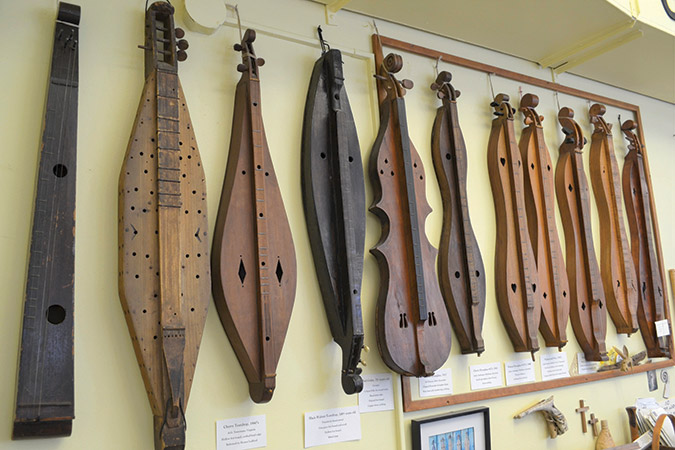
Warren May – Dulcimer woodworker (Berea, Kentucky)
Warren May, creator of some 18,736 dulcimers (and counting), is considered a musical instrument-making rock star. He’s been the subject of numerous magazine articles, included in craft heritage books, and a featured artist on HGTV, Bluegrass & Backroads, and NBC’s “Today Show.” Yet, if you pointed out these accolades, he would gently deflect all fame and turn the conversation to the instruments themselves.

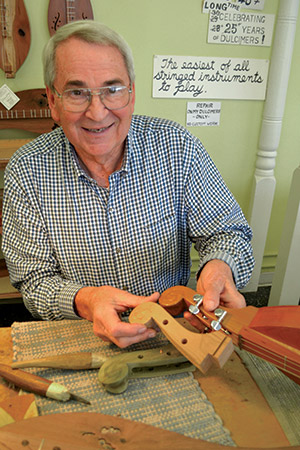
“People want to play music, and the dulcimer is absolutely the easiest way. I enjoy seeing ordinary folks who like to sing and want to play an instrument. They can learn three standard chords; some basic techniques; and just go!” he exclaims.
Growing up as “the least of 10 children” in a pre-Civil War cabin in Carroll County, Kentucky, May says, “I always had a pocketknife and was whittling kitchen tools for my mother.” Skills he still uses in many hand-carved attributes on his creations.
“One day, I came home from school in the first grade and we had electricity!” he says. “My brother then brought over a friend with an electric guitar and amplifier, and he could play all the popular songs. I really wanted to do that. So,” he continues, “I banged on an old guitar for years with my dad listening and never saying a negative thing, and even kept trying through college. I never was very good.
“Then I made my first dulcimer in 1972. It took me two weeks while I was teaching shop in a local high school in Eastern Kentucky. Everybody there plays music. So I applied some of my guitar skills, and it sounded beautiful. I could play it! And that was the beginning of my dulcimer woodworking life.”
Five years later, May and his wife, Frankye, left teaching, relocated to Berea, bought a farm, raised three daughters, and built a full-time woodworking business (which also includes heritage furniture and small items).
May does all the work tranforming boards of wood into finished instruments at his home workshop and storefront locations.
“Each piece of wood, and combination of woods, makes slightly different tones. For example, walnut will be really mellow. Cherry will be a bit brighter, more ‘note specific.’ And, poplar has the most authentic genuine mountain sound,” he explains. “Sapwood at the outer edges of trees brightens the tone, and the choices for the fretboard are very important, since this is where the noting and musical quality happens. I can sometimes customize this to fit how a person wants to play—chording, finger picking, strumming, and so forth.”
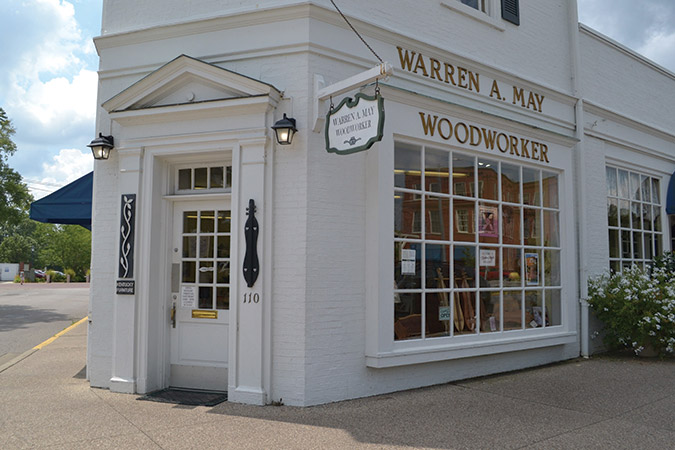
May also uses some reclaimed boards, such as poplar from buildings erected in the early 1900s or before. As we were talking, a local man came in the shop carrying massive rough-cut walnut and black cherry boards. I eavesdropped while they reviewed grain quality, color, thickness, knot placements, and other mysterious properties that would translate into stunning, world-renowned dulcimers in this woodworker’s hands.
May can be found in his shop, located in the College Square area of the artisan-dense town of Berea, Kentucky, carving, installing frets, and tuning strings. As he works, he shares, “The word dulcimer is Biblical from the Book of Daniel. I think the name was chosen to legitimize making music for religious people who may not have approved of instruments. It was okay as long as you played good wholesome songs and mountain ballads,” he says, smiling. “Our Kentucky or Appalachian mountain dulcimer is made to be played on the lap. It’s a quiet sound, and is usually played by itself.
“Dulcimer popularity kind of languished for a couple of centuries until the 1970s’ folk music revival,” he continues. “The instruments became more accurate and more standardized with more sophisticated music configurations. I chose to retain the original Kentucky style with its warmer tones and hourglass shape, edge-beading, hand-carved scroll, and softer voice fret spacing.” Over the decades May has developed his signature asymmetrical shape called the Hourdrop© — a combination of the hourglass and teardrop.
Sometimes, he also gives impromptu lessons to whoever stops by his store. During our interview the front door bell jingled, and a lady tentatively walked to the counter hugging a dulcimer. “I bought this at an estate sale some years ago, and recently found your tag on the inside,” she said to May. “I don’t know how to play anything except the radio,” she says with a nervous laugh. “Will this dulcimer still make music?”
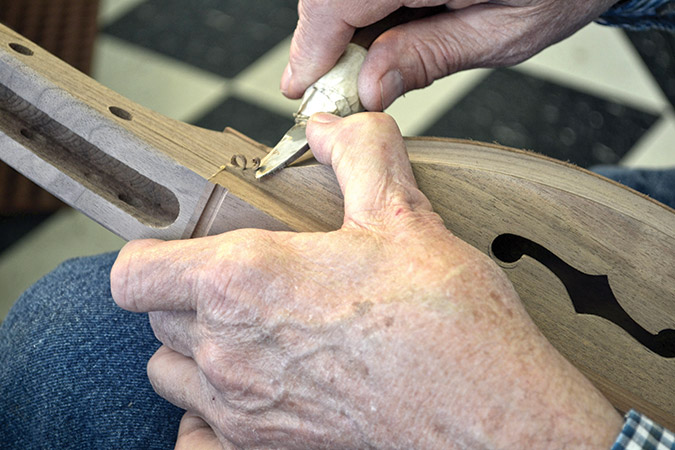
May turned the instrument this way and that, examining the construction with expert eyes. His tag on the inside was numbered in the 9,000s, meaning he had made her dulcimer approximately 24 years ago. With a couple of light turns to the keys, he strummed a basic three-chord sequence found in many songs. Fifteen minutes later, with a tear of joy in her eyes, she was able to strum a few basic notes of “You Are My Sunshine.”
The customer left her dulcimer for a thorough check-up and tuning. And as she closed the door on the way out of the shop, May says more to himself than to me, “Helping people play music – that’s what I love.”
Looking ahead: “I’ve harvested enough wood for the rest of my lifetime. So I’ll keep making dulcimers for anybody who wants to play music, and I’ll build furniture for my children.”
Starter Kit/Insider Tips from Warren May
Warrenamay.com | Kentucky Guild of Artists and Craftsmen – kyguild.org
Learn to play:
Study the older instruments.
Buy a premade kit — “you can learn a lot just working with the pieces and parts.”
Watch videos and read books.
Construct a simple version first, focusing on how it feels to work with thin wood to create something that’s easy to play.
Don’t worry about cosmetics at first. “The consistency and playability are the hardest to master.”
Have your dulcimer professionally tuned if it’s not been played in several years.
Small repairs or damage don’t affect the tone of the instrument very much.
The story above is from our November/December 2019 issue.