Skip to content

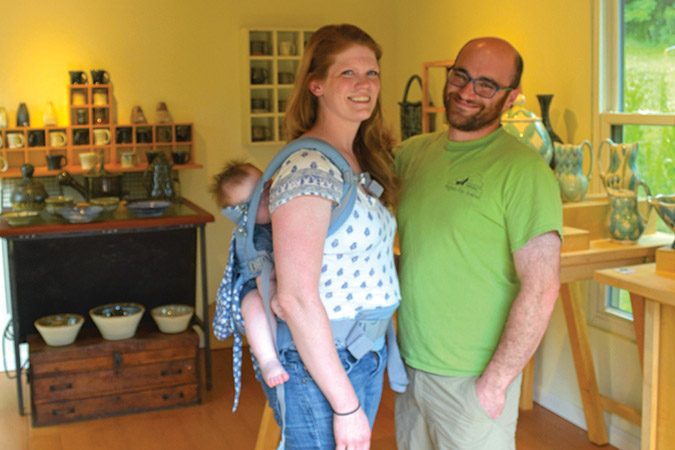
Seth Guzovsky & Andrea Denniston – Potters (Floyd, Virginia)
Eleven years ago, groups of college exchange students traveled 7,700 miles from the U.S. to the town of Jingdezhen in southern China—home to ancient pottery creations dating to the Han Dynasty in 206 BCE. On that trip to this auspicious environment, Seth Guzovsky and Andrea Denniston first met… and then went their separate ways. With degrees to complete and apprenticeships to pursue across the eastern seaboard, several years passed.

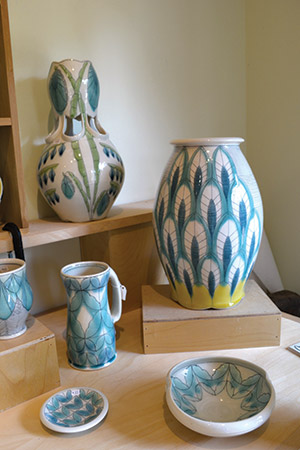
Denniston later landed in Floyd, Virginia, to learn under the guidance of internationally renowned potter, Silvie Granatelli, “and I basically followed Andrea here,” laughs Guzovsky. “I purchased a house. We had a long-distance relationship, and then got married in 2016.” In addition to this abbreviated version of events, both artists have a deep connection with their craft.
“I clearly remember making my first pot in kindergarten when the grown-up fifth graders came to our room for projects,” says Denniston. “I always wanted to make more, but it wasn’t really an option in Kansas and West Virginia where I grew up. So I didn’t touch clay again until my junior year of college. I took my first real class, and haven’t stopped since!”
Guzovsky shares: “The wrestling coach was also the sculpture teacher in my high school outside of Boston, Massachusetts. I wanted a spring thing to do in the afternoons, and it was available. I actually sold my first pot when I was a sophomore. And I still have that check!”
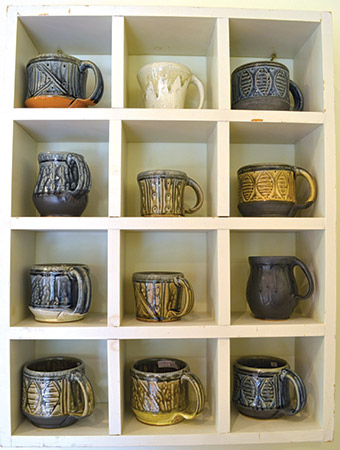
The couple spent many of their first months back together on the road, setting up at fairs and shows around the region. “Your heart is in the center of that booth tent,” Guzovsky says. “We were grinding hard; learning our market across the mid-Atlantic circuit; winning some awards; and picking up the start of a customer base. At times though, we might bring back 95% of what we took. So we’d get home, regroup, calculate the numbers, and go back and do it better.”
Back at their home and studio in the mountains, Guzovsky has built two custom 35-cubic-foot kilns for his stoneware, as Denniston utilizes two electric kilns for her porcelain. In the multi-room workshop, there is a sense of ancient purpose as each move through the processes of cutting and weighing clay, throwing shapes, filling boards for drying racks, attaching handles and incising, firing once to bisque, and twice to glaze. “In school,” recalls Denniston, “it was like Christmas to open a kiln. Now it’s like—what if something went wrong?! The stakes are definitely higher.”
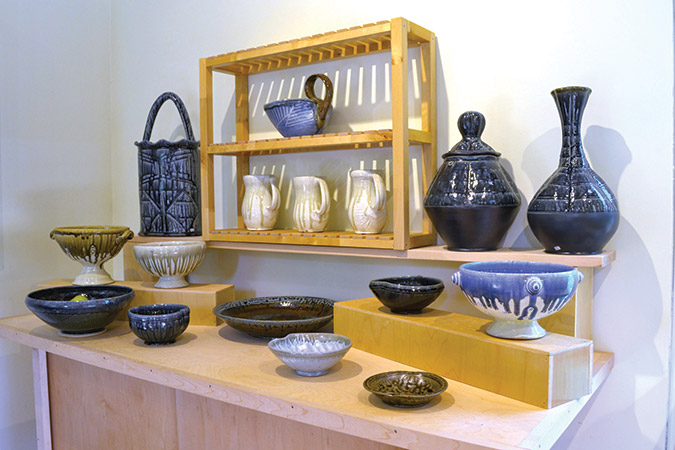
Their parallel adventures of distance and time are now bound together, creating a pottery power couple quickly gaining acclaim for their skills and visions.
“More than the shape or color, I’d like to think that our pots hold a purpose in people’s lives,” says Guzovsky, which is in turn reflected in the name of their business. “Historically, poor farms offered honest work to people who were in need. I bonded to the name because of the similarities in program merits to an apprenticeship. Both offer an alternative place to work, learn, and be productive.”
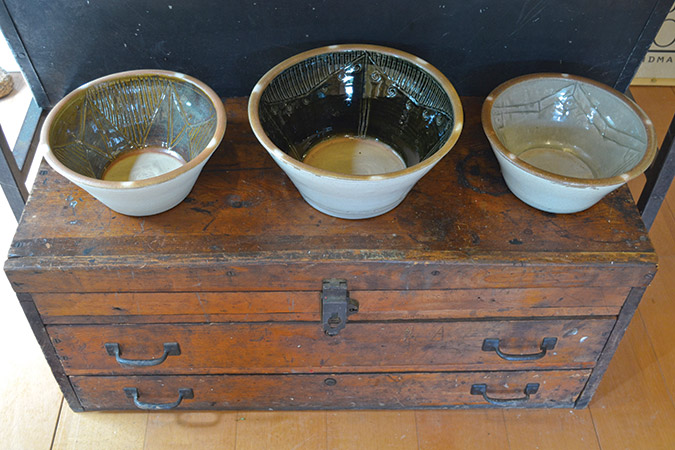
In conclusion, Guzovsky states that the key to long-term success at Poor Farm Pottery “is the combination of academics, apprenticeships, and professional practices, along with the creativity.” He states, “Andrea has that touch; a natural ability.” Then he adds with a smile, “And I work really hard!”
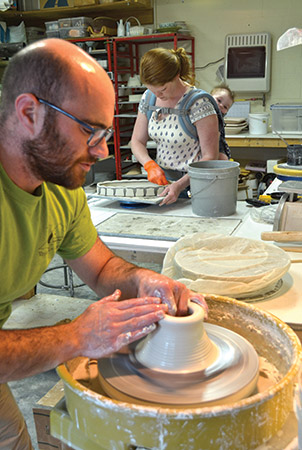
Looking ahead: “We like to continue to make small incremental improvements to our work,” says Denniston. Therefore, the future includes developing a new line for the wholesale market “that’s not Seth, and not me. Rather it’s a collaboration of both. Then we’d like to attend select shows, work directly with galleries and catalog companies, sell online, and have more customers come to our gallery here. This will allow us to stay home more,” says Denniston, as she holds the newest addition to the family, daughter Phebe.
Guzovsky adds, “We are constantly getting asked about taking an apprentice. And we’ve definitely talked about that happening in the next couple of years.”
Poor Farm Pottery – poorfarmpottery.com
16 Hands Studio Tours – 16hands.com
Blue Ridge Potters Guild – blueridgepotters.com
‘Round the Mountain: Southwest Virginia’s Artisan Network – roundthemountain.org
Starter Kit/Insider Tips from Seth Guzovsky & Andrea Denniston
Education will come with many hands-on opportunities. Make the most of these experiential learning activities.
Pursue as many assistantships as possible.
“If you’re going to make pottery your business, meet with a financial professional. Local small business administrations can often recommend free resources.” (Denniston)
Develop a marketing plan that includes organic ways to build clientele (such as home studio tours), as well as inorganic methods (such as images and posts on your website).
Become members of a guild and/or association. “Nonprofit networking is important. Each can offer different resources, different levels of potters, and access to different clientele.” (Guzovsky)
“Always pay your dues, and get paid when possible! Apprenticeships can be for money, or space exchanges. Working with experts, you have everything to gain.” (Guzovsky)
“Do your research whether you’re moving your products in galleries, online, shows, or a combination. Online images and articles can be very informative.” (Denniston)
Decide what you want to create before you turn on the wheel.
“Keep your line of sight on the lip when throwing or you’ll lose control of the pot.” (Guzofsky)
Some potters use online funding mechanisms to raise capital for studio expansions, a new kiln, a new line of products, and so forth. This can be especially successful after you develop your brand.
The story above is from our November/December 2019 issue.