Skip to content

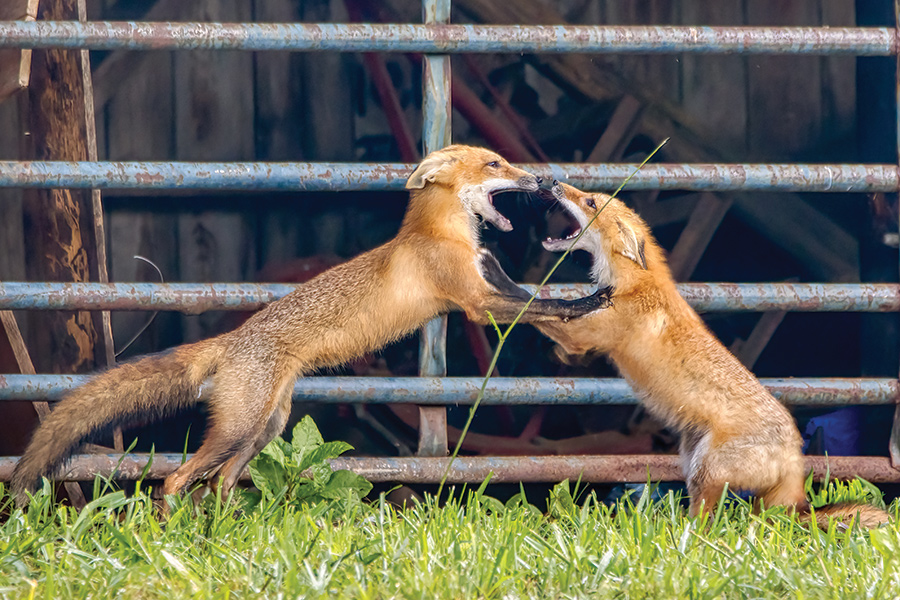
Two young kits playfully “fight.” This rough play helps them learn to survive and establishes dominance from a young age.
It was a photographer’s good luck and privilege to get an invitation to capture images of a family of foxes living in an east Tennessee barn.

As a wildlife photographer, I am always looking for ways to capture images of different animals in their natural habitat. So when a family reached out to me to let me know they had a family of five foxes living in a barn on their property, I was very excited.
They had been observing the foxes all spring and thought I would enjoy trying to photograph them. They were definitely right.
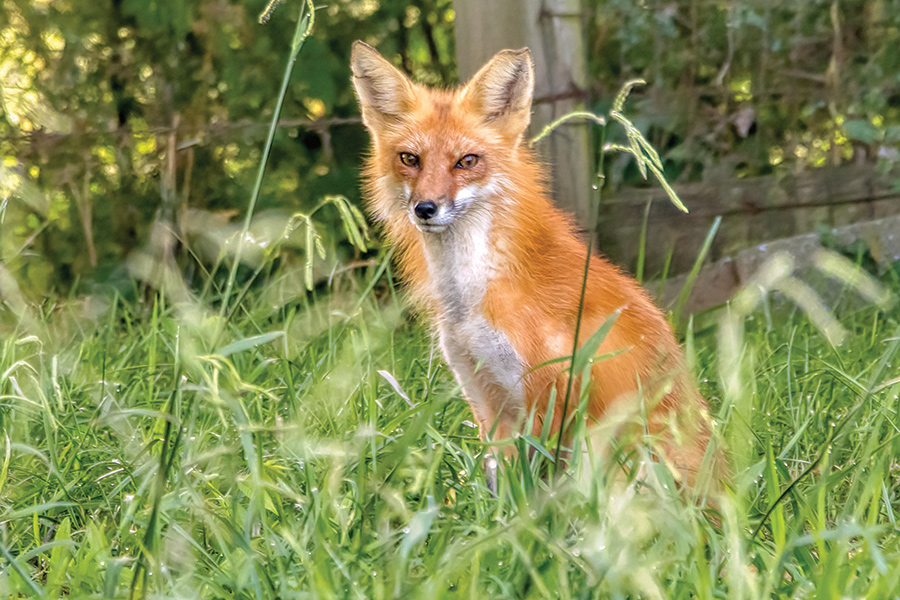
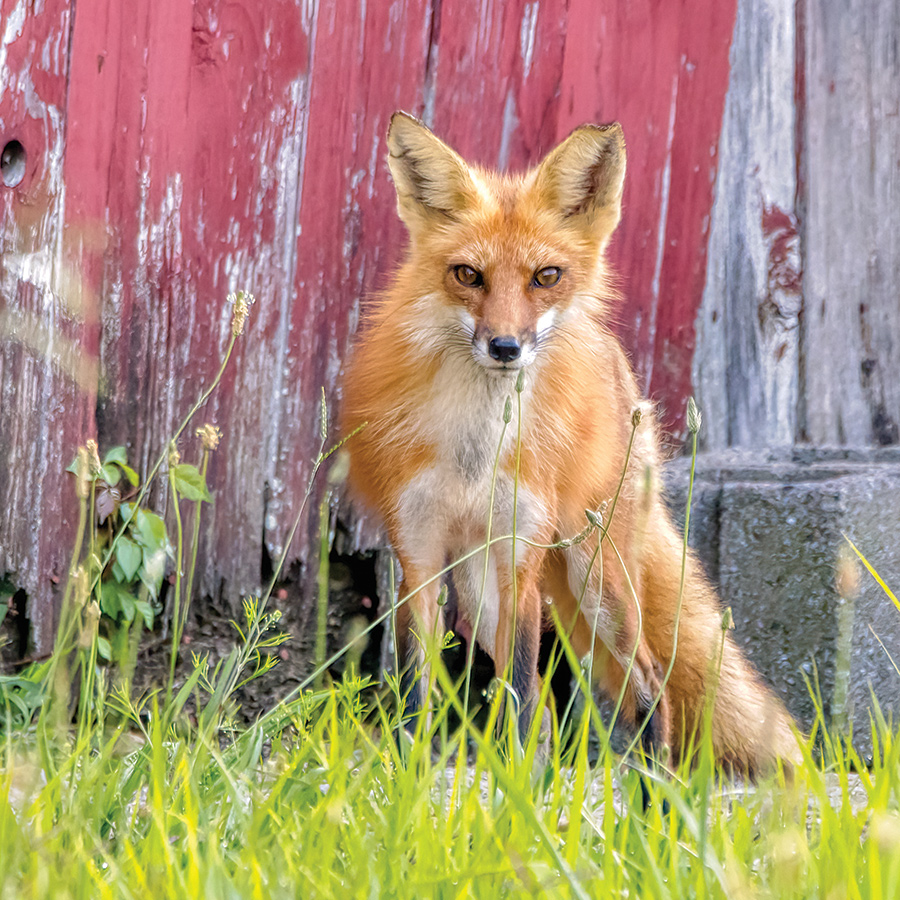
There were three younger kits and two adults. Since foxes are most active early in the morning just after sunrise, I set out one weekend to get in place before the sun came up. Even though it was June, it was a chilly morning, which is common around northeast Tennessee. I wasn’t sure how resistant the foxes would be to my presence. I figured since they are living in a rural area with other houses nearby they would be fairly accepting of me.
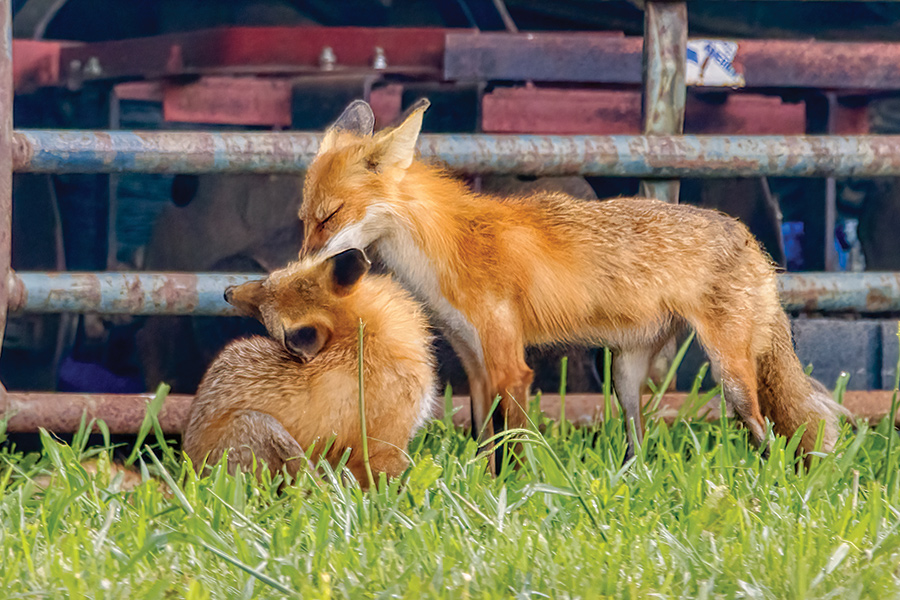
I set my gear up about 150 feet from the barn. As the sun rose they started coming out of the barn. They were immediately aware of me and hesitant at first. After a few minutes, however, they started going about their morning routine. I was thrilled to be able to witness this and capture some photographs of them. I went back a second time and got to observe the kits play fighting with each other and being cleaned by the adults.
Red foxes live in family groups—usually just one mating pair along with multiple generations of their young. The young will help raise the new kits each season. While many wild animals struggle to live in human-dominated regions, red foxes have learned to thrive. They are often attracted to areas with people, because they can hunt the rodents that live in large numbers around populated regions. They also like to build their dens in man-made structures such as barns and sheds.
It was a great privilege to spend a couple mornings watching these beautiful animals interacting with each other in their chosen environment.
The story above first appeared in our November / December 2022 issue.