Skip to content

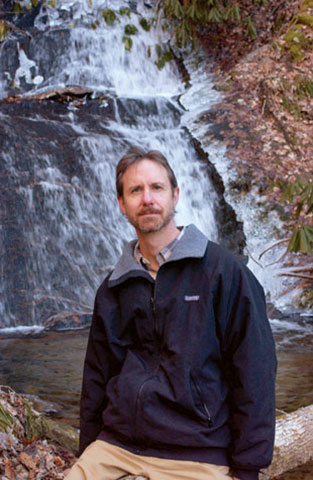
Ron Rash is Parris Distinguished Professor of Appalachian Cultural Studies at Western Carolina University and the author of eight books of poetry and fiction,the most recent of which is “The World Made Straight” (Holt, 2006).
I was blessed to have grown up in a place where I was in constant contact with the natural world, and the best of those times were summers when I spent much of school vacation on my grandmother’s farm near Blowing Rock, N.C.

Very often it was she and I alone at the farm, and there was no car or truck. I had the kind of freedom that is almost unimaginable today. My grandmother would fix me a big breakfast; afterward, I would pack a lunch in my fishing vest and then be gone until suppertime. I sometimes followed the stream that began as a spring above the farmhouse the two-and-a half miles down to where it flowed into the middle fork of the New River. Other times I would head up or down the Blue Ridge Parkway, which bordered the farm.
I was always alone, though sometimes I might stop and talk to one of my relatives as I passed their houses. I often fished, and often kept what I caught so my grandmother and I could have fresh trout for supper, but much of my time was spent observing and imagining, and though I did not know it at the time, I was training to be a writer.
There is a popular misconception that the language of southern highlanders is unsophisticated and impoverished, of interest only in its mispronunciations and harkings back to Elizabethan England, but I have frequently heard a vitality, inventiveness, and yes, sophistication, in the use of metaphors and similes that belie such a notion.
One morning my uncle and I were in Boone and a scantily-clad coed passed us on the sidewalk.
“That girl hasn’t got enough clothes on to wad a shotgun,” my uncle said. This sentence does everything that any poet would wish a line of poetry to do – it is memorable, at once surprising yet also apt, and concise.
Similes in Appalachian speech are almost always connected to the natural world, and the language of nature is the most universal of languages.
Readers in Rwanda or Cambodia have a much better chance of understanding a comparison to a river or tree a than a Macy’s Thanksgiving Parade balloon.
One of the great pleasures of my job is the opportunity to instill in a younger generation a sense of pride in their heritage. Popular culture representations of the region have made some of my students ashamed of being from these mountains. The southern Appalachian region has had and continues to have many problems, but our contributions to this country are underappreciated. I’m most excited about the explosion of excellent literature in the region, from younger writers such as Silas House to veteran authors such as Lee Smith. I believe as much good fiction and poetry is coming out of this region as any region in the country.
My hope is that the mountains my family has called home for more than 250 years, and much longer than that for the small portion of Cherokee in me, will not be destroyed by coal companies, lax environmental laws and overzealous developers, who too often seem intent on destroying the rural landscape and natural beauty that attracts people to the region in the first place. No one can expect the southern Appalachian region to remain in some changeless vacuum, but how much change and at what cost are questions the region must ask of itself.