Skip to content



Life Quest: “Who Grows Where, and Why”
After a career straddling botany and communications, Laura Cotterman writes, travels, and gardens in the piedmont of North Carolina. She worked for more than a decade as publications and publicity coordinator at the North Carolina Botanical Garden, where staff hope to counter the modern ailment known as “plant indifference” by celebrating, promoting and safeguarding native plants. She coauthored “Wildflowers of the Atlantic Southeast,” a Timber Press Field Guide (2019), with colleagues Damon Waitt and Alan Weakley.
Imagine hiking a high mountain ridge through oaks, hickories and pines, with blueberry and huckleberry shrubs at your side. Soon the trail drops down-slope into a cove. It’s cool, and a small stream glides around moss-covered boulders. Once your eyes adjust to the shade, you realize you are wading through a lush, knee-deep carpet of ferns and wildflowers. There’s umbrella leaf, with its large twin leaves and cluster of white flowers. Also pink-flowered trilliums, scarlet-flowered beebalm, and tall, elegant Turk’s-cap lily.

Or perhaps your hike has taken you to a bald, which, though covered in grasses, sports an assortment of sun-loving wildflowers, from wild strawberry and mountain cinquefoil to the rare cliff avens.
The southern Blue Ridge is a botanist’s paradise. The variety of habitats found in our mountains makes this a perfect place to explore wildflowers. I learned that early. At age 22, I landed a summer job as naturalist at the Highlands Biological Station’s nature center in western North Carolina. That job launched my career, which was thereafter guided by abiding curiosity about nature—especially plants. In the company of researchers hailing from a half-dozen different universities, I absorbed all I could about native flora, salamanders, birds and Southern Appalachian ecology. After going back to school for a graduate degree in plant ecology, I traveled North Carolina surveying natural areas and searching for rare plants.
Wildflowers, like all plants and animals, are inseparable from their habitats. Observing and identifying wildflowers, in addition to being an aesthetic pleasure, will initiate you into an exploration of the landscape. My own curiosity—a quest to know “who grows where, and why”—made me want to understand the ways that climate, geology, water, soils, fire and human history create habitat.
Fortunately, once your interest in wildflowers is piqued, there are many helpful resources. And please don’t think that you must go to wild places like national parks to learn wildflowers! Native plants grow and thrive in backyards, vacant lots, pastures, old fields and along roadsides too. You can learn much by visiting a public botanical garden specializing in native wildflowers. Books help too. With colleagues at the North Carolina Botanical Garden, I recently developed a new wildflower guide describing more than1,200 species commonly encountered from New Jersey to Georgia. Organized by flower color, it provides a basic key as well as range and habitat details. Our book was an outgrowth of decades, even centuries, of botanical exploration in the region and incorporates information gathered by generations of botanists.
Over the years, my favorite wildflower expeditions have been to the cove forests, grassy balds and bogs of the Southern Appalachians. Here’s hoping that many others will discover the pleasures of observing and learning wildflowers of the Blue Ridge and beyond.
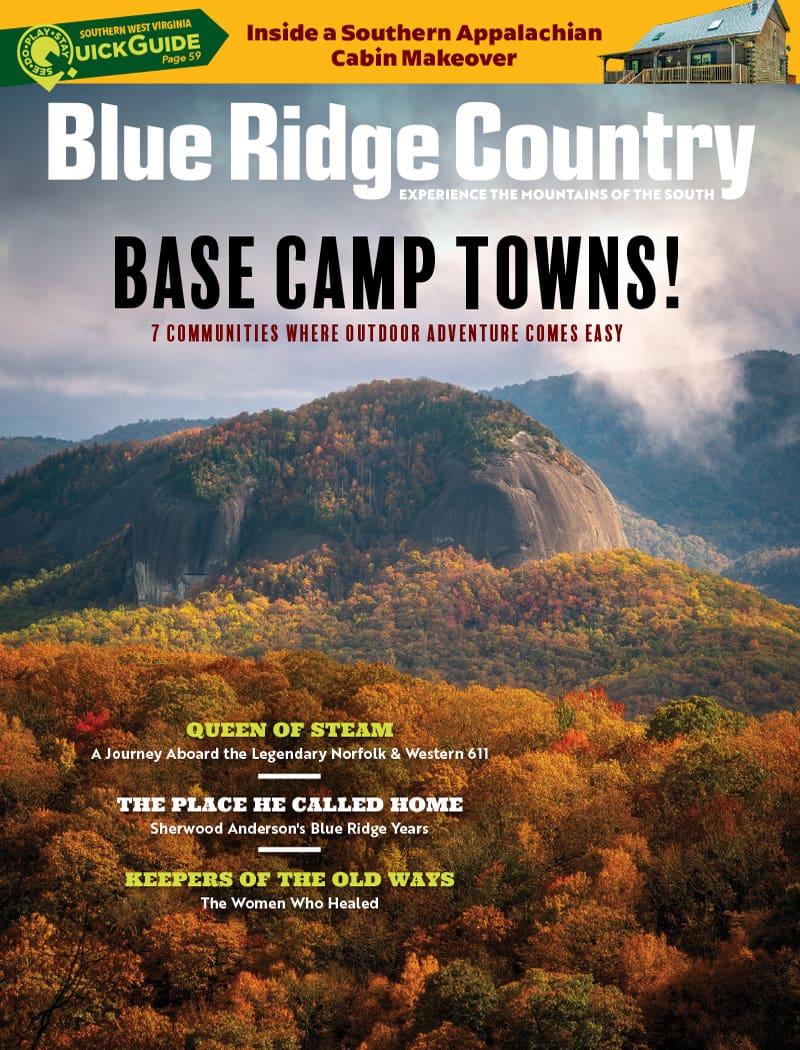
The story above appears in our September/October 2019 issue. For more, subscribe today or log in to the digital edition with your active digital subscription. Thank you for your support!