Skip to content


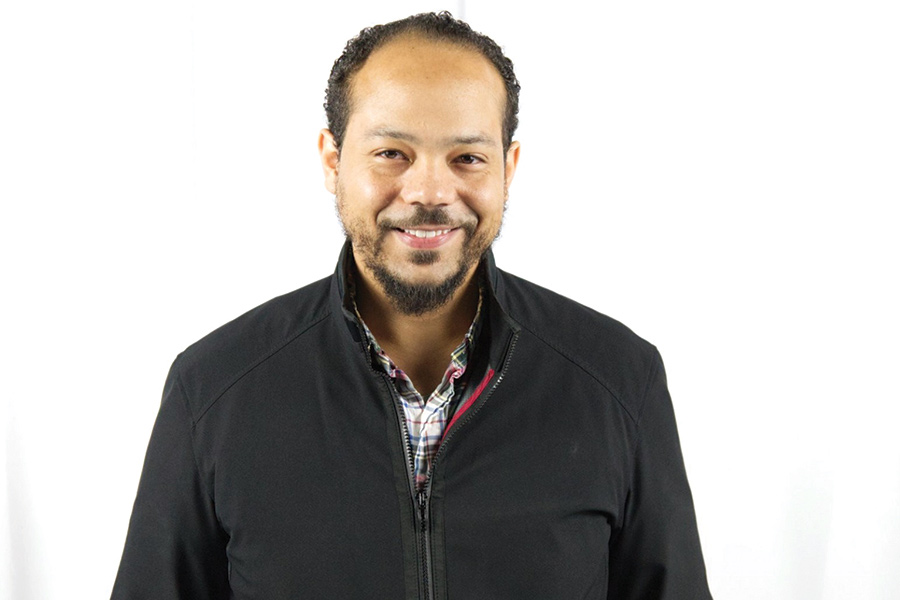
Courtesy: Alex Gibson
Alex Gibson is executive director of Appalshop—home to the largest body of creative work on Appalachia in the world. He’s taking the Whitesburg, Kentucky, nonprofit into its next 50 years as an arts, culture and media education center. He has helped change the narrative about Eastern Kentucky and is now tackling what may be Appalshop’s biggest challenge.

Tell us how you came to Appalshop. You’re an Eastern Kentucky native who’s traveled the world in internships, work and outreach.
I grew up in the region, the only black kid in a rural town. I had some friends, but I was also harassed. I didn’t like my town, the region, the state, and I resented the culture of folks who could be so cruel. As I grew older, I traveled internationally, watched Appalshop films and understood that Appalachia is more complicated than I first thought. Places all over the world resembled Appalachia, and those folks had many things in common with one another—and I with them. When I finally understood the systems applying force to folks in resource economies, my bias shifted targets. I now understand that my resentment toward unfairness is wholly Appalachian.
I went to law school with the son of Appalshop filmmakers Elizabeth Barrett and Herbie Smith. Unbeknownst to me, Appalshop was searching for an executive director. I was also searching for a job abroad after being disillusioned by a couple of years in big law.
The chair of the Appalshop Board reached out to see if I was interested in applying. It was a chance for me to give back to an organization that meant a great deal to me as a young Appalachian. I idolized the people at Appalshop, so coming back was a no-brainer.
Appalshop’s goal at its 1969 founding was simple: to operate 16mm film equipment for vocational training. It was a runaway success and has changed the narrative about Eastern Kentucky. Tell us about “then” and “now,” and why this place matters?
Free access to media is critical for a functioning democracy. Those outside the mainstream often have different political interests and challenges. It matters that folks of all sorts speak with their own voice. Appalshop shows how folks, even those without great financial means, can gather together to speak on behalf of themselves.
Appalshop started as a film workshop, training young Appalachians to tell their stories in their own words about everything from cultural heritage to labor and social issues. This continues through our Appalachian Media Institute, our radio station WMMT, a touring theater company—Roadside Theater, an archive with over 24,000 materials, our Pick and Bow youth music program and more.
Appalshop is an anchor in Whitesburg. Why is this important to you?
We are an anchor institution by virtue of longevity, position in the region, employment history, clean financial track record, alumni, spin-off organizations and mission to serve. Appalshop is far bigger than me or the folks who inhabit it. We have a responsibility to be an ethical steward of place. And preserving Appalachian life is as important to us as preserving documentaries.
The epic flooding in eastern Kentucky this summer turned lives upside down and left communities unrecognizable. Is Appalshop’s recovery your biggest challenge as executive director?
We can’t overstate how heavily these floods have impacted us and the community we serve. Overnight, long established towns and businesses were inundated—including Appalshop. My focus now is making sure Appalshop has 50, 100, 200 more years of serving and that our role as a helper and loudspeaker for Central Appalachia never falters.
You say “The work goes on.” What does this mean as Appalshop recovers from unimaginable floods?
Everything is in service to our mission: documenting, revitalizing and holding space for Appalachian culture, while using this work to fight against stereotypes. The work looks different as we meet this moment that will go down in history as one of the region’s worst floods, but the core of it remains the same. While we are exhausted by being resilient, few things are more Appalachian than being resilient when you wish you didn’t have to be any longer. In this sense, the work continues because it is still so desperately needed.
The story above first appeared in our November / December 2022 issue.