Skip to content


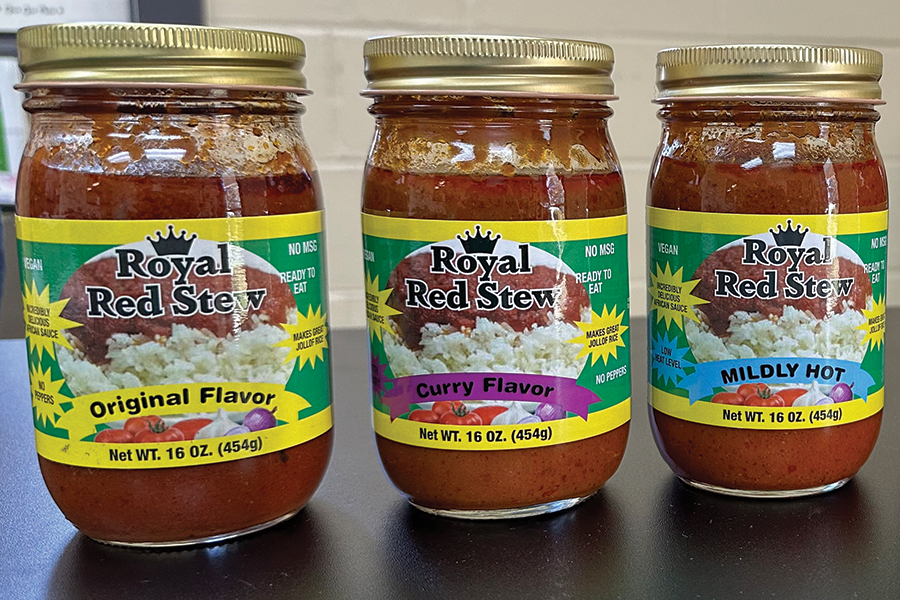
This line of West African-style stews has made it into stores in five Southeastern states.
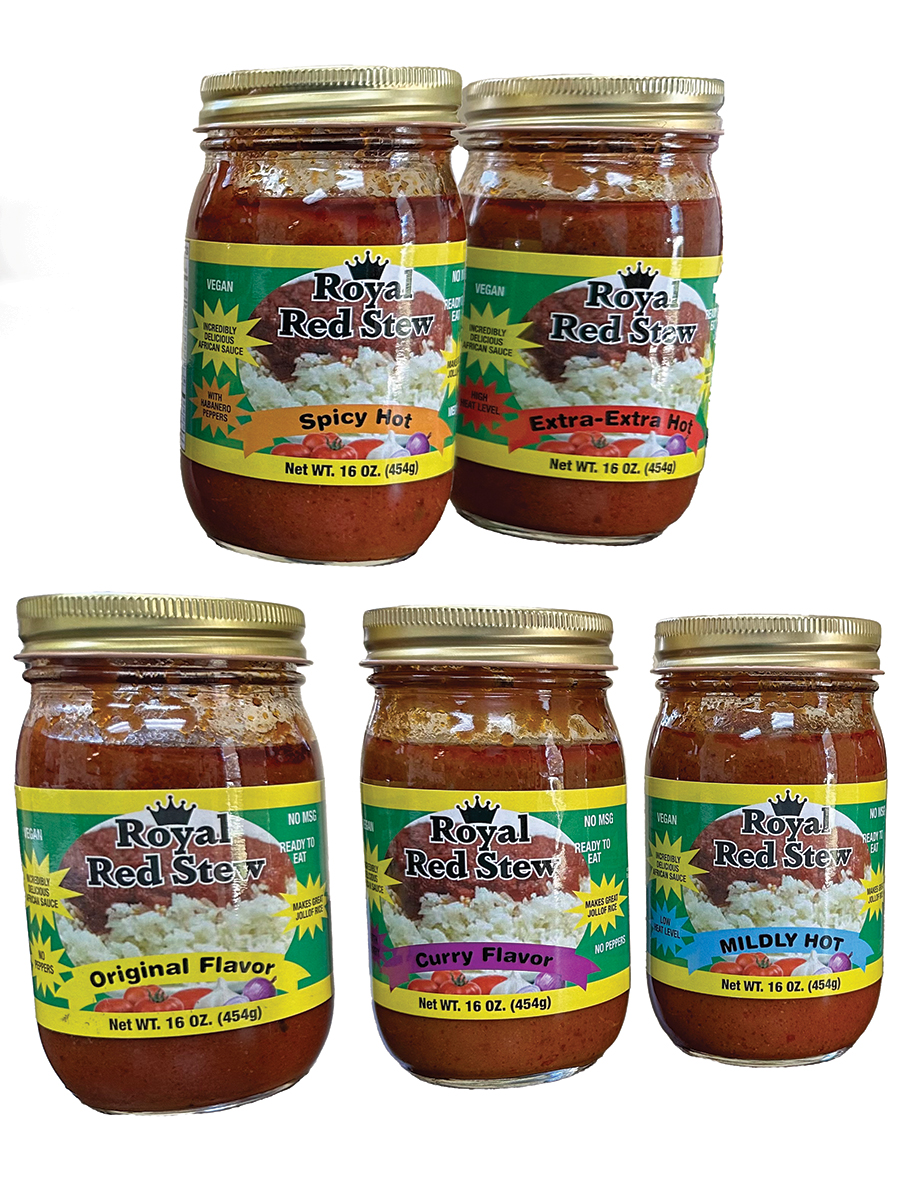
Photo Above: The Royal Red Stew product line includes regular, curry and several degrees of hot.
Photos Courtesy of Fred Sauceman.
The flavors and aromas of Nigerian kitchens are increasingly common in East Tennessee, thanks to two entrepreneurial engineers. On store shelves throughout the region, alongside traditional southern gravies, sit jars of a red sauce.

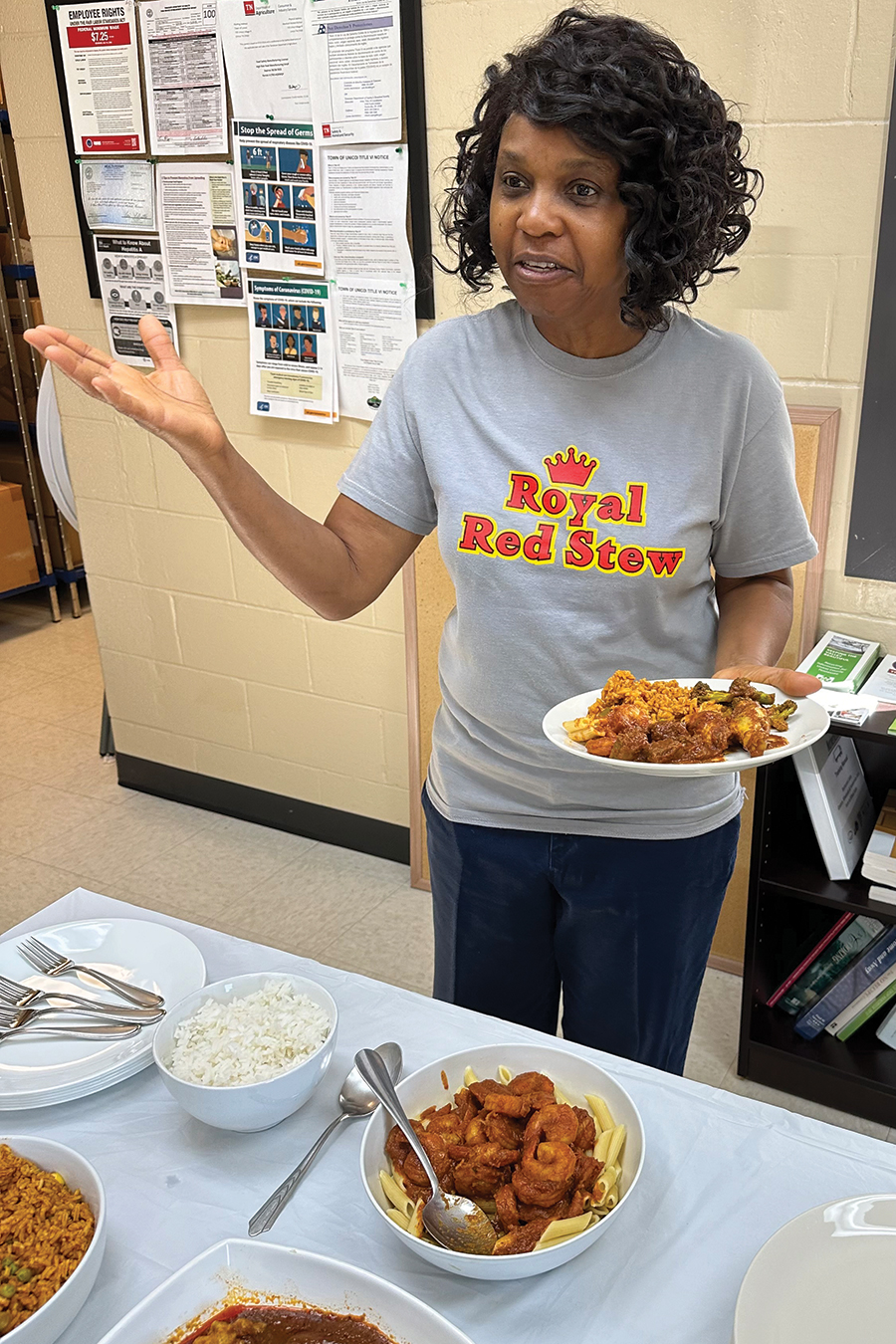
The product line, known as Royal Red Stew, is the creation of Helen and Paul Okpokowuruk. Originally from Nigeria, they now make their home in Johnson City, Tennessee. Paul is a mechanical engineering graduate of the University of Wales. Helen earned her degree in agricultural engineering with a concentration in food engineering from Cornell University.
Helen was recruited directly out of Cornell by Procter & Gamble as a food product developer. She and Paul came south, to Charlotte, North Carolina, when Helen was hired as a manufacturing supervisor by Frito-Lay. Eventually, Paul’s job, manufacturing pneumatic pumps, would bring them to Johnson City.
Both nearing retirement, they started producing Royal Red Stew as a way to introduce the cooking of their homeland to their new neighbors.
“The taste is pretty close to how my mom made it,” Helen tells us. “She would spend hours going to market and prepping to make it perfect.”
It takes Helen and Paul about seven hours to make one batch of the slow-cooked, tomato-based stew. They view their enterprise as a way for people in Southern Appalachia to enjoy Nigerian dishes without a large investment of time.
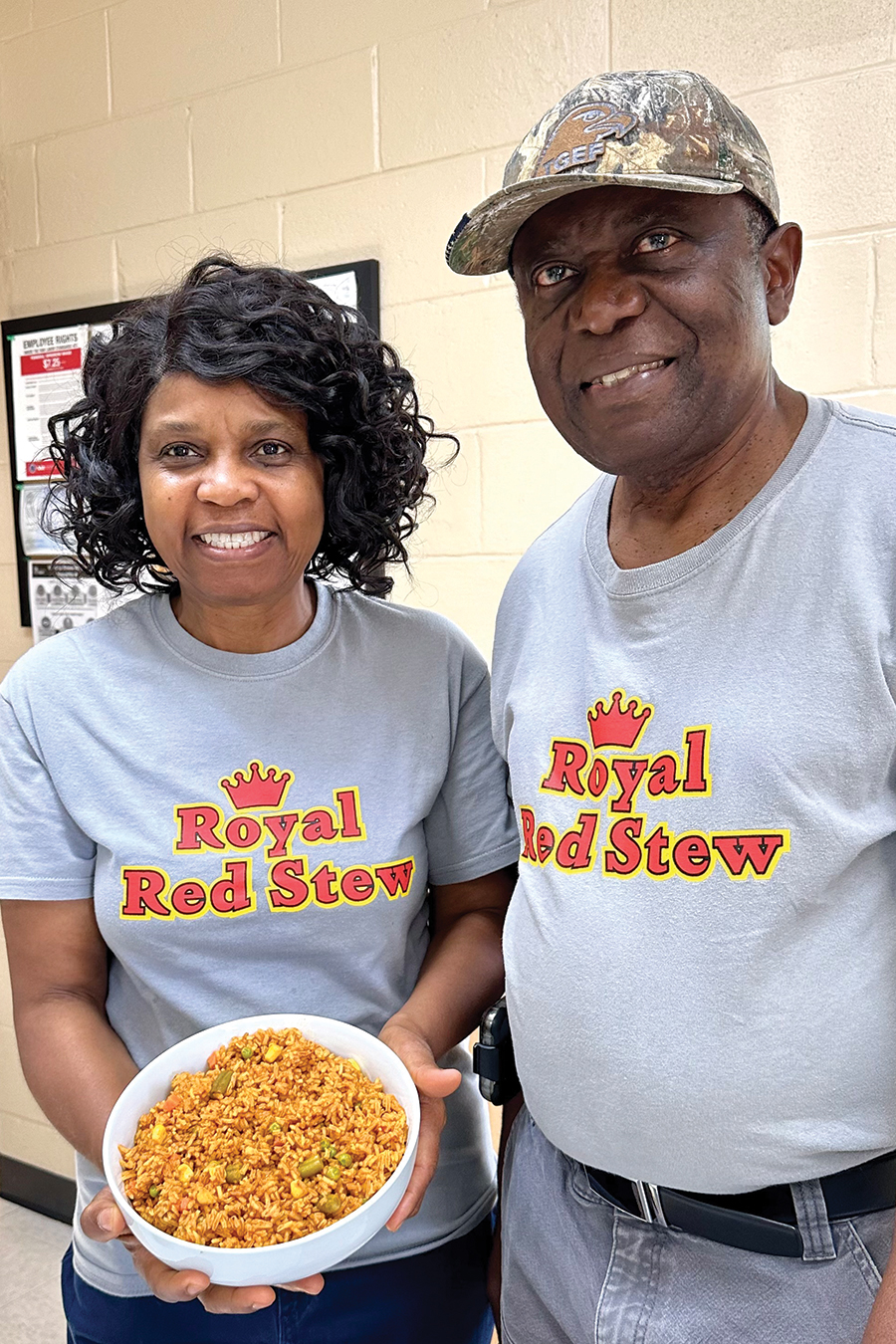
The cooking of Royal Red Stew products is done in Unicoi, Tennessee, at Mountain Harvest Kitchen, a food business incubator. The Okpokowuruks describe it as the “perfect infrastructure.”
There are currently five flavors of Royal Red Stew, with more in the planning stage. They range in heat from no peppers at all to extra extra hot. Curry is the best seller. “It’s not overpowering curry,” says Paul. “It has a sweet flavor and aroma. People have even asked us to make it hotter.”
For our visit to Mountain Harvest Kitchen, Helen prepared a Nigerian beef stew, shrimp enrobed in red sauce and jollof rice, one of Nigeria’s most popular creations. Helen and Paul blend the sauce into cooked rice, often adding mixed vegetables, chicken or shrimp.
“Jollof rice is part of every celebration in West Africa—weddings, the birth of a child, any gathering, jollof rice has to be there,” Helen says. “We fight about which country makes the best—Nigeria, Ghana, Sierra Leone. Our product takes the labor and pain out of making it.”
Food has been a dominant part of Helen’s life since the beginning. Her mother, Rose Etuk, was a school dietitian in Nigeria and later a restaurant owner.
“She was very interested in food preservation,” Helen says, pointing out that in some parts of West Africa, a lot of food is allowed to spoil, while in other areas, people are starving.
Helen and Paul are the parents of five children. When the last child was getting ready to leave home, they started researching the idea of creating a food business. At first, they sold primarily to African specialty stores and promoted their products at festivals, such as the Bristol Pepper Fest, along the Tennessee-Virginia state line.
Then their big break came. They were among some 400 vendors attending a Pick Tennessee Products convention at the Sevierville Convention Center, where the keynote speaker was Steve Smith, president and chief executive officer of the Food City chain of supermarkets, headquartered in Abingdon, Virginia.
Helen and Paul had tried for several years to get their products onto Food City shelves but were unsuccessful. At the convention, Smith stopped by their booth, sampled their products and directed his assistant to make sure the Royal Red Stew line was carried in all Food City stores—153 of them, in Alabama, Georgia, Kentucky, Tennessee and Virginia.
“We’re a success because Food City opened its doors to us,” exclaims Paul.
Helen adds that the best part of the business, for her, is “putting a smile on people’s faces. To see where God has brought us is so gratifying. People dance after they taste our products.”
Fred and Jill Sauceman study and celebrate the foodways of Appalachia and the South from their home base in Johnson City, Tennessee.
Jollof Rice
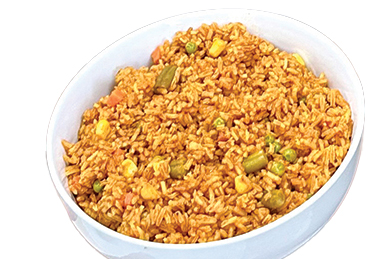
- 1 cup Royal Red Stew (any flavor)
- 3 cups cooked rice (Helen and Paul especially like jasmine)
- Optional items: slightly cooked mixed vegetables; cooked, diced meat; cooked, diced shrimp
Mix the stew and rice thoroughly. Add optional items, if using. Steam in a tightly covered pot over low heat for about 30 minutes, or bake in a pan covered tightly with foil at 350 degrees for about 20 minutes, or heat in a microwave oven for 5 minutes.
For other Royal Red Stew recipes: getcomfortfoods.com
Fred and Jill Sauceman study and celebrate the foodways of Appalachia and the South from their home base in Johnson City, Tennessee.
The story above first appeared in our March / April 2025 issue.