Skip to content

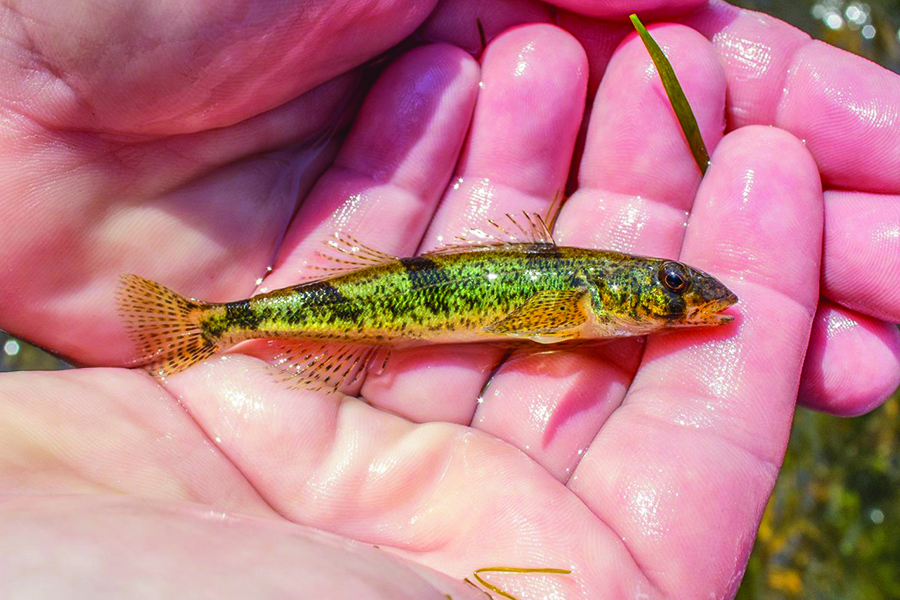
In 1975 the controversial snail darter was placed on the Endangered Species List. Todd Amacker_Conservation Visuals
Nearly 50 years after the snail darter caused a stir in the Tennessee Valley, the fish will soon be removed from the “threatened” list.

In the summer of 1973—the same year the Endangered Species Act was signed into law— University of Tennessee biology professor Dr. David Etnier was snorkeling the Little Tennessee River upstream from Lenoir City to help determine if the upcoming construction of the Tellico Dam would affect the animals living there when he found himself staring at a well-camouflaged, two-inch-long fish he’d never seen before and asking, “What’s this?”
“It ended up being a new species,” says Warren Stiles, listing and recovery biologist at the U.S. Fish & Wildlife Service.
It had been 40 years since the Tennessee Valley Authority had started damming the river, but the spot where Etnier discovered the unassuming snail darter was still pristine and free-flowing, like its freshwater source in the Great Smoky Mountains, and just the kind of rocky-bottom habitat the snail-eating fish thrived in.
“It was only known for these 13 miles of the Little Tennessee that were going to be flooded by the Tellico Dam,” says Stiles. “And from our understanding of how dams were operated, and the habitat needs of the species that we knew at the time, it was anticipated that it would cause the extinction of the species.”
Lawsuits soon paused construction of the dam and in 1975 the controversial snail darter was placed on the Endangered Species List.
TVA fought the matter all the way to the Supreme Court—the first time an Endangered Species Act case had been heard there—but the high court upheld protection for the snail darter. In the end, Congress passed legislation exempting the Tellico Dam from the ESA rules. The project was completed in 1979, but not before the USFWS, TVA and Tennessee Wildlife Resource Agency had learned a lot more about the snail darters and begun transferring them to other places, including the Hiwassee and Holston rivers. In 1984, the snail darter was reclassified from endangered to threatened, and in the 1990s, TVA began working with the USFWS to change how dams release water to safeguard habitat for aquatic species, including mussels and other fish.
“Because of those improvements, they started finding snail darters in more and more places,” Stiles says. “They are now in medium to large rivers from [the East Tennessee] area into extreme northwest Georgia. … By 2012, we were seeing them pretty far down in Alabama, and in 2015 in Mississippi. The reintroduction worked.”
In late 2021, the USFWS initiated the process to delist the species; the final ruling is expected by the end of this year. State and federal wildlife agencies will continue to monitor the snail darter, says Stiles, “to make sure nothing unexpected happens that would necessitate putting it back on the list.”
There’s one other positive outcome of the historic snail darter battle, Stiles points out. “TVA was the big adversary in the beginning. But on this end, they’ve been the biggest partner. … A whole lot of people worked very hard, and sometimes we get a win out of it.”
The story above first appeared in our November / December 2022 issue.