Skip to content

The story below is an excerpt from our May/June 2015 issue. For the rest of this story and more like it subscribe today, view our digital edition or download our FREE iOS app!
Hunted to near-extinction by the early 1800s, elk have been reintroduced to the region, with positive results.
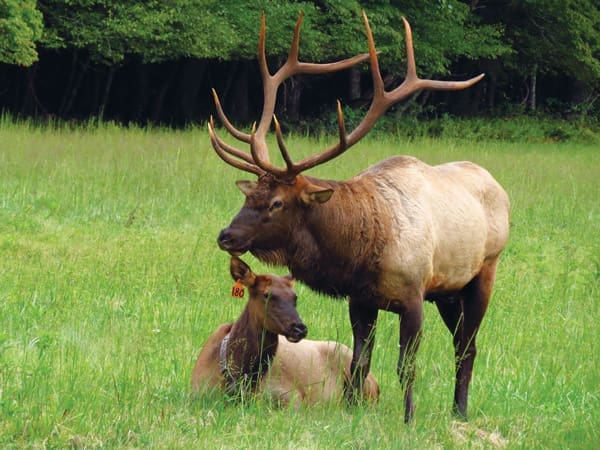
Wildlife biologist Joe Yarkovich didn’t know much about elk when he began managing the reintroduction program in the Great Smoky Mountains National Park in 2006. Now, he says, “I can literally sit in my office [in North Carolina’s Oconaluftee Valley] and hear bulls bugling in the fall. If you’ve never heard it before, it’s a pretty eerie sound. It’s not the sound you would expect an 800-pound animal to make. They stretch their necks out and look all big and tough and start tearing up the ground. And then they let out this high-pitched squeal.”

The fact that Yarkovich, and visitors to several Appalachian states, can see and hear the large, deer-like mammals at all is nothing short of remarkable, given the reality that, by the early 1800s, they had been completely wiped out east of the Mississippi River due to overhunting, habitat loss and diseases contracted from domestic livestock.
“Everybody’s familiar with the plight of the buffalo, the mass killing,” Yarkovich points out. “The same thing was going on with elk, but it didn’t seem to get the attention the buffalo had.”
Historical records are sketchy, especially in the Southeast. Before their near-extermination, however, as many as 10 million elk inhabited North America. Realizing there were only about 100,000 left – all in Yellowstone National Park – wildlife experts set aside land there to preserve them. The herd flourished, and in the late 1990s some of the animals were successfully relocated to Tennessee’s Cumberland Plateau and to grassy, reclaimed strip mines in eastern Kentucky. The Rocky Mountain Elk Foundation then teamed up with the Great Smoky Mountains National Park to do the same thing in the peaceful valleys of Cataloochee in western North Carolina.