Skip to content


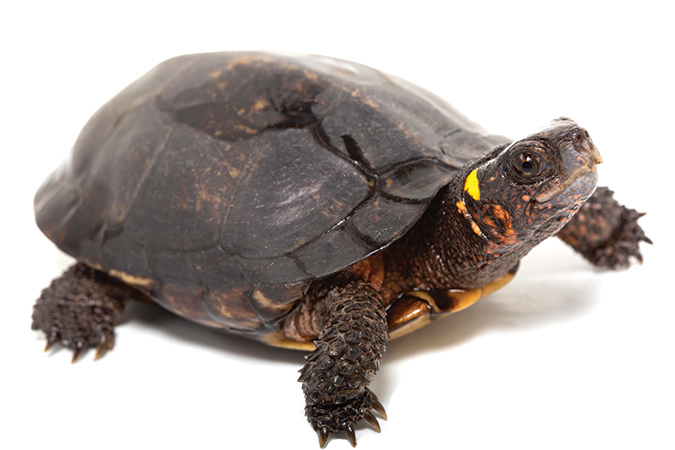
Thankfully, the endangered bog turtle is a master at hiding.
The bog turtle—the smallest in North America—is so tiny that even experts like Michael Ogle have trouble spotting them. “I can’t tell you how many dozens I’ve walked past in my life, never having a clue, because they’re so secretive,” says the herpetology curator at Zoo Knoxville, where efforts are underway to protect the endangered species. “When you’re three to four inches, literally anything can eat you, so they have to be extra shy to keep going.”

Generally found among sedge mounds, sphagnum moss and cinnamon ferns in peat-accumulating wetlands called fens—which are fed by underground springs in the mountainous areas of only a handful of Appalachian states—the low-profile reptile with the chocolate brown carapace likes to tunnel through the mud.
“It’s not until you step into [one of the wet areas] that you step into the peat soil,” Ogle says. “We call it muck because you just kind of get stuck in it. It can go from ankle-deep to waist-deep pretty quickly.”
Like most turtles, the bog species is long-lived. “We have turtles that were first discovered in [Tennessee] in 1986 and they’re still alive and breeding,” Ogle says. “They were hatched probably in the mid- to late-1970s, and some might be older than that.”
Despite its longevity, the bog turtle has appeared on the U.S. Endangered Species list since 1997. Believed to be quite common before settlers began draining wetlands to make room for farms, the populations were separated from each other by agricultural practices in the 1800s and became increasingly isolated in the 20th century when golf courses and residential developments destroyed even more habitat. The rare reptiles are also prized by poachers and collectors in the black-market pet trade.
Ogle estimates there are currently fewer than 5,000 bog turtles in the Blue Ridge region. Most live in North Carolina and Virginia, with 150 to 200 in Tennessee. Understandably, the exact whereabouts of the animals are kept under wraps.
To combat the decline, The Nature Conservancy, federal and state agencies and other groups have been purchasing land to preserve and removing invasive plants that threaten to take over.
Zoo Knoxville has been a leader in these conservation efforts since 1986, when staff herpetologist Bern Tryon discovered the first bog turtles in Tennessee. Until his passing in 2011, he conducted a number of mark-recapture studies and oversaw a breeding program that has since released 180 specimens into the wild. Under Tryon’s watch, the zoo’s recovery project received awards from the Association of Zoos and Aquariums and the U.S. Fish and Wildlife Service.
About two years ago, the program expanded to North Carolina. Ogle and his colleagues “head-start” baby turtles measuring just under the size of a quarter and weighing only four grams from eggs gathered in the Tar Heel state. Approximately 15 bog turtles have been reintroduced there.
The Tennessee project is showing signs of success, even in areas with no previous native populations. A while back, scientists found three separate nests, tracked the turtles and concluded that the majority of their eggs hatched. Recovery doesn’t happen quickly, Ogle points out, especially since bog turtles lay only two to four eggs each year and are slow to mature and reproduce.
“It just goes to show that it takes dedication and time and not giving up.”
Bog turtles play an important role in the ecosystem by digging trails used by other animals, eating pest insects and spreading cranberries from seeds.
“They were here before us,” says Ogle. “We’ve destroyed so much of their land. They were a unique turtle found only in the United States, so I think we owe it to them to undo the wrongs that we’ve done.”
The story above first appeared in our September/October 2021 issue.