Wild Edibles

CURRENT Wild Edibles

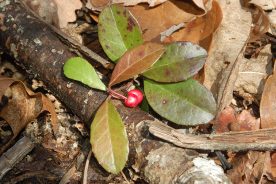
Gaultheria procumbens.

January’s Wild Edible: Teaberry

Gaultheria procumbens, also known as the winterberry, boxberry, and checkerberry more or less officially goes by the appellation of the Eastern teaberry, but most folks drop the first half of its name.
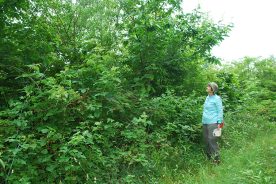
Elaine Ingram admires a purebred American chestnut clinging to survival on the Ingram’s land in Craig County. Such trees are rare.

December’s Wild Edible: The American Chestnut

What was one this region's most predominant tree has now become merely an afterthought.
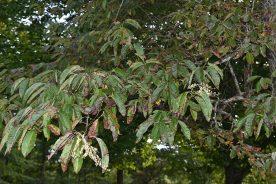
Sourwood leaves are edible and the blooms attract honeybees.

November’s Wild Edible: Sourwood

The sourwood is only found in Eastern North America and is most abundant in the Blue Ridge – making it a quintessential Southern Appalachians tree.
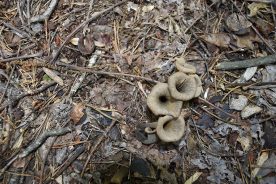
Black trumpets often grow in small colonies.

October’s Wild Edible: Black Trumpets

In the Blue Ridge Mountains, chanterelle family members such as the smooth and cinnabar light up the forest floor with their yellow and red hues, respectively. But their close relative the black trumpet is anything but flashy.
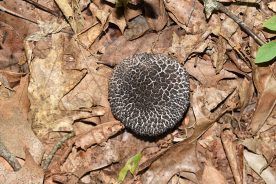
This Old Man of the Woods was found growing in the mountains of Craig County, Virginia.

September’s Wild Edible: Old Man of the Woods Mushroom

Appearing July through October, Strobilomyces floccopus features a two-to-five inch wide grayish black cap that is quite distinct in appearance, but hard to spot among the forest duff.

Departments

Much of the Oklawaha Greenway is lined with trees.
The Good Walk

Walking Oklawaha Greenway

Located just minutes from downtown Hendersonville, North Carolina, this 3.25-mile scenic pathway winds through forests and wetlands.

CALENDAR OF EVENTS