Skip to content



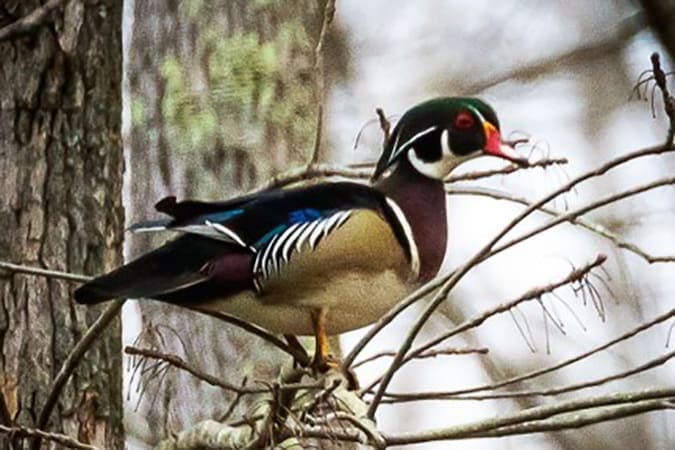
Is there a duck that perches high in the trees and nests in cavities? And, sports some of the most stunning male breeding plumage in the waterfowl world? Yes! Aix sponsa – the wood duck. Swift in flight and fleet of foot in the branches, this bird species can be seen year-round and/or during breeding season across the Blue Ridge and a large swath of North America.
The webbed feet of the wood duck have sharp claws, allowing it easy access to its preferred nesting holes in trees. The closer to the water the better. Abandoned woodpecker holes and cavities left by broken branches are utilized. Additionally, human-made nesting boxes on the water are acceptable.

Mates are chosen in fall and winter, and the females will lead males in spring to the area where they themselves were hatched. It appears that this is the only North American duck capable of consistently producing two broods per breeding season.
Bird Bits
Fun Facts: The first step is a doozy when you’re a duckling. After hatching, they only stay in the nest about one day. Then, everyone jumps. Since their vertical location can be over 50 feet up (and they can’t yet fly), this is a breathtaking welcome into the world for the young ones. The best nest locations have water below and some do not. Either way, this freefall happens without injury. The ducklings right themselves, have a good flutter, and swim and eat right away.
Habitat: This species nests and lives in and amongst wooded wetlands. Ponds, marshes, slow-moving streams and other riparian environments with deciduous trees and vegetative cover offer wood ducks the resources they need to thrive.
Conservation Note: After facing near extinction in the early 20th Century (due to over-hunting and habitat losses), the wood duck is a conservation story of success. The Migratory Bird Treaty Act (1918), the North American Wetlands Conservation Act (1989) and eighty years of growing popularity for providing nesting boxes saved this species. They continue to thrive with a population estimate of over 3 million birds.
ABOUT THIS SERIES: Our “Birds of the Blue Ridge” blog series will showcase frequently seen and rare birds across the southern Appalachian region. Angela Minor has been an avid birder for over three decades across the continental U.S., Alaska, the Caribbean, and seven European countries. She created and authors the state park birding series for Bird Watcher’s Digest; serves as a field editor with Birds & Blooms and the “Park Watch” Beat Writer for 10,000 Birds; and is a regular travel and nature writer for several regional and national print magazines.
Read More by Angela Minor: BlueRidgeCountry.com/AngelaMinor