Birds of the Blue Ridge: Snowy Owl

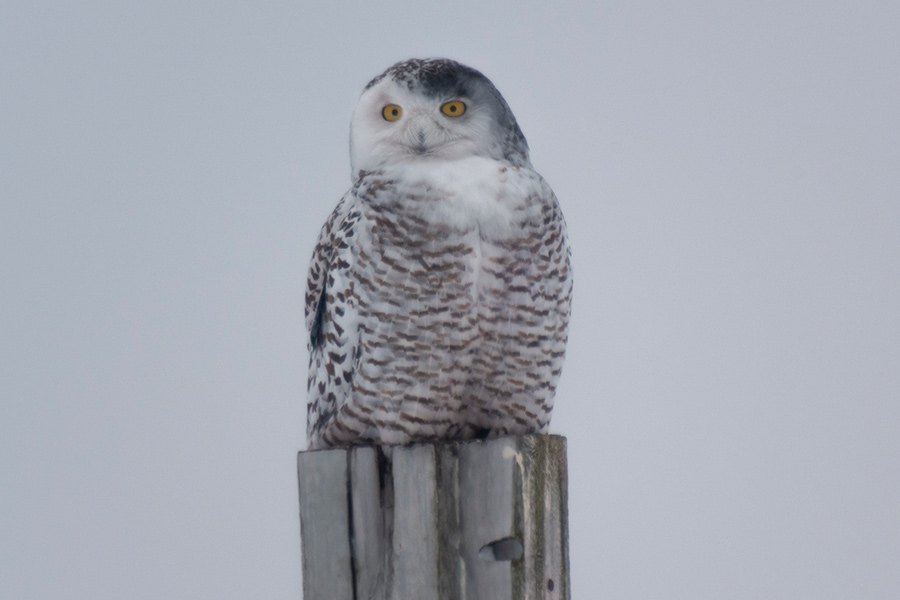
As winter approaches, we might just see a rare Snowy Owl in and around the Blue Ridge. While they are Arctic birds, recent years have shown an uptick in irruptions – irregular migrations outside the normal geographic range of a given species. And, a snowy was reported/photographed in Chattanooga, TN in 2021.

Males are pure white (with a couple of brown spots) and females have a white face with dark bars over their bodies. Both have bright yellow eyes and four- to five-foot wingspans.

During winter, scan near the ground in open areas and atop fenceposts, hay bales and other “tall-ish”
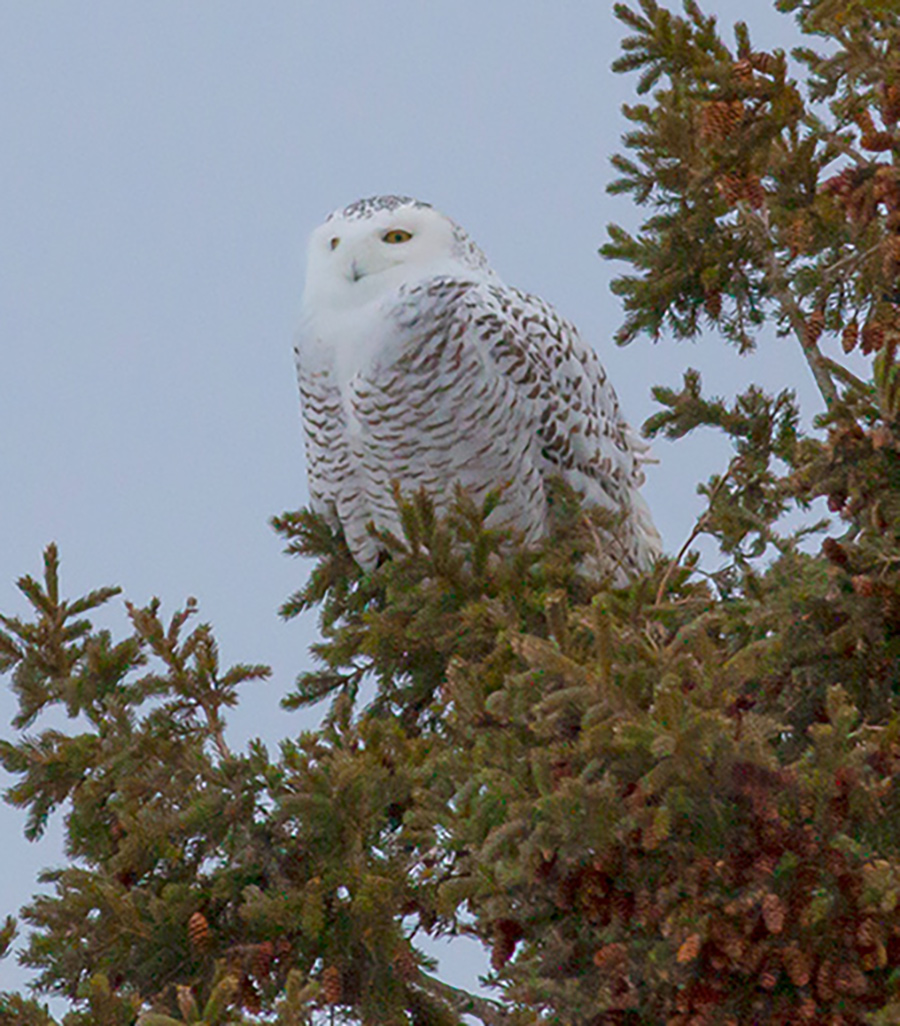
perches. This owl will sit for hours, just swiveling its head – looking and listening for a meal. So have a closer look with your binoculars to see if an unusual “lump” in the field is actually a rare Snowy Owl.

Bird Bits

Fun Facts: They have feathery slippers on their feet for insulation; and, they are the heaviest owls on the continent due to the thickness of their feathers.

Habitat: fields, shorelines and the treeless Arctic tundra

Conservation Note: While populations likely rise and fall based on the availability of prey, it is estimated that the Snowy Owl population has declined a staggering 64% over the past 40 years.

ABOUT THIS SERIES

“Birds of the Blue Ridge” showcases frequently seen and rare birds across the southern Appalachian region. For over three decades, Angela Minor has traveled with binoculars and field guides across the continental U.S., Alaska, the Caribbean, and seven European countries. She is a travel and nature freelance writer for several regional and national print magazines, and also created and authored the state park birding series for Bird Watcher’s Digest.

Read More by Angela Minor: BlueRidgeCountry.com/AngelaMinor

You Might Also Like:

e1b70596-05c8-11f1-92e0-1248ae80e59d-3-2026rueanemone--credit-Joe-Cook

March’s Mountain Wildflower: Rue Anemone

A member of the buttercup family and found in the open woodlands, rue anemone (Thalictrum thalictroides) has long, thin stems that tremble in the slightest of winds—prompting its other common name, windflower.
Pokeweed growing in Floyd County, Virginia.

January’s Wild Edible: Pokeweed

Pokeweed is one of the wild plants that is most associated with the Blue Ridge Region.
A purple-spored puffball growing in a field in Botetourt County, VA.

December’s Wild Edible: Purple-Spored Puffball

The purple-spored typically grows in this region’s fields, often appearing from October through December and into early January.
d289022c-696f-11f0-a179-1248ae80e59d-CGZ_0845-011

Ride the Rails, Explore Rockbridge County: Make a Weekend of the 611 in Goshen!

This fall, one of America’s most iconic steam locomotives is making tracks and memories.
The compound, lancelike leaflets of the bitternut are a good identifier.

November’s Wild Edible: Bitternut Hickory

Frankly, this native species to the Blue Ridge mountains comes by its name honestly.
Mullein growing in Ingram's backyard.

October’s Wild Edible: Mullein

Earlier, this year, a lone mullein plant appeared along the fence that encloses my garden, which made me curious about this plant.
An indigo milk cap growing in Botetourt County, Virginia.

September’s Wild Edible: Indigo Milk Caps

When young, indigo milk caps are one of the most stunningly beautiful mushrooms in the Blue Ridge Mountains.
ec3b964c-5201-11f0-968d-1248ae80e59d-9-2025spottedjewelweed--credit-Joe-Cook-and-Monica-Sheppard

September’s Mountain Wildflower: Spotted Jewelweed

Seek out spotted jewelweed growing beside a stream or along a moist area and you will have a good chance of getting to watch one or more ruby-throated hummingbirds flit from flower to flower.
A black staining polypore growing in Botetourt County, VA.

August’s Wild Edible: Black-Staining Polypore

The black-staining polypore is certainly one of the more fascinating wild edible mushrooms.
Northern Dewberry growing in Botetourt County, Virginia.

July’s Wild Edible: Northern Dewberry

For several reasons, the northern dewberry is often overlooked as a summer berry in the Blue Ridge.

CALENDAR OF EVENTS