Birds of the Blue Ridge: Sandhill Crane

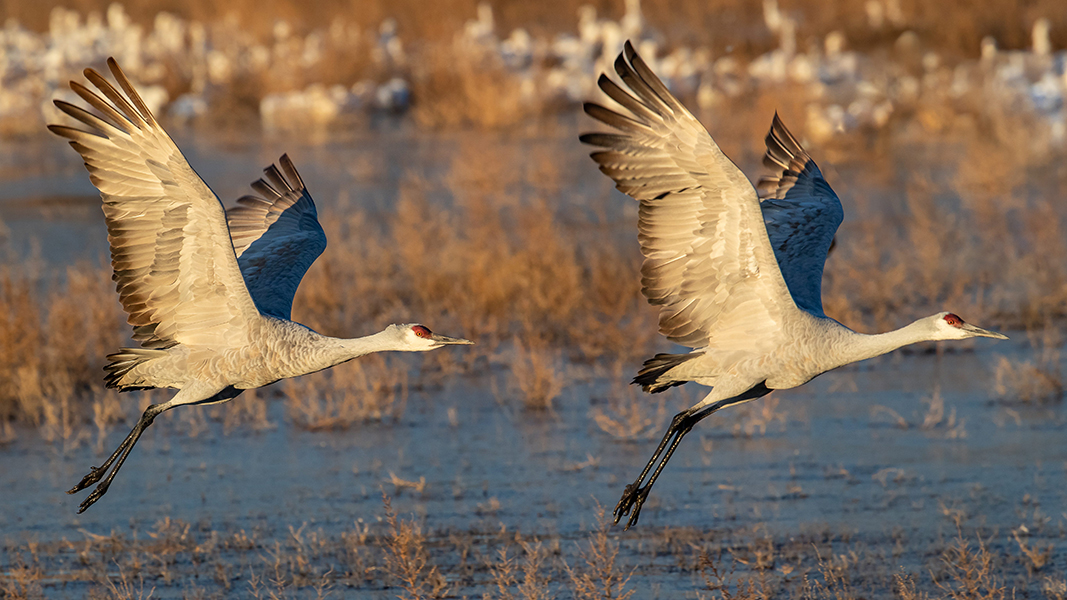
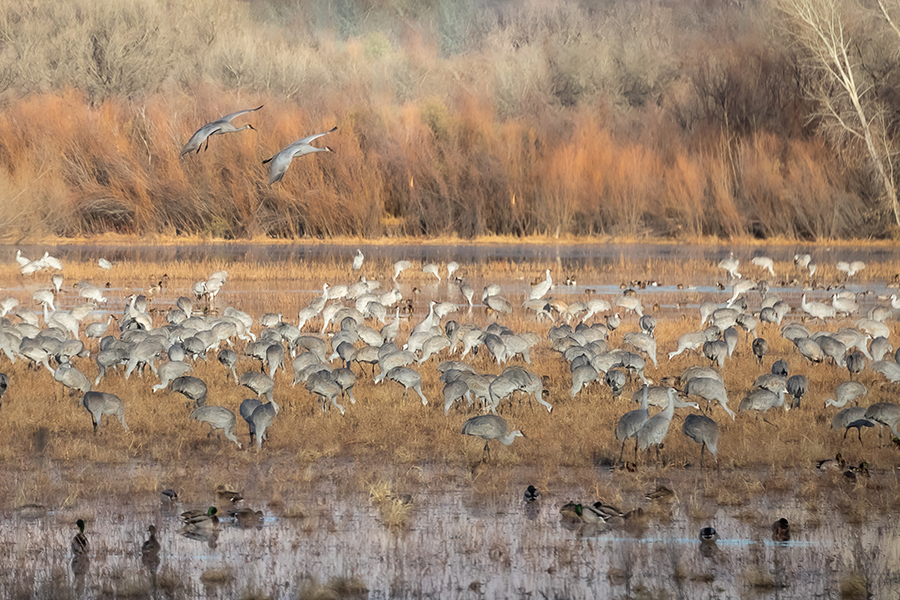
Early holiday gifts are flying overhead as the Sandhill Cranes return to (and through) the Blue Ridge from points north! Watching hundreds of them effortlessly glide in circular flocks and seamlessly form into V-shaped formations (called “chevrons” or “echelons”) inspired the bird choice for this installment.

These long-legged avians stand almost four feet tall with a wingspan of 6.5 feet and sport a signature red color on the crown of their head. They mate for life, gather in large flocks, and go about their days with a grace and style belying their large size. The nobility and elegance of cranes captures the imagination of many cultures. In particular, their courtship dance of bowing and leaping with outstretched wings is venerated in ceremonies and art.

Listen to the skies for the long-distance, rolling, trumpeting call – once heard, never forgotten.
Bird Bits

Fun Facts: A sandhill crane fossil discovered in Florida at the Macasphalt Shell Pit dates to 2.5 million years ago. The longest recorded living crane was 36 years, seven months old.

Habitat: Open wetland habitats such as marshland, tundra and prairies are the preferred locations.

Conservation Note: Like many birds, the future of Sandhills is closely tied to habitat preservation or loss.

*Birding Tip: Scan the flocks for a chance to see an endangered white Whooping Crane, known to occasionally travel with Sandhills.


ABOUT THIS SERIES:

“Birds of the Blue Ridge” showcases frequently seen and rare birds across the southern Appalachian region. For over three decades, Angela Minor has traveled with binoculars and field guides across the continental U.S., Alaska, the Caribbean, and seven European countries. She is a travel and nature freelance writer for several regional and national print magazines, and also created and authored the state park birding series for Bird Watcher’s Digest.

Read More by Angela Minor: BlueRidgeCountry.com/AngelaMinor


You Might Also Like:

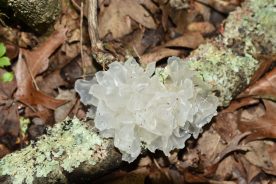
White jelly snow fungus growing in the author’s Botetourt County, Virginia woodlot.

May’s Wild Edible: White Jelly Snow Fungus

“Pass the fungus,” is not common dinnertime conversation in the Blue Ridge Mountains region, but that’s because folks perhaps have not heard of the white jelly snow fungus.
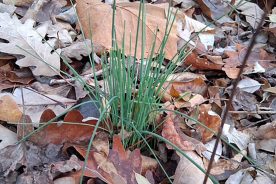
Wild garlic growing in Fayette County, West Virginia.

April’s Wild Edible: Wild Garlic

Fayette County, West Virginia’s Mitchell Dech is one of my foraging mentors, and when he wants me to try an edible new to me … I’m ready to learn about it.
A May apple in bloom in Southwest Virginia.

March’s Wild Edible: May Apple

Sometime this month in the Blue Ridge Mountains, one of these highlands’ signature spring plants will ease from the soil … the May apple (Podophyllum peltatum).
e1b70596-05c8-11f1-92e0-1248ae80e59d-3-2026rueanemone--credit-Joe-Cook

March’s Mountain Wildflower: Rue Anemone

A member of the buttercup family and found in the open woodlands, rue anemone (Thalictrum thalictroides) has long, thin stems that tremble in the slightest of winds—prompting its other common name, windflower.
Pokeweed growing in Floyd County, Virginia.

January’s Wild Edible: Pokeweed

Pokeweed is one of the wild plants that is most associated with the Blue Ridge Region.
A purple-spored puffball growing in a field in Botetourt County, VA.

December’s Wild Edible: Purple-Spored Puffball

The purple-spored typically grows in this region’s fields, often appearing from October through December and into early January.
d289022c-696f-11f0-a179-1248ae80e59d-CGZ_0845-011

Ride the Rails, Explore Rockbridge County: Make a Weekend of the 611 in Goshen!

This fall, one of America’s most iconic steam locomotives is making tracks and memories.
The compound, lancelike leaflets of the bitternut are a good identifier.

November’s Wild Edible: Bitternut Hickory

Frankly, this native species to the Blue Ridge mountains comes by its name honestly.
Mullein growing in Ingram's backyard.

October’s Wild Edible: Mullein

Earlier, this year, a lone mullein plant appeared along the fence that encloses my garden, which made me curious about this plant.
An indigo milk cap growing in Botetourt County, Virginia.

September’s Wild Edible: Indigo Milk Caps

When young, indigo milk caps are one of the most stunningly beautiful mushrooms in the Blue Ridge Mountains.

CALENDAR OF EVENTS