Skip to content

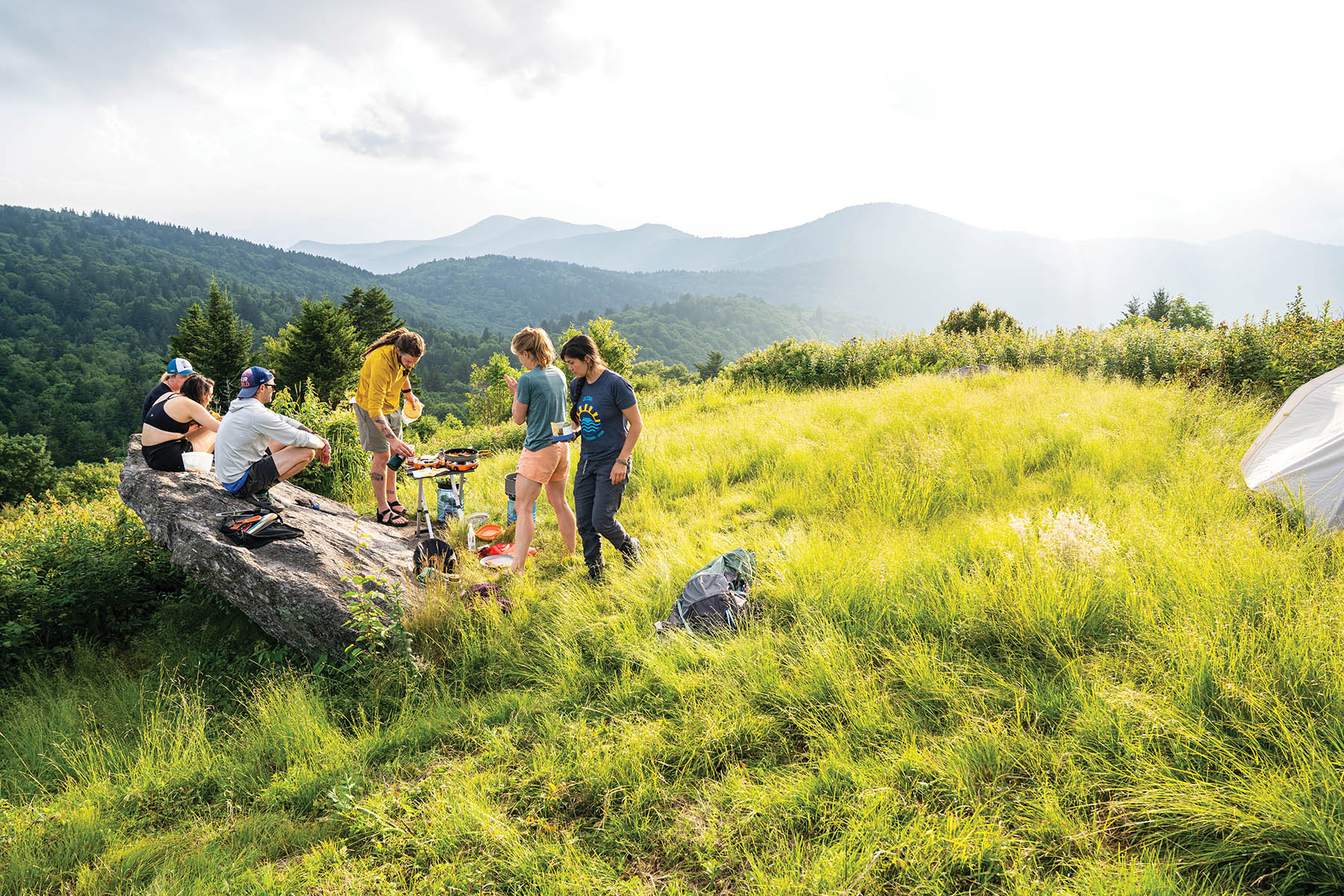
Lee “Natty” Trebotich transforms wild plants and outdoor know-how into unique experiences worth savoring.
By Brandy Jo Hastings / Photo Above: By Steven Reinhold
If your outdoor explorations carry a dose of adventure and daring, you’ll want to meet a guy who can teach you how to make a bandage out of materials in the forest and spot plants that are natural remedies to poison ivy or bee stings. Not to mention whip up a near-gourmet meal of forest-foraged plants and put a wild spin on your favorite cocktail.

Cooking and the great outdoors are simply in Natty Trebotich’s genes. In 2020, he combined these passions and his education—he has multiple degrees in biology—to create Food For Adventures, a business centered on outdoor education and culinary experiences that showcase the many uses of local flora.
Trebotich, originally from the Gulf Coast just outside New Orleans, always wanted to live in the mountains. You could hear the smile in his voice as he shared what led him to put down roots in the region: “The Blue Ridge Mountains were calling, and I came.” He and his wife Meghan have called Asheville, North Carolina, home for eight years now and have found it to be the perfect place to raise their two daughters, Ziggy and Journey.
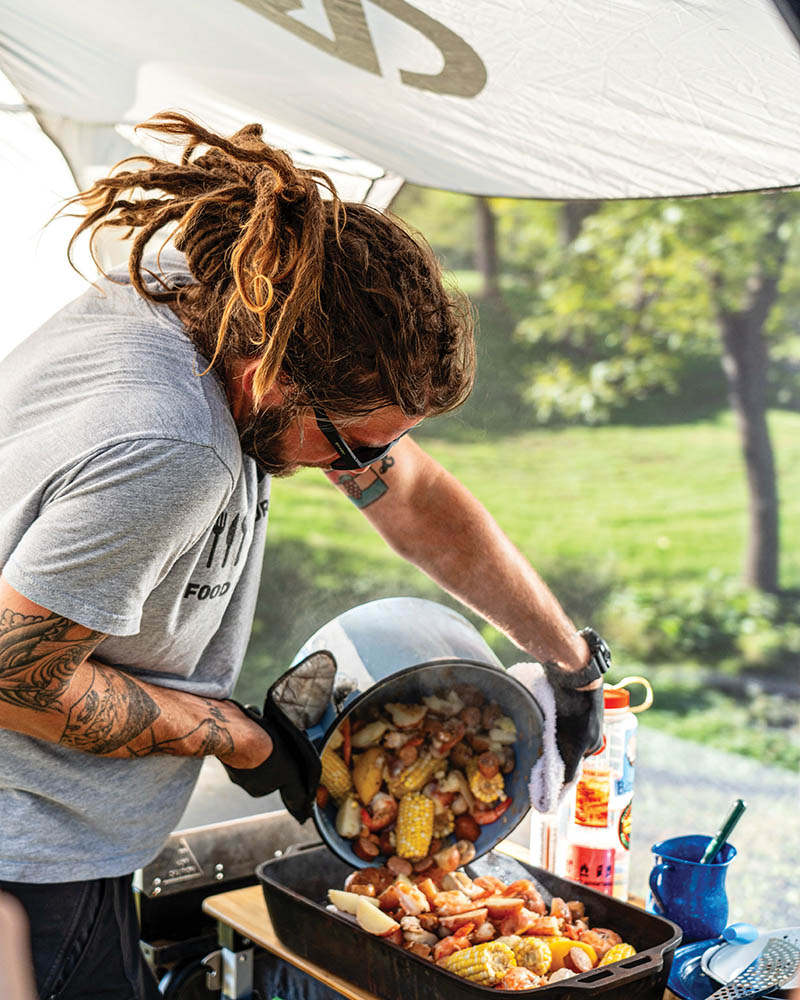
Although the majority of business comes from western North Carolina, part of the job involves being a wild chef in some of the world’s most remote locations. “We’ve cooked for people on glaciers and mountains,” said Trebotich. “We go down rivers and to islands. We’ve done it all.” One of his most extreme experiences as a backcountry chef was a two-week climbing expedition in Alaska while facing -40-degree temperatures.
Closer to home, Trebotich hosts a variety of educational experiences focused on foraging and outdoor cooking. The most popular is the Forage to Plate Experience where attendees learn to search for and harvest plants, prepare a meal using what they’ve sourced from the land, get tips on food storage and outdoor cooking safety, and leave with some fun new recipes. The Edible and Medicinal Plant Tour at Collier Cove Nature Preserve in Asheville and Wild Cocktail Experience are also in high demand. As a certified Leave No Trace instructor, Trebotich always weaves those important principles into his classes and aims to foster appreciation and respect for the outdoors in others.
Trebotich also recognizes the value of partnerships and has found unique ways to collaborate with a variety of other North Carolina businesses. He’s helped Hendersonville’s Nero Coffee with their coffee hikes that take caffeine seekers to local waterfalls, and he can also be seen teaching at local Recreational Equipment, Inc. (REI) events.
Another partnership that is near and dear to Trebotich’s heart is with The Worx Project’s summer camp. He is a firm believer in giving back and has enjoyed helping children develop a passion for spending time in nature while also teaching them about outdoor cooking. “It gets the kids outdoors away from technology for a couple of hours. It’s something that not only do I teach in my family personally, but I try to pass that on to these kids, too.”
For more information, check out foodforadventures.com.
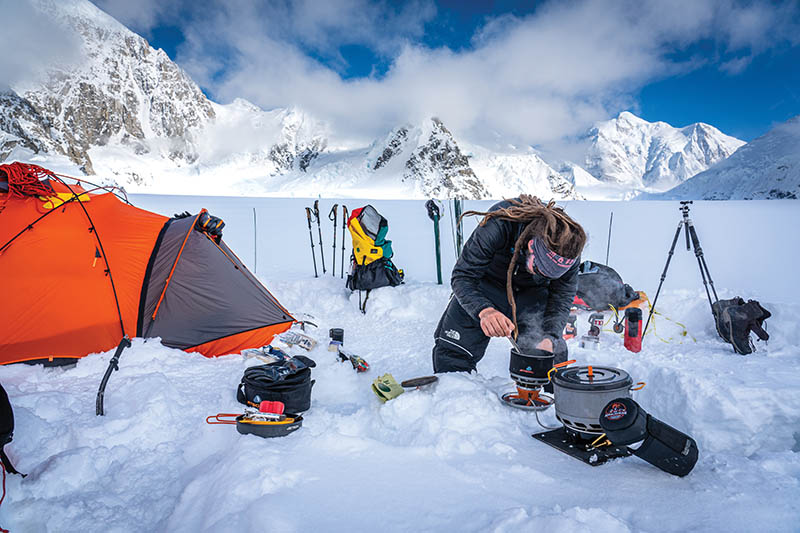
Food for Adventures’Backcountry ‘Butterfingers’
While Trebotich has many outdoor recipes, he admits there is a crowd favorite: Food For Adventures’ Backcountry ‘Butterfingers.’ “It’s something that really holds well and doesn’t spoil in the backcountry.”
Trebotich is also a big fan. “I could probably put down a dozen.”
Prep Time: 15-20 minutes
Ingredients
- 8 One box of regular salted Triscuits
- 8 Peanut butter
- 8 Sea salt
- 8 Chocolate almond bark
Preparation
- 1. Prep snack by spreading ½ tablespoon of peanut butter between two Triscuits.
- 2. Melt almond bark on low heat in a non-stick pan.
- 3. Use tongs to dip each sandwich into melted chocolate, making sure both sides are well covered.
- 4. Place on wax paper or silicone mat and top each with a pinch of sea salt.
- 5. Let butterfingers sit for 30 minutes to harden and store in the refrigerator.
The story above first appeared in our July/August 2026 issue.