Skip to content

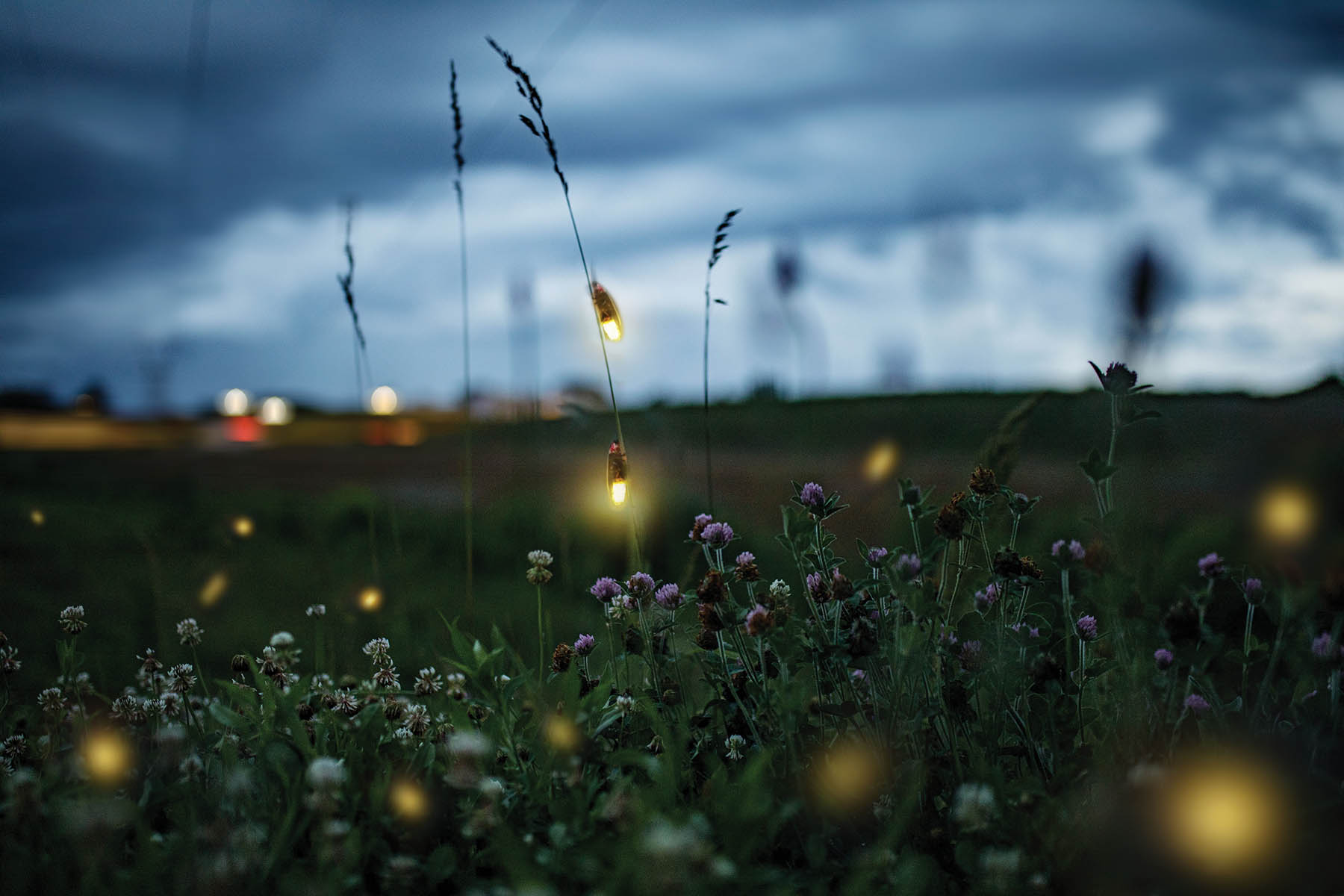
Fireflies are struggling with the effects of artificial light.
By Nancy Henderson
On summer nights, D.J. McNeil mindfully turns off the outdoor lights at his suburban Kentucky home. And he urges others to do the same.

“If you have a big barn or a shed with a light on, or the garage, I would be turning those off, especially during the period when fireflies are mating—any time from May through July,” said McNeil, assistant professor of wildlife management at the University of Kentucky. “A bunch of issues are facing native firefly populations. Like with so many other species, it’s kind of death by a thousand cuts. And artificial light at night is certainly one of them.”
For many other insects, the entire life cycle goes by quickly, but fireflies—or “lightning bugs,” as they’re often called in the Blue Ridge region—spend two or three years as larvae on the surface of the soil. “When they’re in this stage, they’re like a teeny, tiny tiger almost,” McNeil pointed out. “They’re a tiny, vicious predator.”
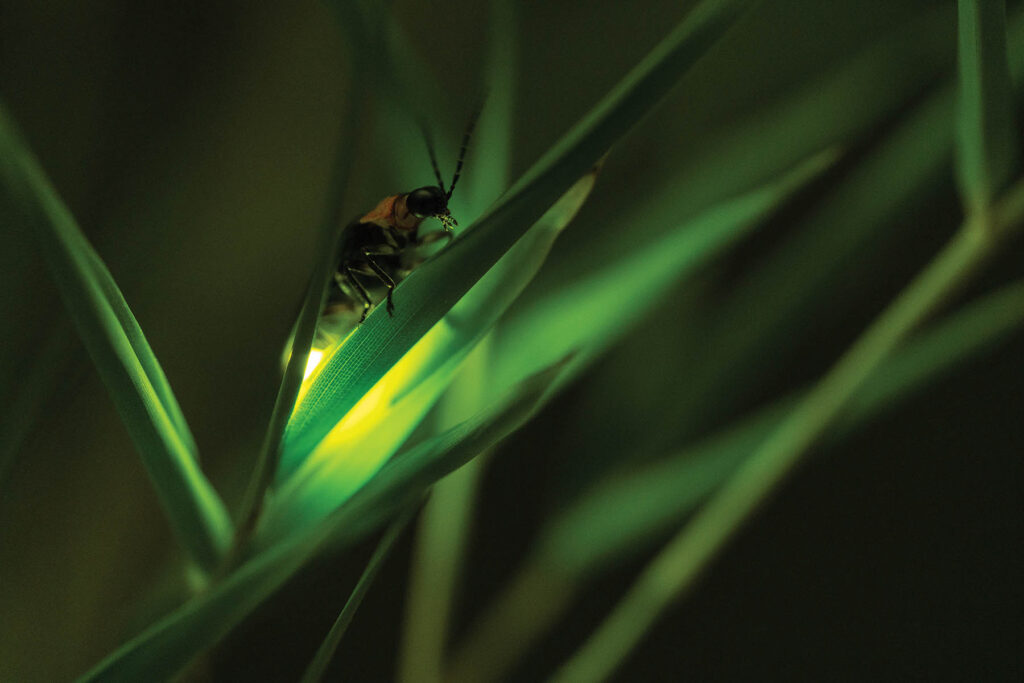
Most firefly larvae are bioluminescent, just like the adults, who live about two weeks. According to McNeil, “That last little bit is when they’re likely most vulnerable to artificial lights at night.”
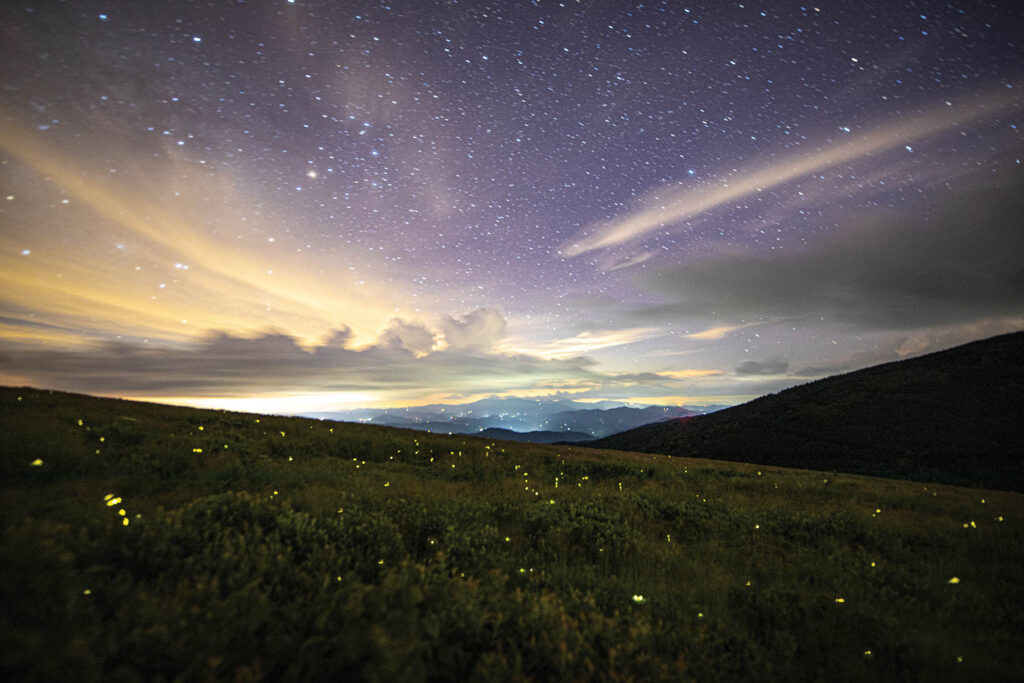
Darkness doesn’t just serve as a backdrop for the firefly’s showy display; it’s an essential part of its mating ritual. In many species, the male and female use different signals to express their amorous intentions and availability for breeding. “There’s a very detailed communication that’s happening there, and it’s super important, not only for them to find each other, but because in a given area there may be 10 species of fireflies,” McNeil said.
This makes it critical to distinguish their own kind in the dark, since mating with the wrong one could be fatal. “There are a couple that eat other fireflies,” McNeil noted. “They lure in unsuspecting males by mimicking their flashes to say, ‘Hey, I’m a pretty lady. Let’s make some babies.’ And then when the male is like, ‘Oh yea,’ the predatory one says, ‘Gotcha.’ So everything about their breeding system is very driven by light.”
While private “lights out” campaigns encourage residents to combat light pollution by installing automatic timers and shutting off outdoor lights at a certain time, McNeil said, “It’s really tough to get major support. To apply it has been really challenging.”
Still, he added, “We have increasingly recognized what’s often called the Insect Armageddon. We’re losing many insect populations. Fireflies are a really excellent flagship species to garner support for the conservation of insects, because they’re so charismatic and so many people love them.”
How You Can Help
D.J. McNeil, assistant professor of wildlife management at the University of Kentucky, offers a few more tips on protecting fireflies:
Go natural. “The more you can make your yard resemble a natural area—that is probably the single most important thing you can do to help fireflies,” said McNeil, who is slowly replacing the exotic honeysuckle bushes in his own backyard to buttonbush, dogwood, and other indigenous plants and converting small patches of lawn to wildflower gardens. “Having a sterile, homogenous lawn is possibly the worst thing for fireflies, maybe short of a parking lot.”
Get involved in citizen science with Firefly Watch, iNaturalist, or another app. Data on Appalachian fireflies is scarce, McNeil said, but ordinary citizens can help change that.
Check online resources. McNeil recommends the Xerces Society (xerces.org) for advice on best management practices and landowner guidelines.
The story above first appeared in our July/August 2026 issue.