Skip to content


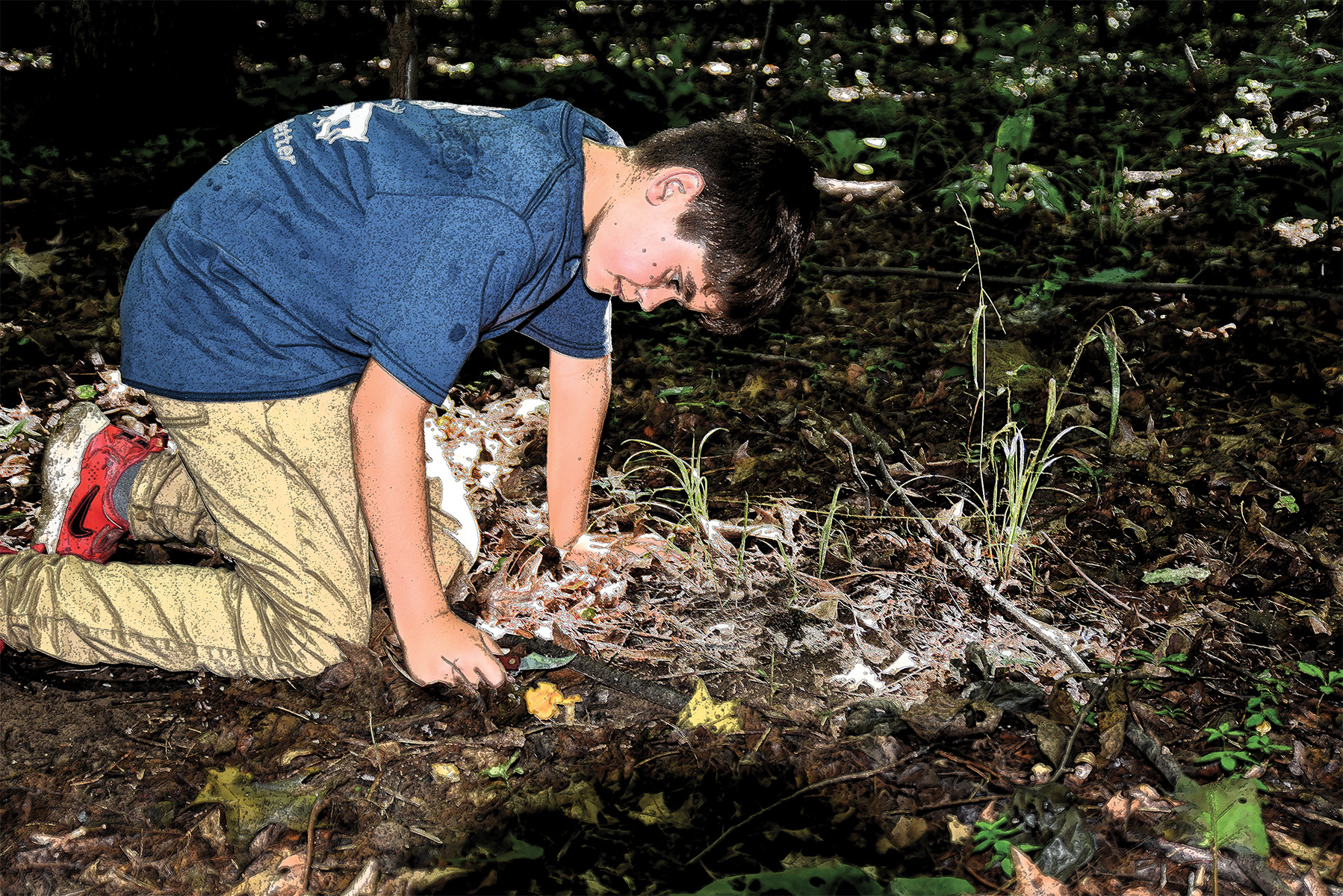
A morning spent foraging for fungi turns into a friendly competition between the grandsons.
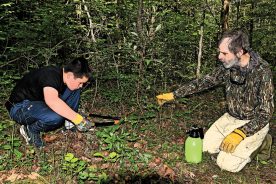
Photo Above: Eli severs a smooth chanterelle from the ground. / Text and photo by Bruce Ingram | Photo styling by Janette Spencer
The July weather here in Botetourt County, Virginia, had been brutal for over a week. But the last three days had proved particularly fierce, with blustery afternoon thunderstorms and heat indexes as high as 105. However, the one salvation the humid heat wave brought was that it was just the type of weather that makes mushrooms burst forth from the forest duff.

So, I summoned grandsons Sam and Eli across the hollow from their parents’ house to Elaine’s and mine early one morning long before the afternoon tempests began. On the short drive to a favorite fungi destination, I reviewed some of the rules for foraging.
“What do you do if you find a mushroom that you think might be edible and I’m not around?” I asked.
“Pick it, but don’t eat it, and bring it to you,” Sam said.
“What are some examples of poisonous mushrooms?” I asked next.
“Jack-o’-lanterns and Amanitas,” Eli responded.
“And what are some ways to tell that those two are bad?”
“Jack-o’-lanterns are orange inside, and Amanitas look like toadstools,” the younger Eli said.
The review complete, I inquired if the boys would like to have a contest during our expedition. Asking a 13- and an 11-year-old if they would like to compete for anything is sure to result in affirmative responses. I added to the sibling rivalry by assigning point values to the edible mushrooms we might find this time of year. Choice edibles like chicken-of-the-woods and smooth chanterelles would be worth five points, quality edibles like black staining and the Berkeley polypore qualify the finder for three points, and bland-tasting ones like tree ears and amber jelly rolls a mere point.
Last summer, the duo had found the black staining and Berkeley. The former is a white mushroom that turns black when it’s touched, and the Berkeley is a lobed, platter-sized and shaped, beige-colored fungus. Both often grow at the base of hardwoods, as does the similarly sized and shaped (but red to orange to yellow) chicken-of-the-woods. After I gave them a quick review of this trio and told them that the smooth chanterelle (which they had never encountered) features a golden yellow/orange funnel-shaped cap with wavy edges and white flesh, we were ready to enter the woodlot.
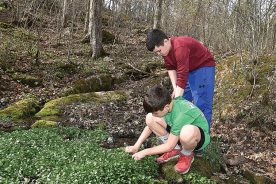
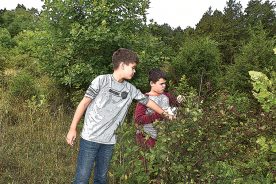
I also instructed the boys that I would walk between them, and we would try to stay together in a straight line as we foraged through the woods. Such directions were useless, as the individual personalities of the twosome immediately appeared. Sam attacks every task and soon began rambling randomly through the woods. Eli is more pragmatic and slowly inched through the forest, stopping often to peer at the ground.
Predictably, Eli scored first, finding an amber jelly roll and shortly afterward another individual from that species, tallying two points. Sam wasn’t finding anything edible as he rampaged about, but then his strategy paid off when he yelled to me, “I think I’ve found a bunch of smooth chanterelles.”
Indeed, he had, and we called Eli to help us sever a dozen or so of this almond-like-smelling edible from where their stems met the ground. Both grandsons remembered why—so that the mycelium beneath the ground might one day regenerate, making it more likely that we could find this species there next summer.
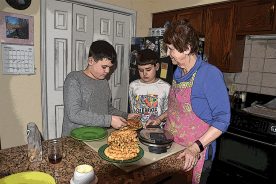
A few nights later, Sam and Eli came over to enjoy the rewards of their foraging. With organically raised chicken purchased from a neighbor and the chanterelles and jelly rolls from the boys (plus eggs from our hens and zucchini from our garden), Elaine and the boys prepared a frittata for the four of us. Adding to the feast was steaming hot, homemade sourdough bread, slathered with blackberry jam made from berries we gathered. Gifts of the land, indeed.
The story above first appeared in our July/August 2026 issue.