Skip to content


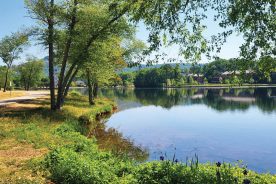
Located just minutes from downtown Hendersonville, North Carolina, this 3.25-mile scenic pathway winds through forests and wetlands.
By Leonard M. Adkins | Photos by Leonard M. and Laurie Adkins
Returning home from a midwinter hiking trip to the Deep South, Laurie and I decided to spend the night at the Waverly Inn (waverlyinn.com) in Hendersonville, North Carolina, rather than continue driving in the dark. It’s just minutes away from the city’s amazingly alive downtown, with close to two dozen restaurants located on a few short blocks. We split a satisfying roasted vegetable pizza at busy Mezzaluna on Main Street.

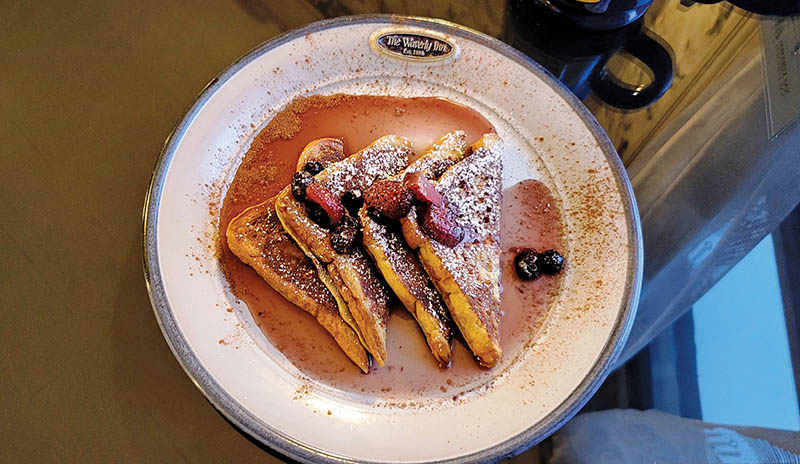
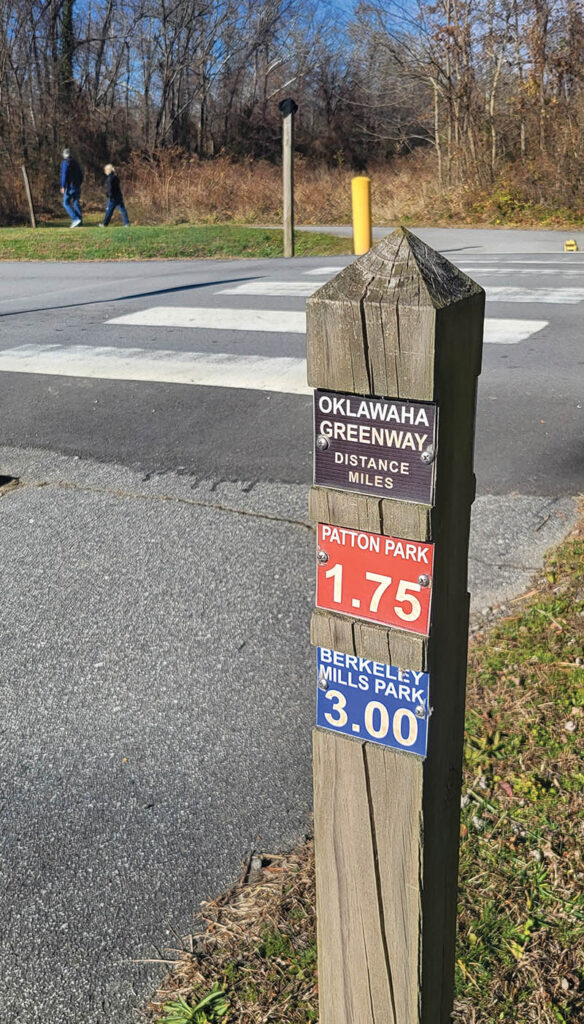
The inn is also within a five-minute drive of the 3.25-mile Oklawaha Greenway, where innkeeper Tracey Burnette directs “guests to when they are looking for a leisurely walk or run.” Fortified by the inn’s French toast with fresh berry compote and locally produced sausage, the temperature was 32 degrees when we set out to walk the pathway, whose name is Cherokee for “slow-moving muddy waters.” It parallels a scenic stream for much of its distance in addition to going by wetland areas.
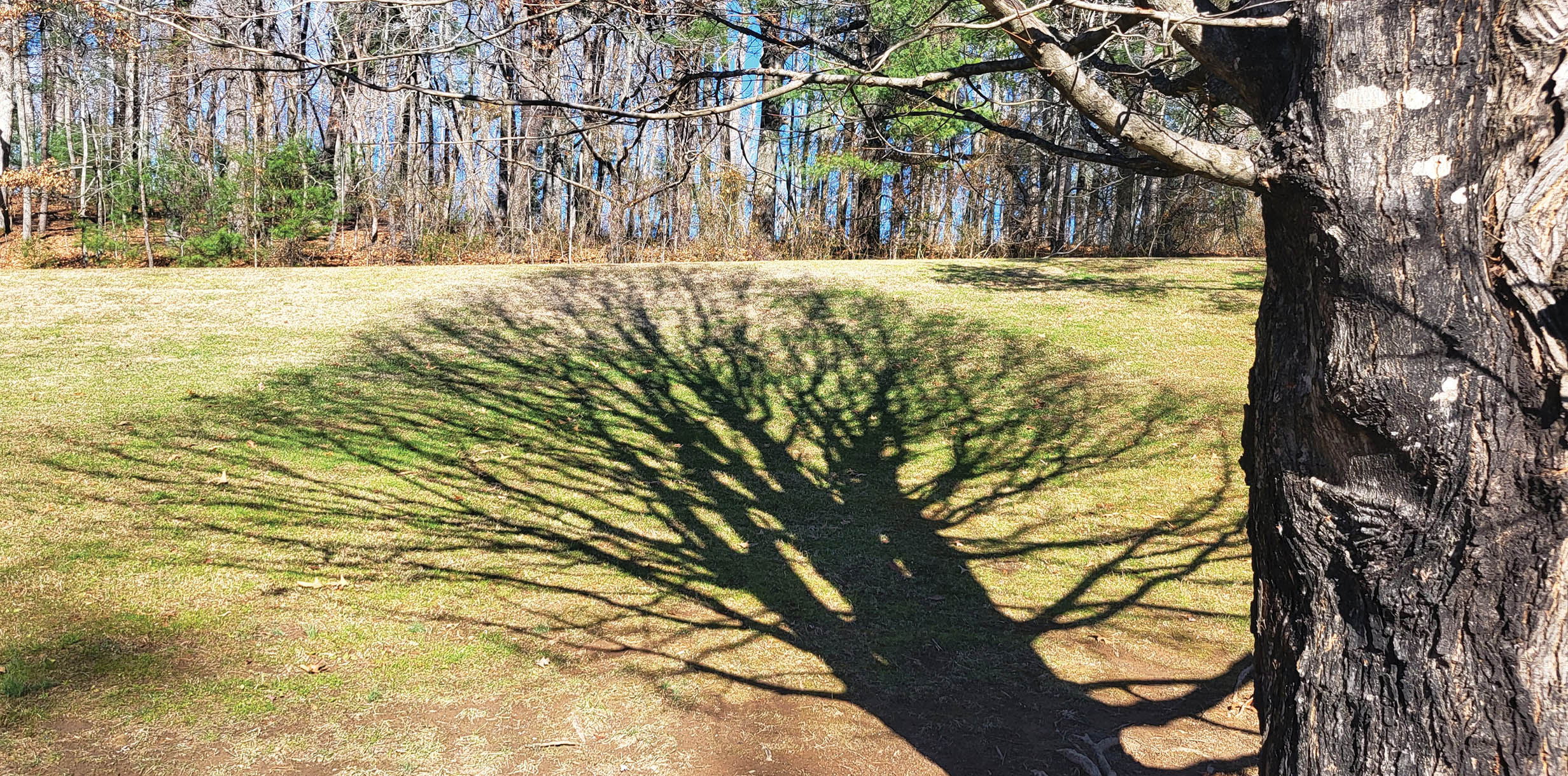
While the trees lining the pathway would have provided welcome shade in the summer, they were now leafless, showing their true countenance. Some had large branches bending and curling like sinewy arms, while smaller branches appeared to be unfolding fingers. One, whose branches all pointed upward, cast such a particularly intriguing shadow that both Laurie and I were drawn to photograph it.
We watched a pileated woodpecker pound his beak against a tree trunk and saw great blue herons trolling the waters as a couple of wood ducks floated by in Mud Creek. Yet it wasn’t until we read the trail’s interpretive signs that we found out the greenway is a renowned birding destination.
Later, in discussing this with local resident Kevin Burke, who leads outings with Carolina Nature Tours (carolinanaturetours.com), he told us, “The birding on the greenway is great year-round. In the colder months, we see birds that have migrated here—white-throated sparrow, purple finch, yellow-bellied sapsucker, and winter wren. Resident species like eastern bluebird and red-shouldered hawk are seen on most walks. Fall is my favorite season. Warblers, vireos, and flycatchers visit in large numbers due to the number of insects inhabiting the greenway. The flooded forest provides a ton of food for migratory birds. We can sometimes see up to 20 species of warblers in a single day. You can’t do that anywhere else in the state.”
The Oklawaha Greenway is already a wonderful asset for locals and visitors, but future plans to extend it for miles and to connect it with the recently opened Ecusta Trail on the other side of Hendersonville assure you’ll be hearing even more about this area of the state as an outdoors destination. Stay tuned.
MIDWAY MORSELS
Via a short side trail, The Baker’s Box (thebakersbox.net) is located near the greenway’s halfway point, making it the obvious choice for a lunch break. Under the direction of Mara and George Nicholas, who hold culinary and pastry arts degrees from Johnson & Wales University, everything is made from scratch—something almost no restaurants do anymore. This philosophy was evident in the wonderful tastes of Laurie’s chicken salad on sourdough bread and my house-made roast beef, cheddar, and homemade pickled jalapenos hoagie.
WHEN YOU GO
The Walk: A paved, nearly flat 3.25-mile (6.5 miles round trip) trail along waterways and wetlands near downtown Hendersonville, North Carolina.
Getting There: Take I-26 Exit 49B in Hendersonville, follow US 64 westward for 1.5 miles, turn left onto Harris Street, go another ¼ mile, turn left onto Fourth Avenue and follow it to greenway parking in Jackson Park.
More Information: A map and information about the greenway are on friendsofoklawaha.org.
Leonard has been writing hiking and walking columns for Blue Ridge Country for more than 20 years. His favorite walk? “The one I’m on at the moment!” Find out more at habitualhiker.com. He also writes Mountain Wildflowers on BlueRidgeCountry.com.
The story above first appeared in our May/June 2026 issue.