December’s Wild Edible: The Lion’s Mane Mushroom

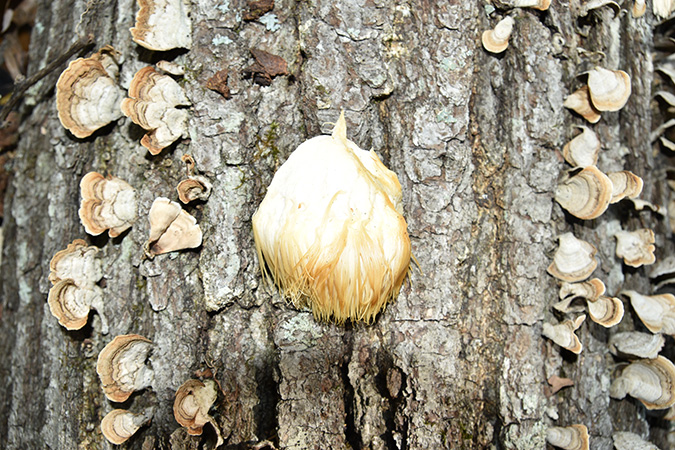
Lion's Mane growing on an oak tree

Wandering through Virginia’s Blue Ridge Mountains this fall, I came across a real delicacy – a lion’s mane. This white, globe-shaped mushroom (with yellow “spines” hanging down) immediately found a place in my daypack and that evening found its way into a frittata that my wife Elaine prepared.

My mushroom mentor, Jeff Huffman of Roanoke, Virginia, regards lion’s mane as a choice edible and describes the fungi as having a seafood texture, which is understandable as many fungi fanciers say Hericium erinaceus possesses a slight seafood flavor of perhaps shrimp or lobster. Huffman adds that lion’s mane can be found in our mountains from late summer through late autumn, especially if the season has been mild.

This mushroom also has been associated with many health benefits as natural food stores often sell an extract of it as a tonic. For example, lion’s mane is reputed to be an antioxidant and to improve heart health as well as cognitive ability. So be sure to check the sides of our region’s hardwoods this fall, and you may just encounter a real prize.


Bruce and Elaine Ingram will profile a different wild edible every month. For more information on their book Living the Locavore Lifestyle, contact them at bruceingramoutdoors@gmail.com


You Might Also Like:

©Steven Reinhold

Fueling Adventure

Lee “Natty” Trebotich transforms wild plants and outdoor know-how into unique experiences worth savoring.
Grandmaw’s Pepperoni Roll

Mountaineers Are Always Free!

The Mountain State’s signature snack—just the way Grandmaw made it.
The SMith House food

Buttermilk Fried Chicken Meets Georgia Gold 

Now in its fourth generation of ownership, The Smith House in Dahlonega remains closely tied to the state’s gold-mining history.
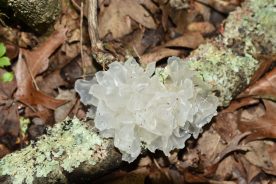
White jelly snow fungus growing in the author’s Botetourt County, Virginia woodlot.

May’s Wild Edible: White Jelly Snow Fungus

“Pass the fungus,” is not common dinnertime conversation in the Blue Ridge Mountains region, but that’s because folks perhaps have not heard of the white jelly snow fungus.
Owner Jennifer Hughes is a constant and comforting presence at Elizabethton’s City Market.

Connecting a Community Through Chicken Salad and Chocolate Pie

City Market in East Tennessee has always stepped up to take care of its neighbors.
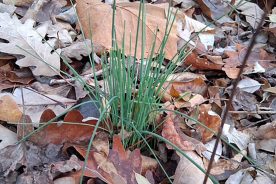
Wild garlic growing in Fayette County, West Virginia.

April’s Wild Edible: Wild Garlic

Fayette County, West Virginia’s Mitchell Dech is one of my foraging mentors, and when he wants me to try an edible new to me … I’m ready to learn about it.
The Giovanni is an Italian-American creation born in West Virginia.

Discovering the West Virginia Giovanni

This flavorful sandwich is a product of the rich Italian heritage of the Mountain State.
A May apple in bloom in Southwest Virginia.

March’s Wild Edible: May Apple

Sometime this month in the Blue Ridge Mountains, one of these highlands’ signature spring plants will ease from the soil … the May apple (Podophyllum peltatum).
e1b70596-05c8-11f1-92e0-1248ae80e59d-3-2026rueanemone--credit-Joe-Cook

March’s Mountain Wildflower: Rue Anemone

A member of the buttercup family and found in the open woodlands, rue anemone (Thalictrum thalictroides) has long, thin stems that tremble in the slightest of winds—prompting its other common name, windflower.
Pokeweed growing in Floyd County, Virginia.

January’s Wild Edible: Pokeweed

Pokeweed is one of the wild plants that is most associated with the Blue Ridge Region.