Skip to content

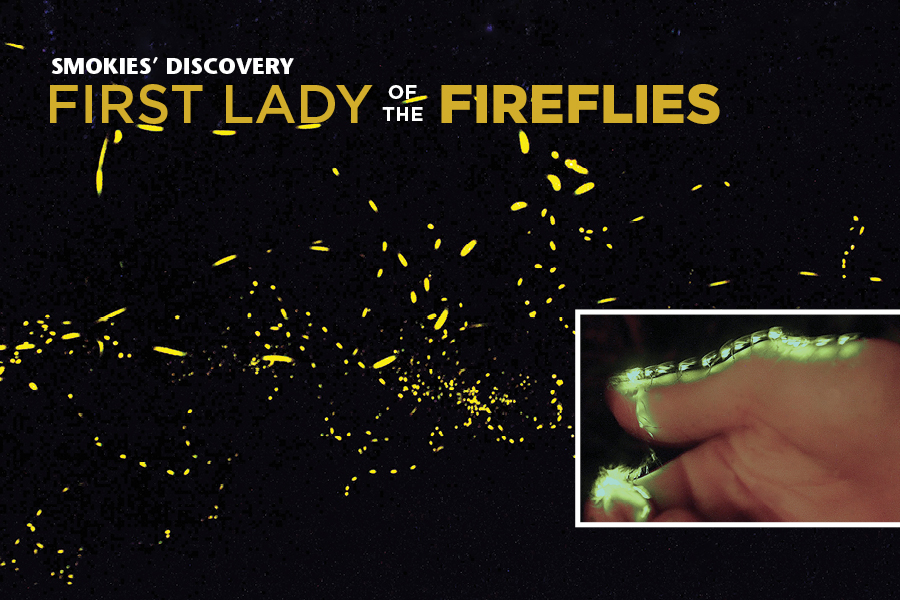
Lynn Faust spent her childhood summers marveling at spectacular displays of fireflies from the porch of a rustic family cabin in the Great Smoky Mountains National Park.
“There was no phone, no TV, just nature,” says the spry 64-year-old, recalling the vanished Elkmont vacation community. “You’d spend the day playing in creeks, climbing trees, hiking, and after dinner everybody would get together on the porch to watch the lightning bugs.”
The memories were some of Faust’s first and fondest. But like all kids, she grew up. Attended the University of Tennessee and studied forensic anthropology. Spent three years circumnavigating the globe via sailboat. Married. Became a loving mother of three children. Helped manage a bustling family farm in Knoxville, Tennessee. Fireflies were but a blip on the early-summer radar.

But in 1991 something peculiar happened, something that would change her life forever.
“I’m flipping through a copy of Science Magazine when I see this photo of a tree in Malaysia just lit up with fireflies,” she says. Intrigued, she read on. The article profiled a species that flashed in synchrony. A renowned scientist stated no such bugs existed in the Western Hemisphere.
Faust was dumbfounded. In Elkmont, the fireflies had not only been especially bright, they’d followed a pattern. She tracked down an address and wrote the scientist a letter.
“It’s a complex synchrony, so I drew up this musical score using four or five little fireflies to try and explain it,” she says. Like sending signals via Morse code, male Smoky Mountain fireflies attract their mates by “completing a sequence of flashes, going dark for six seconds, and repeating.”
The scientist responded. Though skeptical, he was impressed by the clarity of Faust’s description. A visit was scheduled for the following June.
By the spring of 1992 the Elkmont of Faust’s childhood was gone. Appropriated by the park, its 70-plus cabins were slated to be demolished (to make room for a campground). Returning was bittersweet—though mournful of the loss, the prospect of a groundbreaking discovery was thrilling.
“I ride up there with these two scientists and it starts getting dark and I have to sort of coax them out the van,” recalls Faust with a laugh. As academic researchers, the two spent most of their time in labs. “They were from the city; they were terrified of bears and snakes!”
Night falls and the fireflies emerge. But their flashes appear random. The men scoff, grumble.
“It’s 9:30 and I’m getting really nervous,” Faust remembers. “I’m questioning myself, like, ‘Am I crazy? Did I make this up?’”
Thirty minutes pass. Nothing. Then, voila, the bugs have warmed up: The real show begins.
“Suddenly the men are running around with their instruments, crying out for joy,” says Faust. Photinus carolinus was North America’s first synchronous species of firefly. (And later proved to be the largest such population in the world.) “It was a magical moment,” Faust adds. “It absolutely changed my life.”
In the 25 years since then, Faust has become a global authority on bioluminescent bugs.
She’s partnered with scientists and conservationists to establish the yearly Elkmont show as a nationally treasured event. Helped identify dozens of new species throughout the world. Published more than 30 scientific papers (co-authoring countless others). And served as a consultant for multiple documentaries—including projects with the BBC’s Sir David Attenborough.
But Faust says her greatest accomplishment is compiling what enthusiasts affectionately refer to as their Bible of Lightning-Bugs.”
“The idea for a guidebook came in the early 2000s, when I visited my local library and discovered there were no books about fireflies,” she explains. Sure, there were scientific papers. But she was looking for an Audubon-style guide for hobbyists.
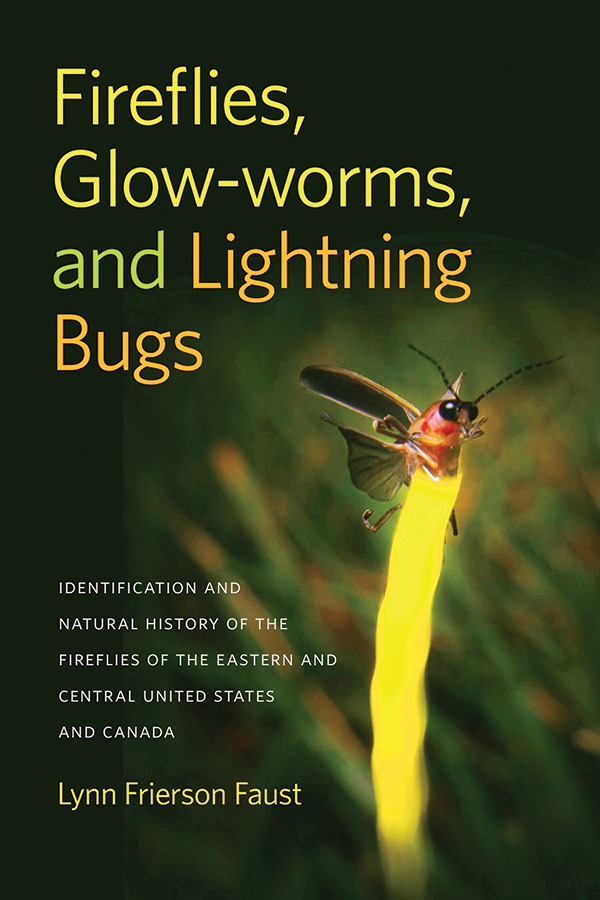
“Fireflies, Glow-worms, and Lightning Bugs” was published in 2017. The book took a decade to write and carried Faust through eastern and central North America to document the habitats, characteristics and behaviors of more than 75 species of flashers.
“It’s like a hobby gone wild,” she chuckles. Faust now receives upward of 3,000 requests for help with identification each year. “But that tells me people are getting excited about this,” she explains. “That gives me a sense of accomplishment; it tells me I’m on the right track.”
Looking to the future, Faust hopes to pen additional guidebooks and continue her work helping to identify new species (there are currently about 2,000 worldwide).
“This is a niche field and there’s so much we don’t know,” she says. “At heart, I’m still that little girl sitting out in the woods on a porch in Tennessee. I just want to share that joy.”
END OF PREVIEW
The story above appears in our Jan/Feb. 2019 issue.