Skip to content


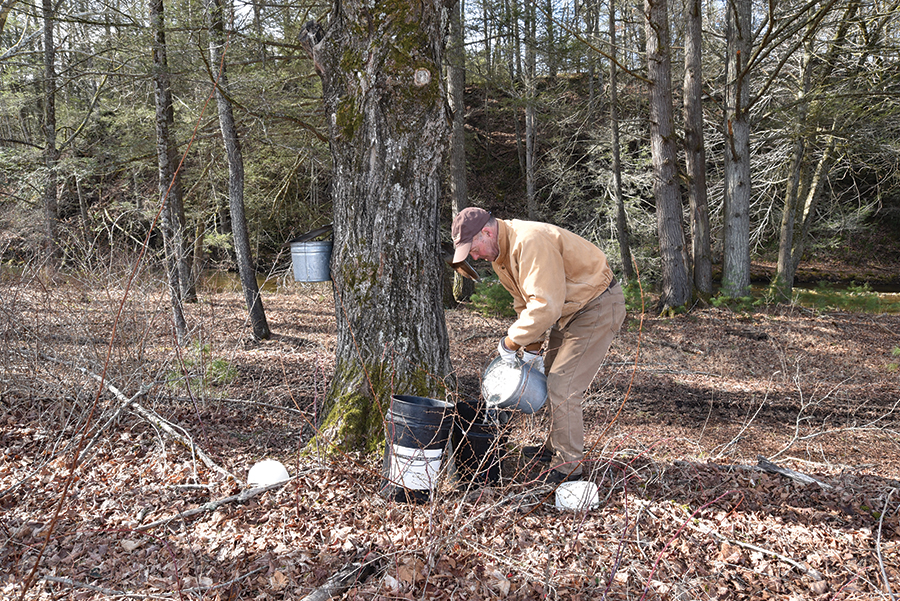
West Virginian Bob Sheets has stuck with the old ways—well, the 20th-century ways—of creating maple sweetness.
Photo Above: Sheets gathering sugar maple sap from a neighbor’s farm.
Photos Courtesy of Bob Ingram.
We arrive at Bob Sheets’ 180-acre family farm just after 8 a.m., but the 74-year-old retired teacher has already been laboring for some three hours. The time is a mid-March Saturday in this mountain valley in Pocahontas County, West Virginia, and that means at least two things: it’s maple syrup season and winter still reigns… the temperature just shy of 25 degrees.

We find Sheets in his sugar shack, and he has just finished sliding several yard-plus-long slabs of wood into the brick arch under a 10-foot-long welded, sheet metal flat pan.
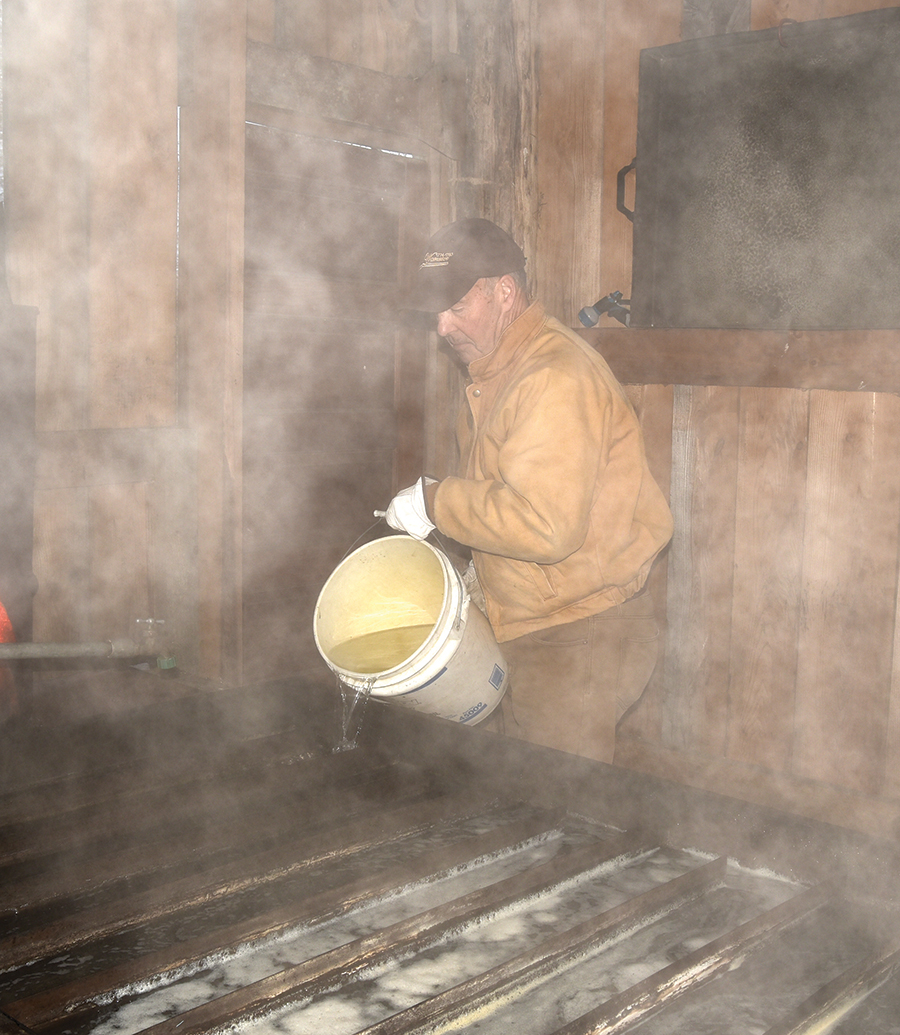
“Any kind of wood will do, but pine is the worst because it burns so quickly, and black locust is the best because it holds heat for a long time,” he explains.
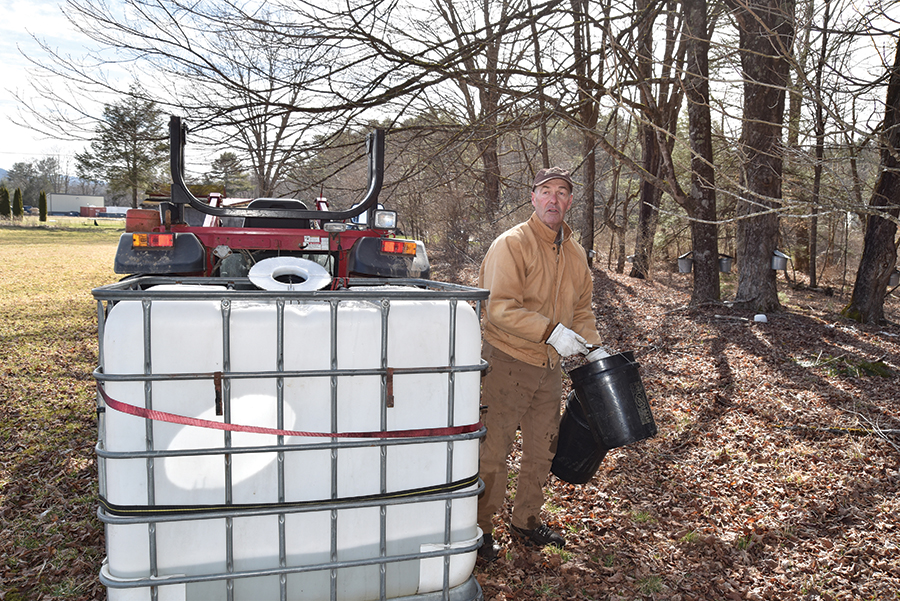
Steam and the sweet aroma of maple syrup being created both permeate the air within the small wood building. Sheets then goes outside to his tractor where a massive white container holds dozens of gallons of sugar maple sap. He drains several of those gallons into white buckets, returns inside, and adds them to the upper end of the flat pan.
“Maple syrup was one of the first trade items between the Native Americans and the early colonialists when they settled this area in the 1700s,” Sheets explains. “Native Americans poured sugar maple sap into hollowed-out logs and allowed the sap to evaporate and freeze, and then they had their sweetener. The natives traded their syrup for the settlers’ weapons and blankets.
“The settlers eventually figured out that by using cast iron pots, they could also boil down sap, and that’s how syrup was created well into the 1800s. The problem is, though, that those pots don’t have a big evaporative surface, so the syrup making process doesn’t go very fast. And that fact, and the Industrial Revolution, is what led to the welded flat plan being invented in the late 1800s. My flat pan was built in the 1930s, and I coveted it for a long time before I was finally able to buy it from a neighbor who decided to get out of the syrup making business.”
Huge stainless steel pans, in turn, gradually replaced the flat pan boiling process (also known as open pan) during the 20th century, further accelerating the syrup making process. But Sheets balked at that modernizing step.
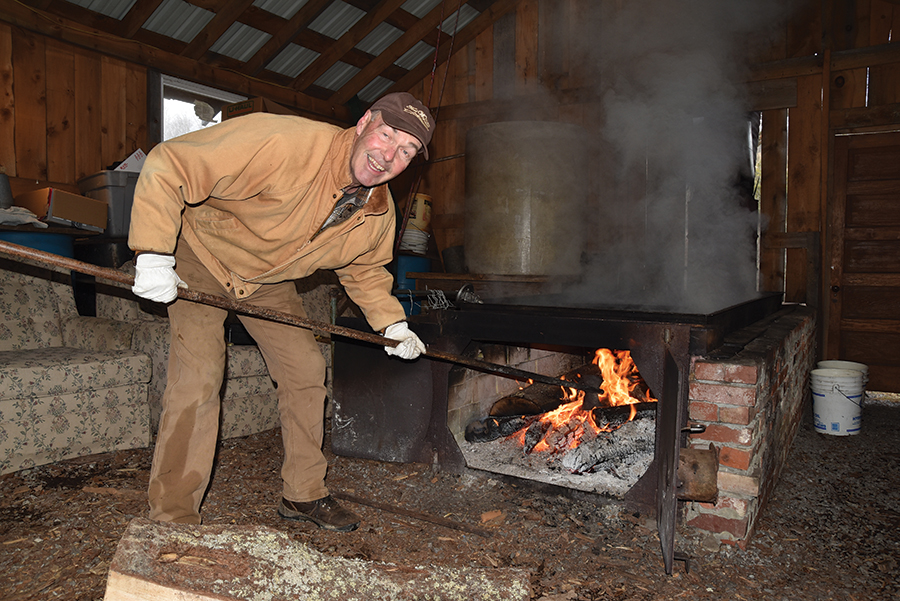
“Just as high-quality wine can’t be made quickly, you can’t create high quality sugar maple syrup too quickly,” he says. “You’re just not boiling away water. You’re allowing a complex chemical process to take place. If you speed up that process too much, the quality of the syrup suffers. After all, you’re boiling down 200 gallons of sap to get five gallons of syrup.”
To emphasize that belief, Sheets shoves another slab into the arch and beckons us to follow him up a hill to his house. There, he holds a container of his maple syrup up to the light and asks us to note the liquid’s color, which is much darker than the Vermont maple syrup we are used to. Sheets’ wife, Elaine, has baked homemade bread, and we drizzle the dark brown syrup onto a slice. The taste is different from the Vermont syrup, too…richer, nuttier… perhaps?
We return to the shed and note that the temperature gauge at the lower end of the flat pan (which has a drop of about ½ to ¾ of an inch from top to bottom) has risen two degrees from 198 to 200. Earlier, Sheets had told us that the maple syrup will be ready when the temperature gauge registers 213 to 214 degrees. So naturally, we think, it won’t be long on this Saturday morning before we can sample freshly made syrup.
“This batch won’t be ready before sometime Monday evening,” Sheets laughs in response. “This evening, I’ll bank the arch with slabs of black locust. The gauge will probably register around 90 degrees when I come here early Sunday morning. Meanwhile, we need to go get some more sap.”
We leave the hollow and head for a neighboring farm where Sheets has tapped several dozen 100-year-old sugar maples. He explains that for tapping rights, he will give the landowner several jars of his maple syrup. With the tractor’s white container refilled, we return to the farm and Sheets returns to the arch.
Before heading home, we take advantage of the all-day breakfast being served in the shelter next to the sugar shack. The open-pan syrup goes great with the buckwheat pancakes and homemade biscuits.
For more information: pocahontascountywv.com/2024-maple-days
The story above first appeared in our March / April 2024 issue.