Skip to content


As Earth Day approaches on April 22, we salute people dedicating their lives to the cause year-round.
There are a lot of good things happening in the Blue Ridge region. From preserving habitat for imperiled birds to protecting old-growth forests to increasing access to nature, there are a number of individuals championing local communities and working to protect the biological diversity of the southern Appalachians. Here are just a few of the region’s green heroes:

© Erin McCombs
Erin Singer McCombs, Georgia/North Carolina/Tennessee: Southeast Conservation Director at American Rivers
The Southern Appalachians are home to the most biodiverse rivers and streams on the planet. And, many of these waterways also have a rich history—and longstanding connection to local communities, and in the case of Tribal Nations, sometimes dating back thousands of years. But, these waterways face a multitude of threats—including expanding development, polluted runoff and sediment-trapping dams that can harm wildlife. While almost every American lives within just a mile of a river or stream, access to these waterways often isn’t equitable.

As Southeast Conservation Director at American Rivers, Erin Singer McCombs is working to both protect Southeast’s exceptionally biodiverse waterways and promote equitable access. An avid river-snorkeler and longtime admirer of the aquatic diversity of southern Appalachians, McCombs is supporting one of the organization’s top national priorities—removing the Oconaluftee River’s Ela Dam. In 2023, American Rivers joined a regional coalition led by the Eastern Band of Cherokee Indians to advocate for the removal of the century-old dam—a move that would open up more than 549 miles of aquatic habitat. americanrivers.org

Gerry Seavo James, Kentucky: Deputy Campaign Director of Sierra Club Outdoors for All Campaign and Founder of Outdoor Recreation Design Lab

© AdventureCrew.org
Gerry Seavo James has been touting the Bluegrass State as an adventure destination—and encouraging others to get outdoors—for more than a decade. James began seeking out Kentucky’s natural wonders and documenting his adventures as a college student at Campbellsville University, founding the Explore Kentucky Initiative in 2013—a social media campaign that later evolved into an organization helping counties across the state showcase their natural assets. James is also working to make our spaces more inclusive.
An expert paddler, James in 2020 also helped create the American Canoe Association’s Diversity, Equity and Inclusion working group. Nowadays, he continues to advocate for equitable access to outdoor spaces for all Americans as the deputy director for the Sierra Club’s Outdoors for All Campaign, an initiative that aims to secure federal support for programs expanding access to nature for youth nationwide. sierraclub.org/outdoors-for-all

Michael Brown, South Carolina: Executive Director of Sustaining Way
Based in Greenville’s historically diverse Nicholtown Community, Sustaining Way has been fostering sustainable neighborhoods—and tackling challenges like energy affordability and access to fresh food—since 2012.
With expertise that includes beekeeping and sustainable agriculture, Michael Brown has been a part of the organization for more than five years, becoming executive director in 2021—shortly after opening his own urban farm, Roots of Life. Under Brown’s guidance, the organization’s focus has included tackling the persistence of food deserts and food swamps, that is, foodscapes where it’s challenging to find nutritious foods. One response, has been the launch of a Backyard Garden Program, offering hands-on training and equipment for households in Nicholtown. Reducing the energy burden is another top priority. In 2022, the organization kicked off the ongoing Energy Home Visit Program, an initiative that continues to offer energy assessments and basic, efficiency-improving upgrades for residents free of charge. sustainingway.org

© Sustaining Way
Hannah Furgiuele, North Carolina: Program Director at Forest Keeper

© Forest Keeper
Old-growth forests are scarce in the Southeast. Nationwide, less than 0.1% of America’s old-growth forests are still standing. Fortunately, there are a few precious patches of old-growth forest stashed away in the Blue Ridge—and people working to protect these ancient woodlands, including Hannah Furgiuele.
Program director at Forest Keeper, Furgiuele grew up exploring the southern Appalachians, and has supported initiatives aiming to protect some of the wildest places remaining in the Nantahala and Pisgah national forests—including the I Heart Craggy campaign, an effort to create North Carolina’s first National Scenic Area, the so-called Craggy National Scenic Area. A skilled musician and storyteller, Furgiuele has also documented the rich musical history of the southern Blue Ridge. Her first documentary “A Mighty Fine Memory,” profiled fiddler Roger Howell, while her second project, “Bluff Mountain: The Rallying Cry,” explores the roots of western North Carolina’s Bluff Mountain Music Festival—born from a community effort to protect Bluff Mountain from logging. forestkeeper.org

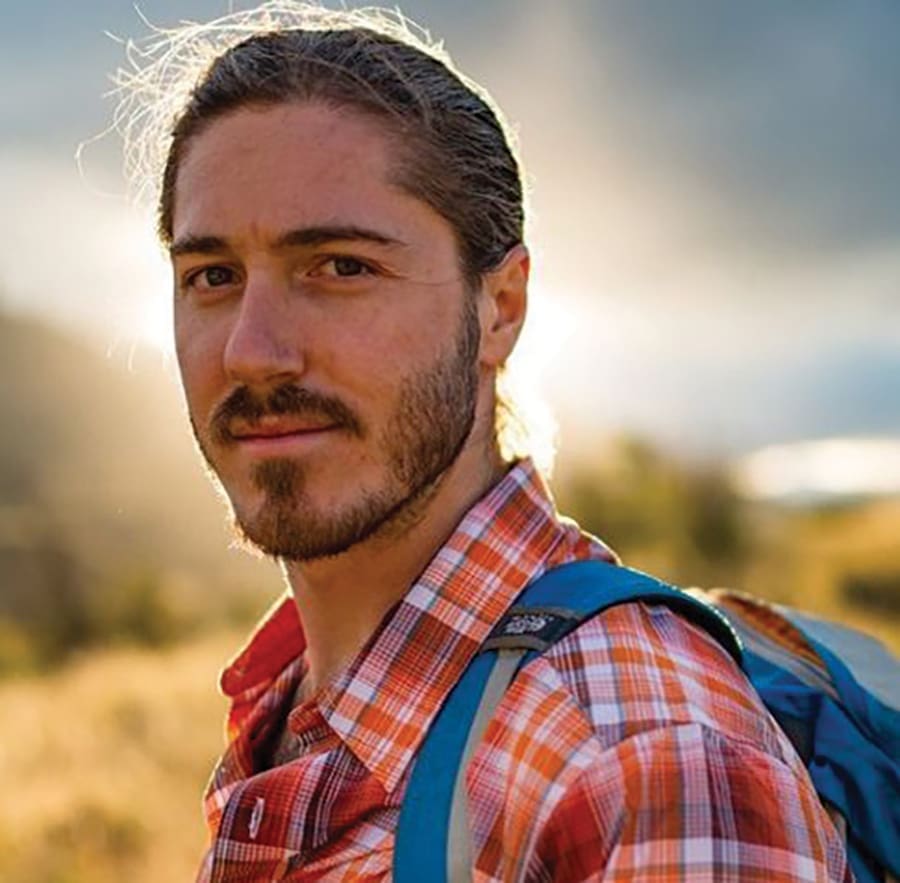
Dylan Jones, West Virginia: Editor-in-Chief of Highland Outdoors
© Highland Outdoors
Writer and photographer Dylan Jones has been savoring West Virginia’s wildest places for more than 30 years. A lifelong outdoor lover, Jones took over as managing editor of Highland Outdoors in 2018—the only independent magazine dedicated solely to the Mountain State.
Released four times a year, the publication profiles outdoor leaders and shines a spotlight on West Virginia’s rich biological diversity, burgeoning outdoor industry and community conservation efforts.
Dispelling antiquated stereotypes sometimes attached to the Mountain State and unpacking some of the most critical environmental issues facing West Virginia, this year, for instance, the publication has documented the aquatic diversity of the state’s waterways, detailed a quest to find the state’s rarest native orchids and delved into the reasons for the loss of red spruce forests in West Virginia’s rugged highlands. highland-outdoors.com

© Highland Outdoors
October Greenfield, Virginia: Virginia Grassland Birds Initiative Co-coordinator, Habitat Restoration Coordinator at Piedmont Environmental Council

Over the last half century, more than 80% of America’s grasslands have disappeared. And, in the Southeast, the loss has been even more extreme—only about 10% of native grasslands remain, and the majority are privately owned. As the country’s grasslands continue to disappear, so do the birds relying on them. Since 1970, over half of America’s population of grasslands birds has disappeared. In Virginia, more than 50 different species rely on grasslands—and the loss of habitat has meant species like bobolinks, eastern meadowlarks and Northern bobwhite quail have virtually disappeared.
However, the Virginia Grassland Bird Initiative—a partnership among Virginia Working Landscapes, The Piedmont Environmental Council, the American Farmland Trust and Quail Forever—is prioritizing these vanishing species. Wildlife habitat restoration coordinator for the Piedmont Environmental Council and co-coordinator for the Virginia Grassland Bird Initiative, October Greenfield is one of the experts facilitating the initiative. The South Dakota native has a background researching grassland species, including barn owls and American kestrels—and now helps protect critical habitat for these birds in 16 counties in Virginia. The initiative offers farmers a financial incentive for adopting simple bird-friendly practices, like delayed haying. In the project’s inaugural year, 10 farmers participated—dedicating 500 acres of pastoral land. In 2023, 19 new farms were added to the roster, providing an additional 1,000 acres of habitat. pecva.org

©October Greenfield
Kathleen Gibi, Tennessee/Virginia: Executive Director of Keep the Tennessee River Beautiful

©Courtesy of Kathleen Gibi
Tennessee claims more than 60,000 miles of rivers and streams—a lot of water to protect! Since 2016, Keep the Tennessee River Beautiful has been doing just that—organizing clean-up events along the Tennessee River and its tributaries, while also drawing attention to some of the key issues affecting the state’s waterways, particularly the impact of storm water runoff, which can wash litter and pollutants into rivers and streams.
Kathleen Gibi has been leading the organization since 2019—and at the time, also served as the non-profit’s only boat captain, piloting a 26-foot workboat nicknamed The Tennessee. Since taking the helm, Gibi has worked with regional partners and volunteers to coordinate the removal of more than 600,000 pounds of trash from the Tennessee River watershed—with over 205,000 pounds of litter hauled out of the state waterways this year alone. Under Gibi’s leadership, the non-profit also installed 18 Seabins along the Tennessee Rivers and its tributaries in 2022—devices that capture litter floating on the surface of water and filter out other contaminants, including gasoline, oil and microplastics. Cumulatively, the litter-capturing Seabins have the potential to remove more than 54,000 pounds of trash from regional waterways every year. keeptnriverbeautiful.org
The story above first appeared in our March / April 2024 issue.