Skip to content


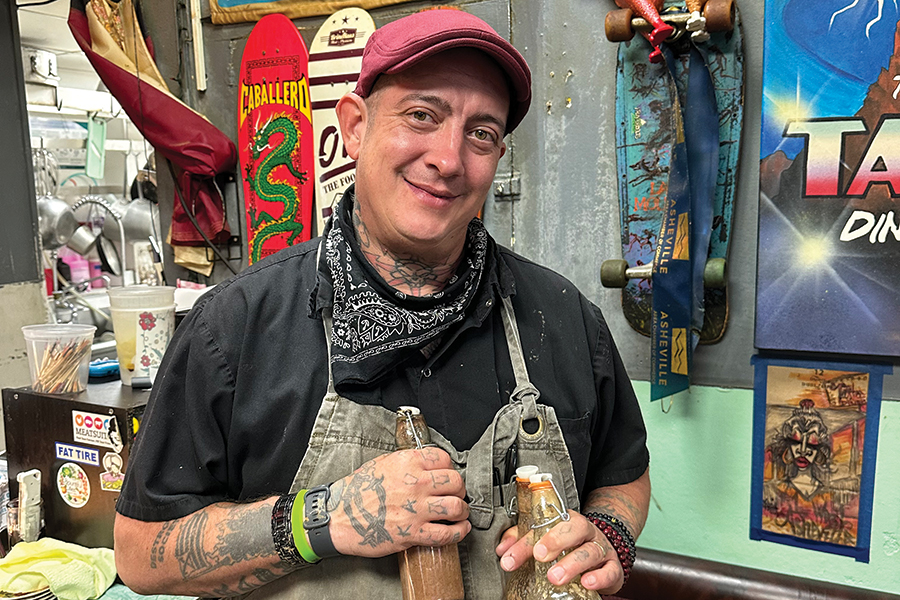
The diner is an integral piece of Asheville history and testament to one man’s determination.
Photo Above: Goff takes great pride in making his own hot sauce, and every batch is different.
Photos Courtesy of Fred Sauceman.
From the time he left home at the age of 15 until he became a father 11 years later, Steve Goff slept under bridges. He hopped trains. He battled addiction.

A native of the Bay Area of northern California, he moved with his family when he was very young to Greenville, South Carolina. When he decided to abandon his parents’ home, he headed for the closest big city, Atlanta. From there, he hopped his first train, all the way to Arizona.
Steve Goff has known the streets of New Orleans, San Francisco, Seattle, Portland. He was fined $2,000 for sleeping under a bridge in San Diego when the authorities knew he had little more than a few coins to his name.
“I’d wake up, obtain food, obtain beer, go to sleep and then do it all over again,” he recalls. “You’re dehumanized 24/7.”
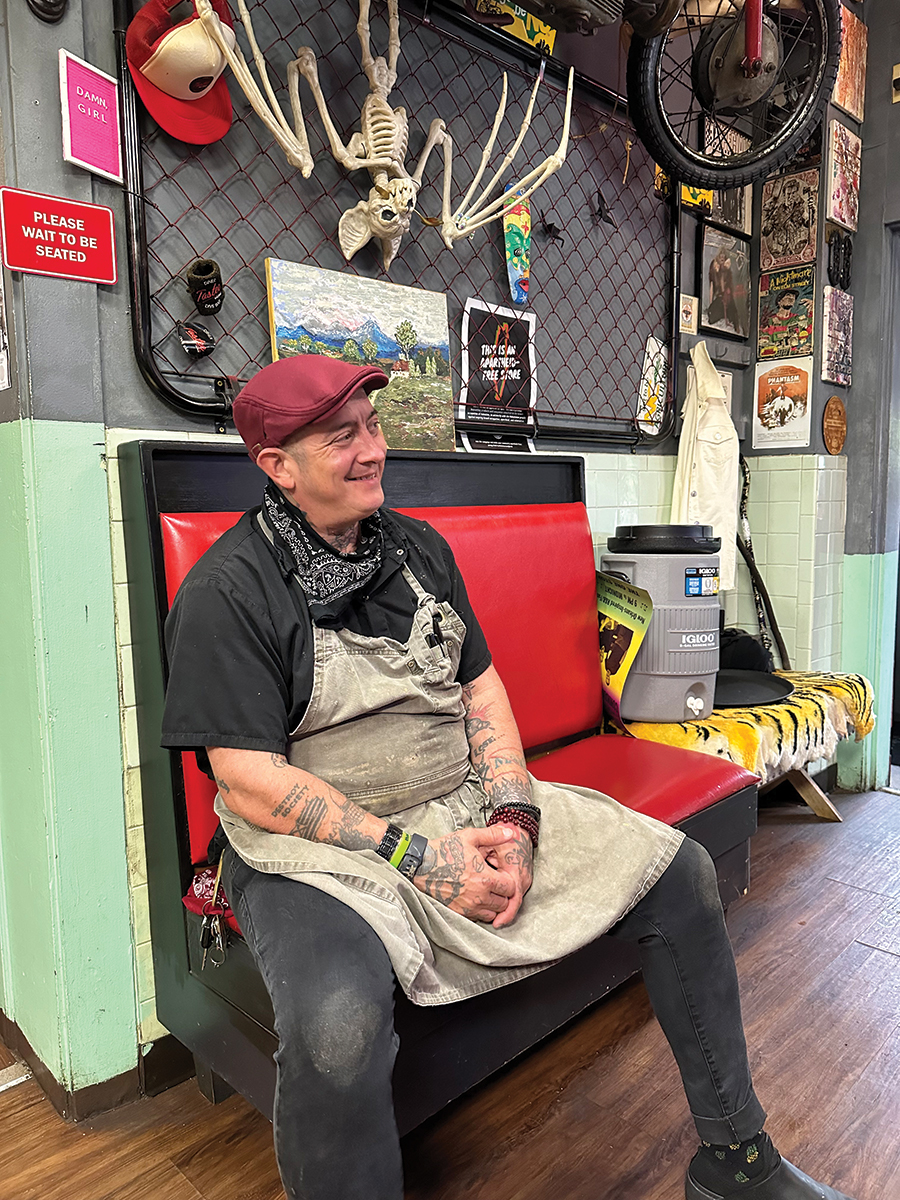
It was in New Orleans where his life began to change, when some “tattooed chefs,” as he describes them, convinced him that he would be a good candidate for culinary school. They were right.
Goff enrolled at Asheville-Buncombe Technical Community College in North Carolina, eventually completing a degree in culinary arts and then a certificate in baking and pastry arts.
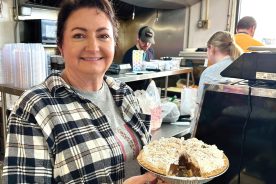
At the end of the spring term this year, he was invited back, to judge the seven-course meals prepared by members of the graduating class. He didn’t have to drive far. Steve Goff is a culinary celebrity in Asheville as the owner of the Tastee Diner on the city’s west side.
“I’m super tight with A-B Tech,” he tells us, as he recounts the ups and downs of his life story.
In a 104-year-old building that originally housed a garage, Goff dishes up Southern favorites like biscuits and gravy, fried bologna sandwiches, country fried steak and pot roast. Reading his menus, you immediately understand that Goff has fun with food. The I-26 Pile Up consists of pulled pork, macaroni and cheese, collards, mashed potatoes and brown gravy.
Because of the life he has led, he says he doesn’t have any “granny’s knee” stories about learning how to cook Southern. But his Western North Carolina friends say he is as Southern as they are now.
“I’ve finally embraced my Southernness,” he adds, pointing to the smoked bologna sandwich with pimiento cheese, tomatoes and lettuce from the “Meaty Handhelds” section of his very broad menu. The sandwich is enclosed not in brioche bread or croissants. Goff’s bread of choice is Texas toast.
“There are five ingredients that, to me, represent North Carolina or Appalachia, and they are pork, collards, sweet potatoes, peanuts and sorghum,” he proclaims.
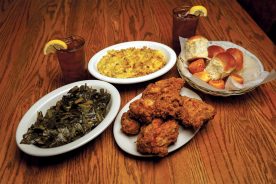
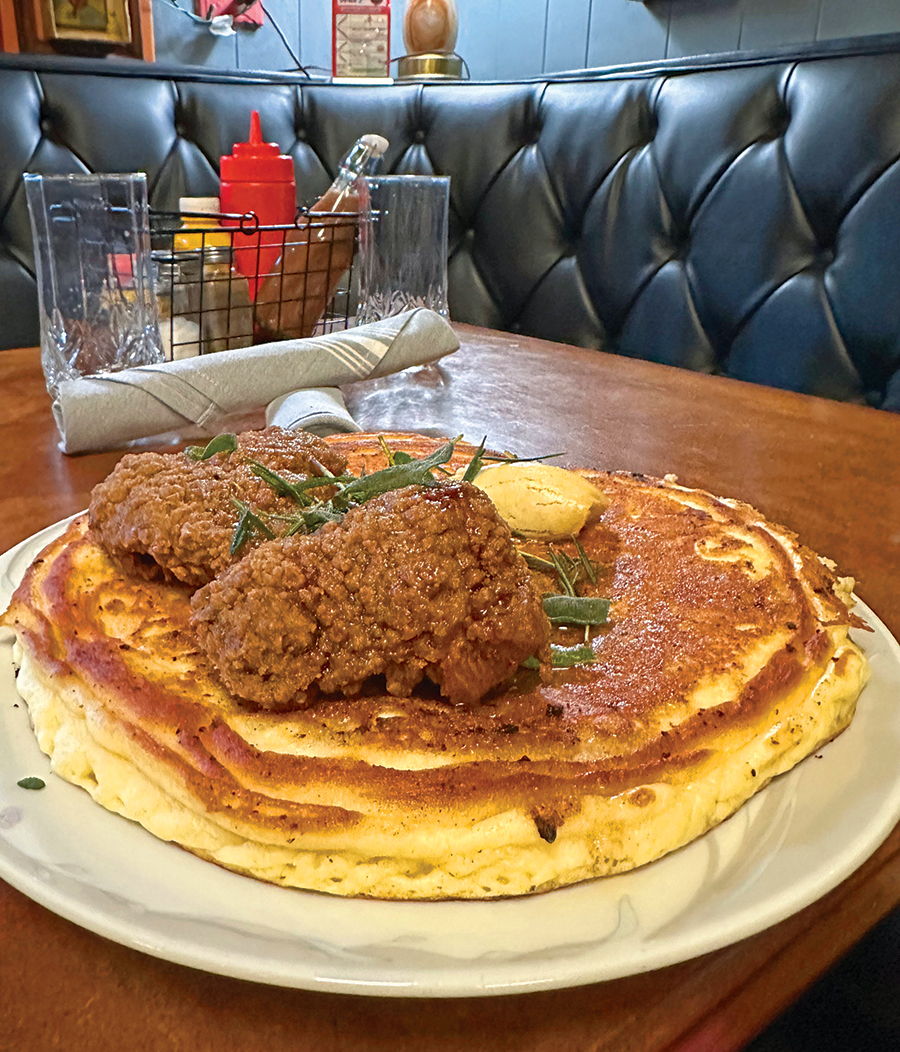
Goff adds butter to sorghum from Muddy Pond in Tennessee to make a topping for the Tastee Diner’s fried chicken and pancake. It’s typical of how he modifies classic dishes using regional ingredients. The chicken is a boneless thigh atop a pancake that more than covers a dinner plate and is about an inch thick.
“With the more traditional chicken and waffles, the waffle is too hard and doesn’t absorb enough stuff,” Goff says. “I want my chicken grease to be absorbed in there, and the pancake is a great vehicle for that since it’s texturally pleasing with your crunch and your soft.”
A favorite among the Tastee Diner staff is the Shipley Farms Beef Chopped Cheese, a sprawling sandwich made with local beef and dressed with American cheese, mornay sauce and onions.
The sweet tea is local, too, from the Asheville Tea Company, and the restaurant’s coffee comes from just up the street at Cooperative Coffee Roasters.
There are hot-sauce bottles on every table. They are unlabeled because the sauces do not come from a commercial producer. They are made at the restaurant, and, as our server told us, no two are the same, since the additions to the pepper mash could be watermelons, cucumbers or any fruit left over from a catering event that might create a sweet and heat balance.
Outside, accessible from the sidewalk, is a reminder of Goff’s former life on the streets. The “give box” is a wooden structure with shelves.
“At the end of the night, any food left over is placed in it,” Goff says. “Sometimes I’ll make a can run. People drop off cans. It’s a neighborhood thing. They’ll put blankets in there when it’s cold—anything that can be used by people on the streets. We have a high homeless population right here on Haywood Road.”
Knowing that restaurant employees across the city don’t get off work until midnight or after, Goff stays open until three o’clock in the morning to accommodate them.
This is a restaurant with a “dive vibe,” overseen by a photograph of famed French culinary artist Auguste Escoffier on the dining room wall and perfumed by smoked chicken wings. But more importantly, it’s a restaurant with a deep social conscience and a mission to improve the world around it, guided by a punk rock fan and ex-addict, who tells his story openly, in the hope that it can be an inspiration for other people.
Fred and Jill Sauceman study and celebrate the foodways of Appalachia and the South from their home base in Johnson City, Tennessee.
The story above first appeared in our July / August 2024 issue.