Skip to content


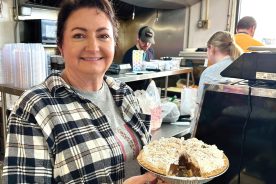
Folks line up outside the door for fried pies at the Lord’s Acre sale in Hiltons, Virginia. Fred Sauceman
This end-of-September Lord’s Acre Sale celebrates the bounty of the fall season in “the buckle of the Fried Pie Belt.”

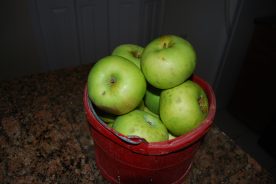
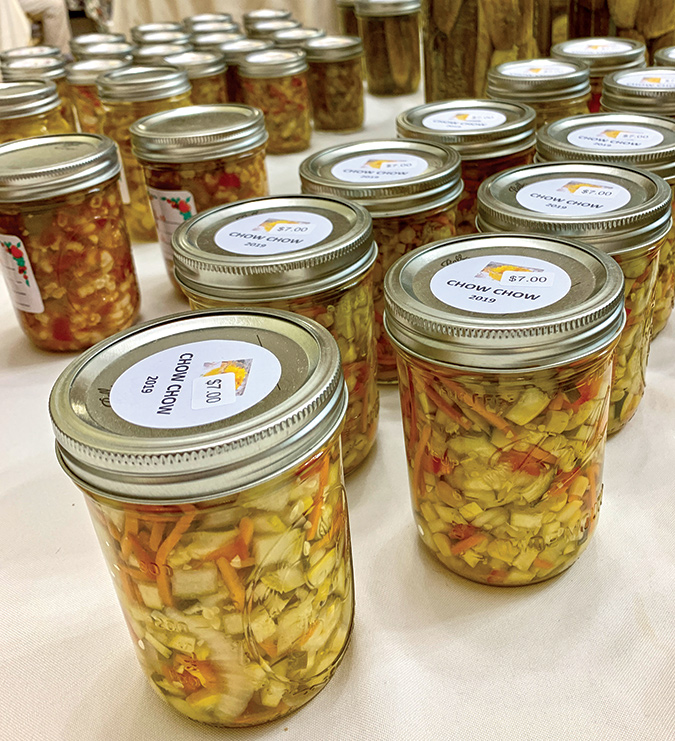
The boiling of apple butter in country churchyards and the canning of the garden-clearing relish called chow-chow in mountain kitchens are sure signs of the coming of fall. In the Scott County, Virginia, community of Hiltons, canning and preserving the harvest are timeless rituals. And they’re high art.
When items like apple butter, chow-chow and pickled yellow crook-necked squash appear at Hiltons Memorial United Methodist Church during the annual Lord’s Acre Sale in late September, the entire community turns out.

Lord’s Acre sales often double as harvest festivals. And like many other hallmarks of Southern culture, they grew out of difficult times.
In the spring of 2013, the Georgia Historical Society, the Bluffton, Georgia, City Council and the Bluffton Baptist Church dedicated a historical marker in Clay County, recognizing the Lord’s Acre movement. The marker commemorates the time back in 1922 when the Reverend H.M. Melton of Bluffton Baptist Church challenged his congregation to set aside one acre of farmland and donate the proceeds from crops raised there to the church. Seven farmers did so. Not only did their farmland thrive, but it seemed impervious to the boll weevil that infested the county in 1923.
The publication of a Time magazine article in 1924 and the creation of the Lord’s Acre Plan of the Farmers’ Federation of North Carolina helped spread the Lord’s Acre movement. The concept is now worldwide, growing beyond farmland to include projects of donated time and service, and sales featuring homemade goods, arts and crafts.
The annual sale at Hiltons Memorial falls squarely within that tradition. Apple butter, chow-chow, canned green tomatoes and many other items are sold for a higher cause.
“Our proceeds go strictly to pay off this new building, this new Life Center that we have,” says church member Andrea Roberts Lawson, an elementary school guidance counselor in Scott County. “The Lord’s Acre team has paid tremendous amounts toward the principal for the Life Center that houses our fellowship hall, Sunday school rooms, and offices.”
Lawson says church members start planning for the sale in January, and in the summer, they start canning and crafting. “It’s a yearlong labor of love,” she adds.
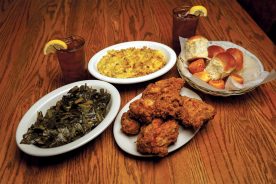
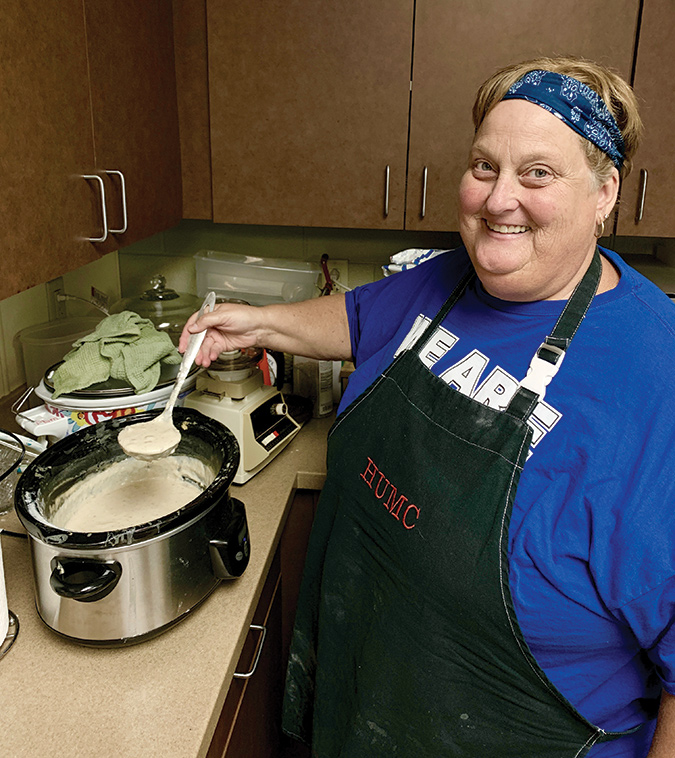
Each church member contributes a special talent, too. For Lawson, it’s making sausage gravy.
“Gravy is our drug of choice here in Hiltons,” she says with a characteristic laugh. “We love our gravy. We’ve sold out today.”
Lawson and a fellow church member put their first skillet on at 6:20 on the last Friday morning in September. By about 10:15, they have made 10 gallons of gravy.
“We start with the grease from Swaggerty’s sausage, then add flour, salt and pepper, and let that brown. I say burn the paste taste off of it,” instructs Lawson.
Lawson adds whole milk, the chopped, cooked sausage, and lots of black pepper. Some people in the region prefer a whiter gravy, but Lawson says she likes hers a little darker. White or brown, “It’s just a way of life here. It’s a lifeline,” she says, as she ladles gravy over a hot biscuit.
For church members Lisa Faust and Carla Spivey, their Lord’s Acre Sale niche is making fried pies.
In the days when some cooks take fried-pie shortcuts using Bisquick or already prepared biscuit dough, Faust and Spivey don’t compromise. Their dough is the real thing.
“This is a dough that we found online,” says Faust. “But it has been fabulous. We love it. It’s got lots of butter in it, so it’s fragile.”
In fact, the pie fryers had to find a cooler room to work with the temperamental dough, which is made a day early and kept cold.
Spivey says the mixture of butter and Crisco creates an especially flaky dough, aided by a little touch of apple cider vinegar.
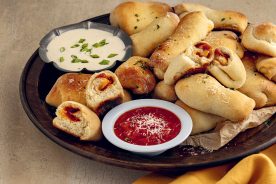
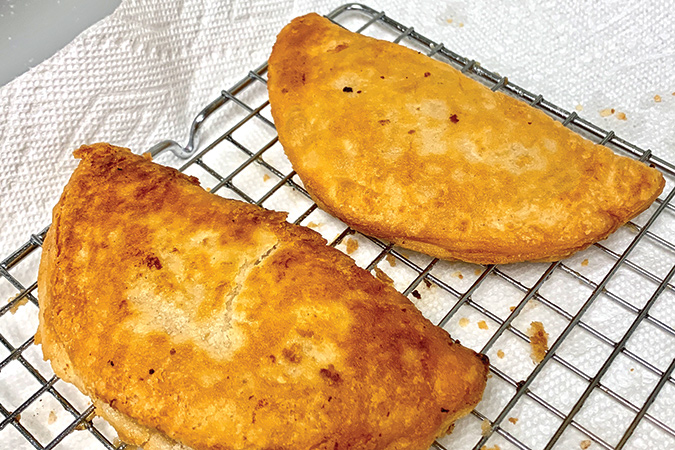
Despite its sensitivity, church members make about 90 batches of dough, enough for 750 fried pies, filled with blueberries, raspberries, apples and peaches. People line up out the door for them.
If there’s a Fried Pie Belt, Scott County, Virginia, is pretty close to the buckle. People in this mountain community know their fried pies, and many still use black-iron skillets to make them. The long lines at the Lord’s Acre Sale are testament to both the talent and the tradition that combine to make a good fried pie. But the taste of a crimped, fruit-filled pie, so hot you almost can’t handle it, isn’t the most compelling reason to attend the sale. Rather, it’s the coming together, especially now, since the 2020 event had to be scrapped because of COVID-19.
“This is the social event of the year in Hiltons, I think,” says Carla Spivey. “But these ladies work so hard.”
Adds Lawson, “This is such a blessing for what comes out of it—seeing people you don’t see often and making new friends. Some of our former pastors come by.”
The flavors of the fall harvest and the fellowship that takes place at Hiltons Memorial are savored and remembered until the next sale comes around. And a building debt is lessened along the way.
For details on this year’s Lord’s Acre Sale, scheduled for Sept. 24-25, 2021, visit hiltonsumc.org/schedule.htm
Jill Sauceman, a native of Hiltons, Virginia, and her husband Fred celebrate and document the foodways of Appalachia and beyond from their home base in Johnson City, Tennessee.
The story above first appeared in our Sept. / Oct. 2021 issue.