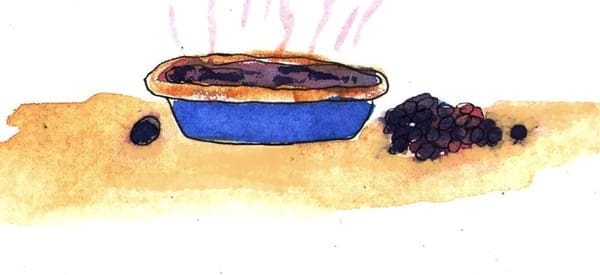
From the Issue: Grape Pie

This grape pie recipe originally appeared in the March/April 2016 issue’s “Singing in the Garden” column by Ginny Neil. You can read her article here.

Grape Pie

The reward of a well-trimmed grapevine will be enough grapes next fall for this delicious pie. Cut this recipe out and save it for then.

Ingredients:

  • 4 cups Concord grapes
  • 1 ½ cups sugar
  • ½ cup flour
  • 2 tsp lemon juice
  • ¾ c Bisquick baking mix
  • pinch salt
  • 9-inch pie shell

Topping:

  • ½ cup oats
  • ½ cup brown sugar
  • ¼ cup flour
  • ¼ cup butter, softened

Boil the grapes and sugar together for 5 minutes, smashing and stirring. Then run this mixture through a food mill to remove the seeds. Add the rest of the pie ingredients and pour into the shell.

Mix the topping ingredients together until they are crumbly and pour on top of the pie.

Bake at 425 degrees for 15-20 minutes, until the topping is a little browned. Cool before serving.

You Might Also Like:

The Giovanni is an Italian-American creation born in West Virginia.

Discovering the West Virginia Giovanni

This flavorful sandwich is a product of the rich Italian heritage of the Mountain State.
Pokeweed growing in Floyd County, Virginia.

January’s Wild Edible: Pokeweed

Pokeweed is one of the wild plants that is most associated with the Blue Ridge Region.
The pawpaw version of Ale-8-One debuted in the summer of 2025, in a limited edition.

Ale-8-One: Welcome to ‘Tropical’ Kentucky

This 124-year-old soft drink company continues to innovate and thrive.
Arkansas Black apples sport an attractive reddish black color.

December’s Blue Ridge Mountain Apple Profile: Arkansas Black

Originating in the 1870s in, obviously, The Natural State, this variety is reputed to be a part of the Winesap family, which includes such esteemed members as the Black Twig, Stayman, and, of course, the Old Fashioned Winesap.
A purple-spored puffball growing in a field in Botetourt County, VA.

December’s Wild Edible: Purple-Spored Puffball

The purple-spored typically grows in this region’s fields, often appearing from October through December and into early January.
The Fork and Plough name reflects the professions of the owners — chef and farmer.

Fork and Plough: Neighborly and Nimble

At this Greenville, South Carolina, eatery, the menu changes literally every day, based on what’s available locally.
The compound, lancelike leaflets of the bitternut are a good identifier.

November’s Wild Edible: Bitternut Hickory

Frankly, this native species to the Blue Ridge mountains comes by its name honestly.
Mullein growing in Ingram's backyard.

October’s Wild Edible: Mullein

Earlier, this year, a lone mullein plant appeared along the fence that encloses my garden, which made me curious about this plant.
An indigo milk cap growing in Botetourt County, Virginia.

September’s Wild Edible: Indigo Milk Caps

When young, indigo milk caps are one of the most stunningly beautiful mushrooms in the Blue Ridge Mountains.
Empanadas at Hemingway’s Cuba are house-made and stuffed with either beef or chicken.

Like Miami but with Mountains

The Asheville, North Carolina, restaurant reflects a life remade in exile.

CALENDAR OF EVENTS