Twist of Fate

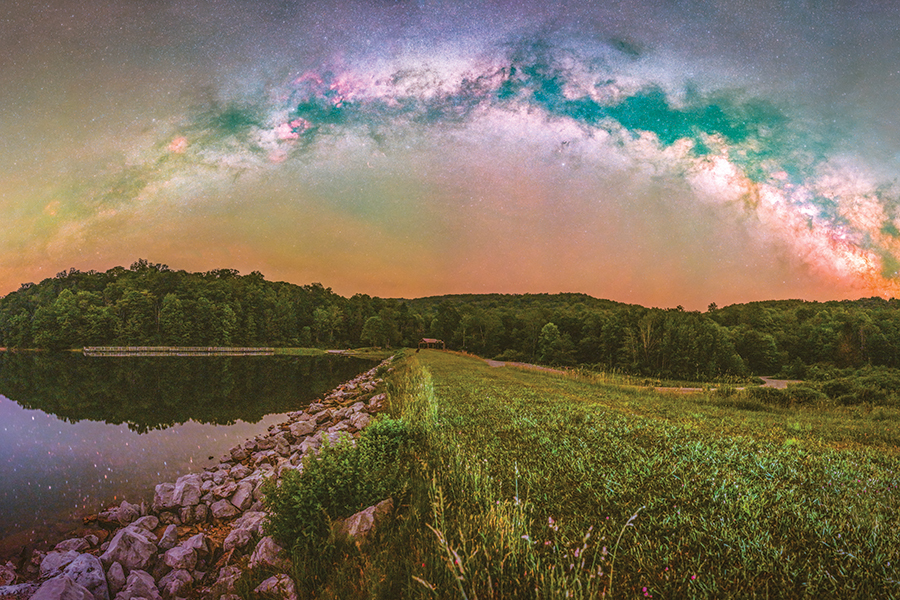
"Summit Lake is at 3,400’ in elevation and the Cranberry Glades Wilderness surround it to create a great place to shoot a springtime Milky Way panorama. North is to left, east at the center and the southern sky is on the right." —Dave Green

A surprise temporary assignment ignited a West Virginia coal miner’s passion for photographing night skies and other wonders.

Photo Above: “Summit Lake is at 3,400’ in elevation and the Cranberry Glades Wilderness surround it to create a great place to shoot a springtime Milky Way panorama. North is to left, east at the center and the southern sky is on the right.” —Dave Green
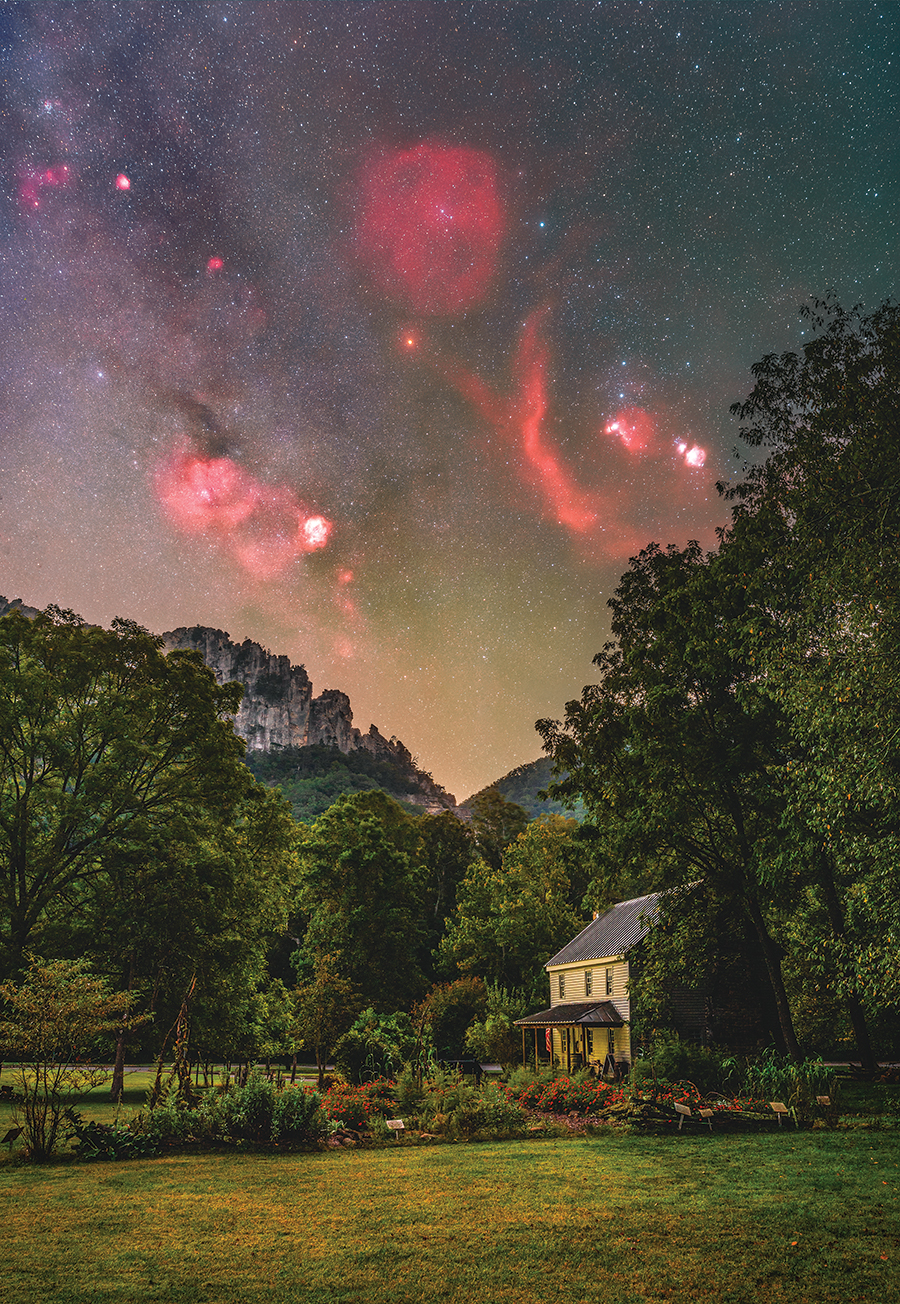
"I’d made every excuse in the world not to go out at 3 a.m., but all the ingredients for an epic landscape photo from the bottom of Seneca Rocks were there: rocky peaks, the old homestead, garden, and trees, the nebulous clouds aligning with it all." —Dave Green
“I’d made every excuse in the world not to go out at 3 a.m., but all the ingredients for an epic landscape photo from the bottom of Seneca Rocks were there: rocky peaks, the old homestead, garden, and trees, the nebulous clouds aligning with it all.” —Dave Green

Dave Green was born near the New River Gorge in Beckley, West Virginia, and grew up exploring its abundant wilderness areas. Most male family members worked for coal mines and he followed in their footsteps at age 21.

Green married, fathered two children, got promoted, was happy enough. Then an interim position introduced him to an unexpected passion.

“I was working as a mine rescue team member and safety instructor (as I still am), and when the staff videographer quit and, for some reason, my boss tells me to fill-in,” laughs Green, now 41. “Well, at that point, I couldn’t have told you how to turn a digital camera on.”

But it was his job and Green took it seriously. He read product manuals, combed online forums, watched hours of YouTube tutorials. Trial-and-error making training and safety videos brought steady improvement.

“I started out terrible, then sucked less as time went on,” says Green. Still, it didn’t take long to “realize this was something I really enjoyed.”

The epiphany led to post-work experiments with new techniques—like hiking with a shutterbug pal into the 17,371-acre Dolly Sods Wilderness to take time-elapsed photos of the night sky. The trip was novel, but capturing the smoky, galactic swirl of fluorescent colors and constellations moved him.

“It was nothing short of magical,” says Green. “I felt like a kid looking up at the stars, just overwhelmed with awe and wonder. I was hooked immediately.”
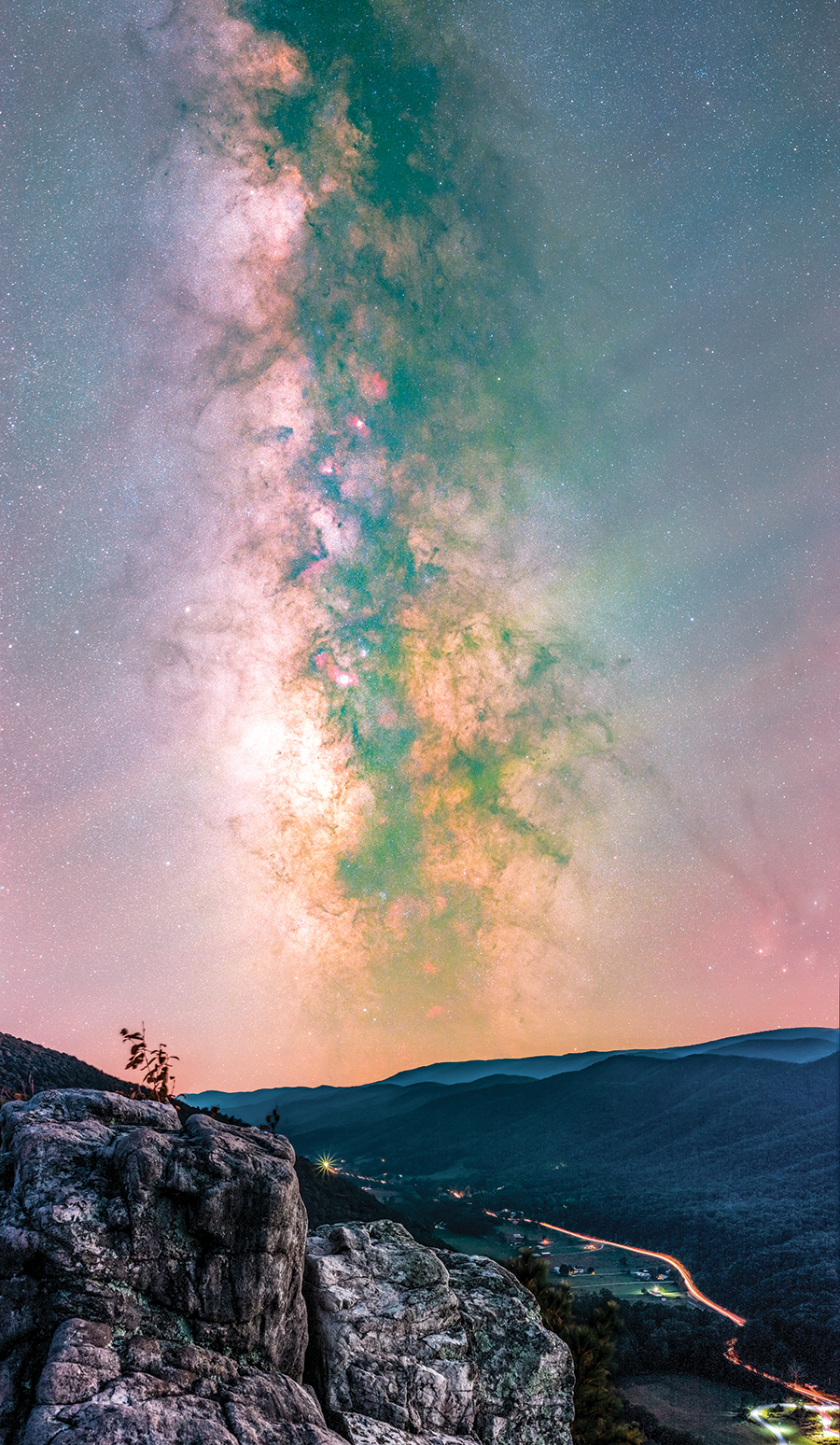
"Hiking the 2 miles to the top of Seneca Rocks with 60 pounds of camera gear is challenging, but I knew it would be a great location to shoot a tracked vertical panorama of the Milky Way. I used one of my first lenses—the trusty 50mm f1.8. It’s light. It’s fast. It’s sharp." —Dave Green
“Hiking the 2 miles to the top of Seneca Rocks with 60 pounds of camera gear is challenging, but I knew it would be a great location to shoot a tracked vertical panorama of the Milky Way. I used one of my first lenses—the trusty 50mm f1.8. It’s light. It’s fast. It’s sharp.” —Dave Green

Checking night sky maps revealed West Virginia is home to the best and most abundant viewing opportunities east of the Mississippi River. A rabbit hole of research brought theoretical know-how and heaps of new gear—like wide-angle lenses, star trackers and editing software—that fueled a spiraling obsession. Green began to keep track of astrological events and weather patterns, and plan weekends or vacation days around photos. He’d pick a natural area like Seneca Rocks, lug 50 pounds of gear up a trail, set up at an overlook, then snap photos through the night. Next came weeks of editing them into a large, composite image that showcases the startling beauty of a wild landscape beneath an incredulous blaze of stars. 

“I realized pretty quickly my photos were going to be about more than just the sky,” says Green. He aims to capture the experience of gazing up into the unfathomable expanse of the cosmos from a particular place—one that feels awe-inspiring in its own right.

Green’s skill grew with practice. When friends and family saw his work, they urged him to share it online. A dedicated website and social media pages launched in 2020 to positive reception: Requests for prints, portraits and special commissions flooded in. So too invitations to show at regional art galleries. But Green’s favorite accolade so far? NASA naming his composite of Orion rising over Green Bank Observatory its photo of the day. 

“I feel incredibly grateful for these experiences and to be able to share my love for West Virginia’s amazing nature areas with others,” says Green. “To me, my photos are a way of better appreciating the world and my place in it, and I hope that sense comes through to others.” 


The story above first appeared in our September / October 2024 issue.

You Might Also Like:

2027 Best of the Mountains Awards

2026 Best of the Mountains Awards

Submit your nominations for the finest in the Blue Ridge today!
Roanoke, Virginia, USA downtown skyline at dawn

2026 Happiest Mountain Towns

Ten years after this poll’s inaugural launch, we once again turned to our knowledgeable readers for their picks. The results? A brand-new collection of 71 exceptional Blue Ridge communities that excel at bringing big smiles to the faces of both residents and visitors.
Kayaks on Toccoa River Below the Falls

7 Fabulous Float-to-Stays

Paddling trips on scenic rivers to great mountain towns make for perfect summer getaways.
Blooming rosebay rhododendrons frame a lovely, fast-moving cascade along the Oconaluftee River in Great Smoky Mountains National Park near Cherokee, North Carolina. Photo by Robert Stephens

Currents & Cascades: A Photo Essay

Our contributing photographers followed the flow of summer.
Sunrise Landscape Great Smoky Mountains National Park Gatlinburg TN and Oconaluftee Valley Cherokee NC

Summer Fun in the Smokies

Our longtime contributing editor knows Great Smoky Mountains National Park like the back of her hand. Drawing inspiration from countless visits over the years, she shares some of her favorite spots to explore during the warm months, plus insider tips for spotting wildlife, discovering waterfalls, finding the best family-friendly experiences in the park—and more!
Mural at the George Buckley Community Center in Marmet, starting point of the Miners’ March.

Courage in the Hollers

More than a century after the 1921 West Virginia Miners’ March that ended with the Battle of Blair Mountain, the story is being told in new and unforgettable ways.
©Steven Reinhold

Fueling Adventure

Lee “Natty” Trebotich transforms wild plants and outdoor know-how into unique experiences worth savoring.
Grandmaw’s Pepperoni Roll

Mountaineers Are Always Free!

The Mountain State’s signature snack—just the way Grandmaw made it.
Elizabethton, Tennessee, USA, - May 15, 2021: Reenactment at Sycamore Shoals State Historic Park of the Siege of Fort Watauga in 1776.

Revolutionary Roundup

On July 4, 1776, a new nation was born. In honor of this historic day, we explore the forts, battlefields, museums, trails, and more that trace the Patriots’ journey to freedom in the Blue Ridge Mountains.
2025 Festivals and Events

2026 Festivals & Events Guide

From the Virginias and the Carolinas to Georgia, Tennessee, and Kentucky, our annual compendium is the perfect travel companion.