Skip to content



EDITOR’S NOTE: This excerpt is from OTTO WOOD, THE BANDIT: THE FREIGHTHOPPING THIEF, BOOTLEGGER, AND CONVICTED MURDERER BEHIND THE APPALACHIAN BALLADS by Trevor McKenzie. Copyright © 2021 by Trevor McKenzie. Used by permission of the University of North Carolina Press. www.uncpress.org
The Wilkes County, North Carolina native carved a path of crime across the region, inspiring the ballads that compelled Trevor McKenzie to write a new book, from which we present an exclusive excerpt.

Otto Wood, born in Wilkes County, North Carolina in 1893, was so drawn to a life of crime that by 1907 he was already on a chain gang for petty theft. His brazen, harsh life—marked by multiple jail escapes, a murder conviction and general mayhem—was compelling enough to one Appalachian State student that his thesis on Wood evolved into a book, the Introduction to which we present here. Trevor McKenzie’s book, spawned by his love of mountain music and the multiple ballads about Wood, was published by UNC Press in September. “Otto Wood, the Bandit: The Freighthopping Thief, Bootlegger, and Convicted Murderer Behind the Appalachian Ballads,” is a detailed, fully indexed exploration of the life of one unfortunate mountain soul.
The silhouettes of two men in overcoats emerge into the light, their feet scraping on gravel. Their conversation is muffled as one limps his way closer to an unseen audience, obscured in the darkness, nonexistent aside from the creak of a metal chair and an occasional cough. Two more silhouettes emerge, one in a broad-brimmed hat. The voices get louder, followed by several wild glints, flashes of pistols pulled hastily from pockets, then sharp metallic clicks and the rapid explosion of gunfire. The shadow of the limping man staggers a few more paces and falls to the ground.

For the audience, these characters are spotlighted, every line heard and gesture seen before the shots ring out. From where I am seated, though, all is shadow; the action is just out of sight, hidden by a wall on the side of the stage. I may not be able to see anything, but the gunfire tells me all I need to know: Otto Wood is dead, again.
It is July 2014 in North Wilkesboro, North Carolina, the fourth year of the outdoor drama “Otto Wood: The Bandit.” This play is how a community reenacts and remembers the life and times of their infamous, homegrown bandit. For the audience, the scene is the cold midday of New Year’s Eve 1930, but back in the darkness on the side stage with the other musicians of the Elkville String Band, it is sweltering. It sounds like the cicadas from the woods behind us might just have the last song in tonight’s performance. The dramatic tension playing out upstage is not my worry, but the tension of my fiddle bow is. The hair will not budge, the workings of the frog jammed by the humidity. The legs of my overalls stick to the edge of the metal chair. I look down to see a woolly aphid, a parasite fallen from a tree in the back of the park latched onto the snakewood stick of my bow. I flick the small cotton-like freeloader off into the darkness.
It’s almost time to play. The lights go down, then flick back on. That’s our cue. In the chair next to me, seated with a brown fedora tilted slightly down over his eyes, guitarist Herb Key begins to sing the words he’s sung a thousand times, the opening lines of the ballad “Otto Wood the Bandit”:
Step up, buddies, and listen to my song,
I’ll sing it to you right but you might sing it wrong,
Story ’bout a man they called Otto Wood . . .
The story of Otto Wood is as twisty as the lyrics of the ballad that bears his name. Composed in 1931 by Walter “Kid” Smith and originally performed by Smith’s group, the Carolina Buddies, the song is now known in folk music circles worldwide—thanks in no small part to a 1960s recording by noted North Carolina guitarist and singer Arthel “Doc” Watson. Smith’s composition is just one of many Otto Wood ballads, however, and, like all outlaw ballads, it selectively distills the complicated life story of a real criminal. The combination of a bouncy melody with violent lyrics is strikingly dissonant. With a chorus pleading “Otto, why didn’t you run?,” the song begs for more facts. This is a true crime story hidden behind a ballad.
Otto Wood’s life was full of running, a surprising amount of running for someone born with a clubbed left foot. With beginnings in rural Wilkes County, North Carolina, at the end of the 19th century, Wood’s life of crime started in his preteen years and extended for three decades. By the time he entered his early teens, Wood was sentenced to work on a chain gang. Only a few years later, he was one of the first children from the mountains of western North Carolina sent to a new state reformatory. By the age of 18, he had racked up a list of petty thefts, as well as escapes from chain gangs and the reformatory, and he had lost his left hand in a hunting accident.

Despite the misfortunes of his early years, Wood packed a lot of adventure into his short life. Wood’s criminal activities led him through the deserts of south Texas, the railyards of Missouri and West Virginia and the back roads of North Carolina. His prison record reflects his travels, as well as his savvy as an escape artist. Within the span of 17 years, between 1913 and 1930, Wood escaped 11 times from five different state penitentiaries across the South and Midwest. These escapes are in addition to breaks from smaller jails, too numerous and, at times, too obscured in the records to ever be tallied. Wood, like many criminals of the era, also loved a good alias and used many throughout his life, further hindering any effort to trace his criminal activities.
In the mid-1920s, Wood achieved a semi-celebrity status throughout the southern United States as the “Houdini of Cell Block A,” a prisoner no jail or penitentiary could hold. His notoriety and crimes caught the attention of several North Carolina governors, most notably O. Max Gardner, who met with Wood and attempted to use the escape artist as a poster child for prison reform. The result of what Gardner termed an “Experiment in Humanity” proved disastrous and ultimately led to the manhunt that resulted in Wood’s death at the age of 37.
A shootout on the streets of Salisbury on New Year’s Eve 1930 ended Wood’s life, but inspired lyrical tributes from early country music songsters who gave Wood a path, albeit a belated one, to immortality.
Can’t tell you all but I wish I could . . .
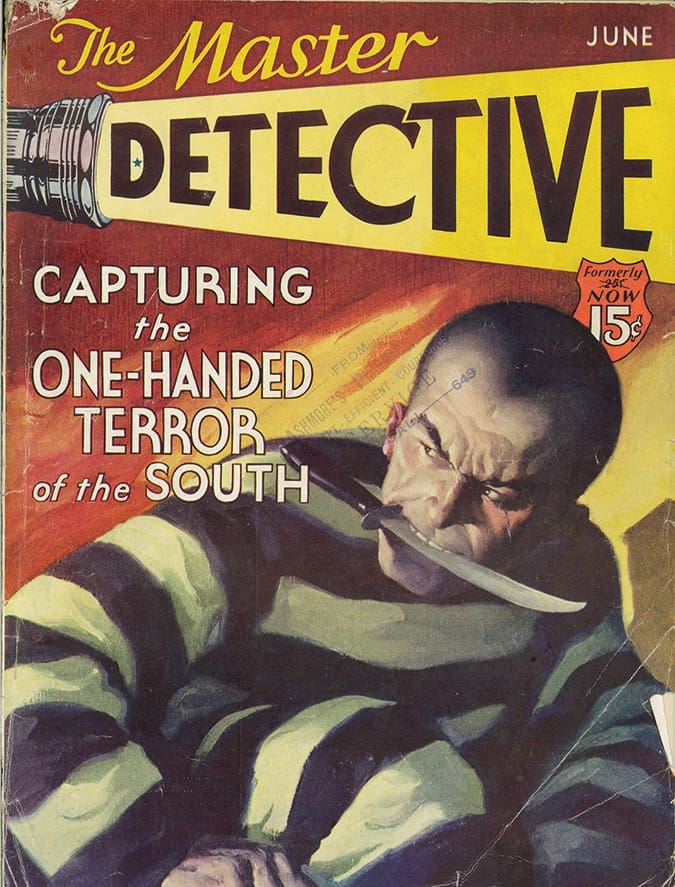
Even the ballad lyrics reveal the difficulties of documenting Otto Wood’s life. True to his larger-than-life persona, Wood took the liberty of writing his autobiography, titled “Life History of Otto Wood,” while behind the walls of the North Carolina State Prison in 1926. While the book contains some solid stretches of narrative on Wood’s life, the numerous half-truths and embellishments padded around the facts make the work well short of anything that could be considered a true history. For example, in one passage, Wood and “his girl”—there is always a female companion in Wood’s stories—travel through the Colorado River area of Arizona, where they are surrounded one night by a “hundred or more angry wolves.” A few pages later, a Texas lawman tells Wood to “reach for the clouds.” Wood obliges, telling his readers that he remembered “the Western rule not to shoot a man so long as his hands were in the air.” If these passages sound like dime novel scenes or straight out of an early 1900s Saturday cowboy serial, it’s because they likely are. Wood, while he did commit real crimes in the American Southwest, consumed and indulged in cowboy and Old West outlaw stories. Descriptions of his crimes in newspapers bear out that Wood frequently and consciously playacted the role of the man with—to quote country music legend Marty Robbins—a “big iron on his hip.” As further evidence, a 1913 photo sent to his mother from Texas shows Wood leveling an antiquated Colt pistol at the camera, wearing the 10-gallon hat and fur chaps of a typical silver screen desperado.
Even with this intermittent Tom Mix–style bravado, Wood could not obscure the fact he was a product of a modernizing Appalachian South. He was a car thief, a bootlegger, a train robber and an escape artist who had all the latest technologies available at the fingertips of his remaining hand. He also made sure to place his one good foot into the criminal networks around illegal alcohol and the trafficking of stolen cars. Although Wood had all the hallmarks of a criminal genius—his miraculous escapes, even when undertaken with accomplices, were mostly accomplished through his own ingenuity—his long stints of avoiding the law were aided by a highly organized community surrounding the production and distribution of illegal liquor. This connection to “moonshine” made his home community in Wilkes County the epicenter for Wood’s crimes. The people in the criminal networks surrounding illegal liquor, as production ramped up under the conditions of Prohibition, needed Wood’s talents as a driver and were ultimately Wood’s safety net. Nevertheless, Wood’s “Life History” is how he wanted his story told, and this version of his life must be given some respect and consideration. Truth was, no doubt in Wood’s mind, just another cell with a lock to pick.
This work is intended to provide compelling biography of a criminal who emerged from the modernizing Appalachian South of the early 20th century. Through a combination of prison records, newspapers accounts, oral histories and myriad other sources, I have constructed, to the best of my ability, a narrative history of the life and crimes of Otto Wood. At certain points, I defer to Wood’s own account and words in his “Life History.” These points of deferral, however, often juxtapose Wood’s stories with prison records or newspaper reports. Throughout the book, narrative gaps of several months appear as Wood travels the highways and back roads from point A to point B, or languishes behind prison bars. I hope readers will excuse these gaps, as I have focused on the events and velocity of a fast-pace narrative suitable to the life Otto Wood lived. Countless family stories and many small facets of Wood’s life are no doubt absent. I look forward to hearing more stories about Otto Wood, and I see this work as a starting point for a renewed conversation about Wood’s significance as a criminal and as a folk hero. When it comes to Otto Wood, just as the ballad reminds us, I “can’t tell you all, but I wish could.”
The Ballads

Otto Wood Timeline
Here are key dates in the life of Otto Wood. This timeline is condensed from the complete version in the book.
May 9, 1893 Commonly accepted date for Otto Wood’s birth
August 1907 Sent to the Iredell County, North Carolina, chain gang for petty thefts
April 29, 1911 Loses his left hand in a shotgun accident
March 27, 1913 Arrested for breaking into train cars at Graham, Virginia
May 10, 1913 Enters Virginia State Penitentiary
May 15, 1913 Escapes from Road Camp 27, Spotsylvania County, Virginia
September 7, 1913 Returns to Virginia State Penitentiary after capture
November 20, 1914 Second escape from Road Camp 27, Spotsylvania, Virginia
November 13, 1915 Arrested for car theft after chase in Salisbury, North Carolina
November 1915 Breaks from Iredell County, North Carolina, chain gang
October 1916 Captured in Chattanooga, Tennessee
December 3, 1916 Arrives at Tennessee Penitentiary
May 28, 1917 Breaks out of Tennessee Penitentiary
June 2, 1917 Captured in Wilkes County, North Carolina
June 8, 1917 Returned to Tennessee Penitentiary
April 27, 1918 Second break from Tennessee Penitentiary
September 5, 1918 Arrives at West Virginia State Penitentiary after being captured and sentenced for car theft in McDowell County
January 9, 1919 Escapes from West Virginia State Penitentiary alongside James Borders
January 30, 1919 Wood’s younger brother and partner in crime, Robert, dies of Spanish flu
May 16, 1919 Captured in Wilkes County, North Carolina
May 20, 1919 Returned to West Virginia State Penitentiary
January 17, 1920 Returned to Tennessee Penitentiary after mass pardons in West Virginia
February 16, 1921 Third and final escape from Tennessee Penitentiary
September 23, 1921 Captured in a stolen car in Portsmouth, Ohio
November 1921 Sent to Ohio State Penitentiary, booked under the alias “Charles Jones”
June 21, 1923 Escapes from road gang in Ohio
November 3, 1923 Kills Abraham W. Kaplan, a Greensboro, North Carolina, pawnbroker
November 10, 1923 Captured in Mercer County, West Virginia, returned to Guilford County, North Carolina
December 1923 Convicted of second-degree murder and sent to North Carolina State Prison
May 10, 1924 Escapes from North Carolina State Prison with John Starnes
May 12, 1924 Wood and Starnes captured in Roanoke, Virginia, and returned to North Carolina State Prison
November 23, 1925 Second escape from North Carolina State Prison
December 7, 1925 Captured in Iredell County, North Carolina and returned to North Carolina State Prison
July 1926 Life History of Otto Wood published
November 22, 1926 Third escape from North Carolina State Prison
January 25, 1927 Shot and captured in Terre Haute, Indiana
February 18, 1927 Returned to North Carolina State Prison, sent to death row for solitary confinement
July 1929 Released from death row
July 10, 1930 Fourth and final escape from North Carolina State Prison
December 31, 1930 Killed in shootout on the streets of Salisbury, North Carolina
The story above first appeared in our November / December 2021 issue.