Skip to content

The story below is an excerpt from our Sept./Oct. 2015 issue. For the rest of this story and more like it subscribe today, view our digital edition or download our FREE iOS app!
Researchers are successfully restoring Southern Appalachian brook trout to mountain streams.
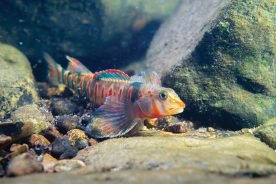
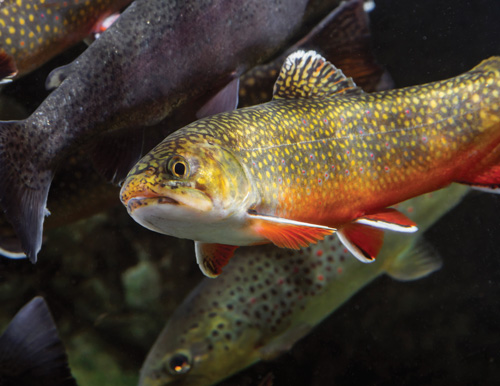
There are few sights more beautiful come autumn, says Dr. Anna George, than Southern Appalachian brook trout mimicking the seasonal turn of the leaves with their breeding costumes of iridescent red, glittering gold and bright pink.

“They’re one of the only fish I know of that actually spawns in the fall instead of the spring,” says George, director of the Tennessee Aquarium Conservation Institute (TNACI), a Chattanooga-based research facility that strives to protect regional freshwater resources. “That’s when brook trout are at their prettiest. You can even see them in some of these clear springs if you’re hiking up them. You’ll catch a flash of red, and it’s a male brook trout trying to attract the ladies.”
The only kind native to the Southeast, Southern Appalachian brook trout (SABT) once thrived from Virginia’s Shenandoah Valley to the foothills of north Georgia. Smaller than similar fish north of the Blue Ridge, they also show more adaptive genetic distinctions, with populations in Tennessee, for example, looking slightly different from those in North Carolina. Once abundant in mountain headwaters, the species was all but edged out in the mid-1800s when European rainbow and brown trout were added to forest streams for the benefit of sportsmen who wanted to catch bigger fish. Just as detrimental, if not more so, was the indiscriminate logging that dumped dirt into the crystal-clear streams and stripped away shade trees necessary for the SABT to exist, eventually slashing their numbers to about 3 percent of their historical range.
For the past three years, biologists from TNACI, the U.S. Forest Service, Tennessee Wildlife Resources Agency, Tennessee Tech University, Trout Unlimited and the U.S. Fish and Wildlife Service have been working to bring back the native brookies. In October 2012, trout experts collected 50 brood fish from Hampton Creek near Roan Mountain State Park, housed them at TNACI, and began raising them in dechlorinated city water, something that had never been tried before. A month later, the eggs hatched.