Skip to content

The story below is an excerpt from our July/August 2017 issue. For the rest of this story and more like it subscribe today, log in to read our digital edition or download our FREE iOS app. Thank you!
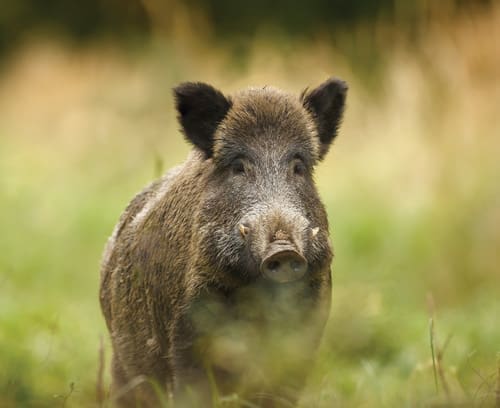
Wild hogs are going hog wild, with increasing numbers spotted throughout the Southeast.
Sometimes, the best-laid plans backfire. In 1999, in response to a surge in wild hogs in the Appalachian Mountains and along the Cumberland Plateau, the Tennessee Wildlife Resources Agency established a year-round hunting season to slow the expansion.

“But that good intention came with bad consequences,” says Ben Layton, a TWRA big game biologist. “We saw a greater spread of hogs across Tennessee in the 11 years we had that year-round hog season than we had seen in the prior 50 years. It was pretty much just hogs popping up everywhere. So we scratched our heads and said, ‘How did this happen?’”
The wildlife experts theorized that by granting permission to shoot the wild hogs, they had actually prompted farmers to release some of their own for sport hunting, causing the animals to spread to west Tennessee, other Southeastern states, even Ohio and New York.
“As late as 20 years ago maybe, we had 17 states with hog populations,” Layton says. “Now it’s more than 40. If a hog shows up in the middle of Ohio, well, I don’t think it walked there. The most likely culprit is that they’re pigs with wings.”
Believed to have been introduced to the Southeast by the Spanish explorer Hernando de Soto—some of the 300-400 hogs he brought with him in the 1500s escaped and reproduced—over the years, the population expanded and survived well on its own. Early settlers often relied on free-ranging livestock, some of which never came home.
And when a wild boar shooting preserve in the east Tennessee mountains went out of business, the animals escaped and started a baby boom in that part of the state.
Wild hogs have no major natural predators and are opportunistic feeders that devour all types of vegetation and prey. Says Layton: “Basically if they can get it in their mouth, they’re going to try to eat it.” They are smaller than their domestic counterparts—generally weighing no more than 200 pounds, compared to 400-500 for captive hogs, with the exception of the 800-pound hybrid “Hogzilla” that showed up in Georgia in 2004—and are prolific breeders.
… The story above is an excerpt from our July/August 2017 issue. For the rest of this story and more like it subscribe today, log in to read our digital edition or download our FREE iOS app. Thank you!