Skip to content


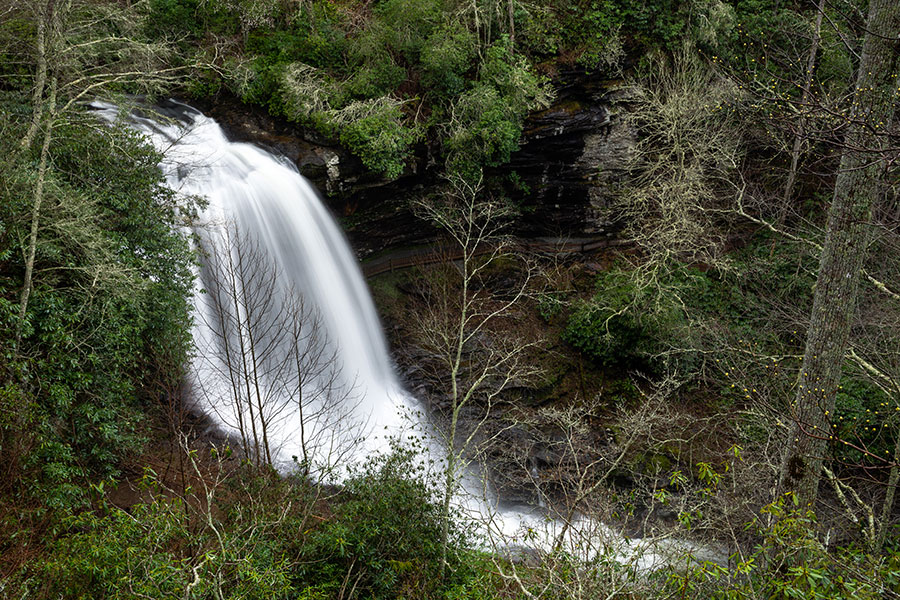
Setting alongside U.S. Highway 64 in Highlands, North Carolina, sits nature’s premier waterfall attraction.
For those Disney fanatics, this waterfall offers one of Disney’s most sought-after features for basically nothing. You heard me correctly, so save a hefty chunk of change and see the backside of water for just three dollars at Dry Falls.

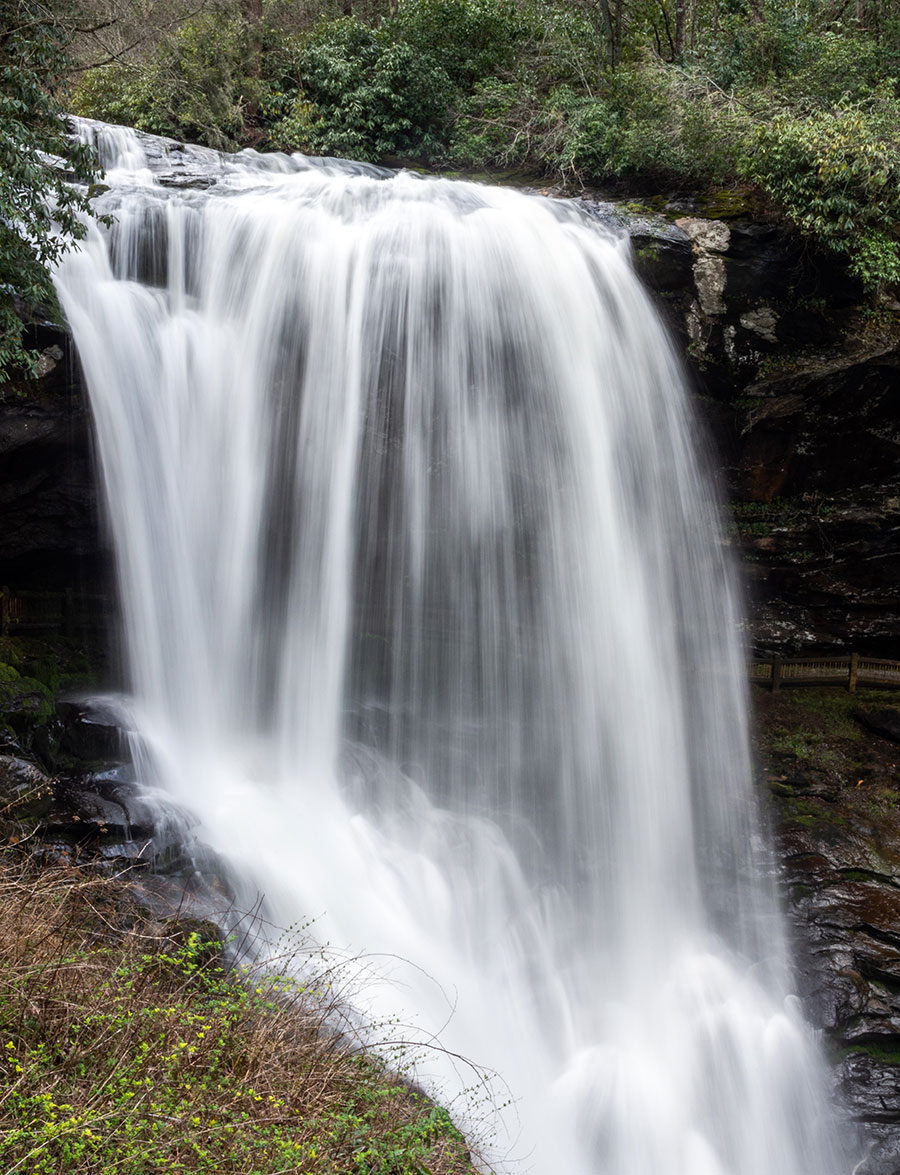
Dry Falls is a beautiful 75-foot waterfall nestled in the Nantahala National Forest. And it’s one you can easily walk behind.
Now that I have your attention, let’s start at the beginning. Once you pull into the parking area, you will find two different kiosks: one is an old-school kiosk where you fill out an envelope and put your cash in and drop it back into the slot, and the other is a quick card swipe with a ticket that ejects to put on your dash. I recommend the swipe. This three-dollar fee allows you to park for the day and goes toward helping the National Forest Service keep these amazing places beautiful.
Along U.S. Highway 64, you will see a few other waterfalls with a parking space for just one car. This road is very narrow, so be very cautious.
At the top of the parking area, you will see a set of stairs leading you down and a path that veers to the right. The path to the right takes you to a viewing area that is handicap accessible. You have a clear view of the waterfalls and plenty of room for a larger party.

Next, the stairs lead you to a walking path that switchbacks down the side of the hill. The path has another set of steps and is completely paved until you reach the waterfall’s base. Once you have reached the base, you will see a small gate leading you to a path that goes behind the waterfall to the other side, where you can have multiple perspectives of this beautiful natural masterpiece.
This path is very slick, and water does drip from the ceiling. I mean, there is a rushing waterfall above you. This is also where you can catch the backside of water, and yes, that is a Disney Jungle Cruise reference for those that do not know.
I love the photography opportunities available here. The fence that keeps you from leaping to your impending doom offers some excellent framing options. The vibrant moss growing along the back of the falls combined with the natural rock offers great photography details that make for some unique shots. The cliff edge has some lovely red and orange tones bleeding out from it as well from the minerals deposited there.
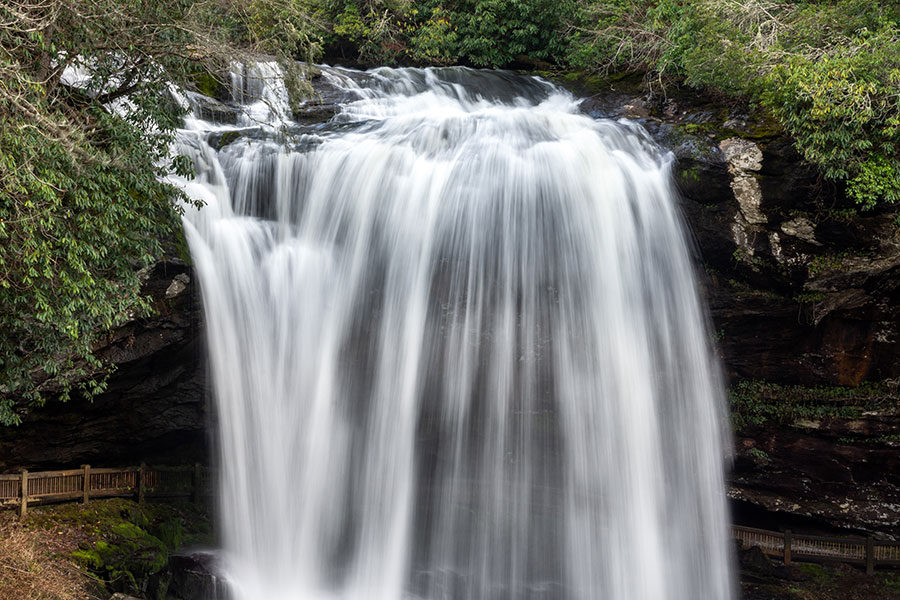
Dry Falls should be on everyone’s bucket list of top ten waterfalls to see in the Blue Ridge region; it offers an experience you won’t get at many others, especially one this large.
ABOUT THIS SERIES:
“Blue Ridge Waterfall Wednesdays” highlights a different waterfall each month from the Blue Ridge region. For the past two decades, Josh Moore has been exploring and capturing the beauty of this fantastic region he calls home. Josh is a professional photographer who has been published internationally, nationally and everything else in-between, and is widely known for his landscape/nature photography. See more of Josh’s work on his website, YouTube channel or on Instagram and Facebook.