Skip to content



Located along the Blue Ridge Parkway (BRP) sits one of the most idyllic waterfalls in North Carolina and is a must-see destination.
Article & Photos Courtesy of Joshua Moore

Crabtree Falls is only accessible via the BRP, and some GPS navigation systems will take you down Crabtree Road, which is obviously wrong; you will want to ignore this and just type in BRP and work your way between mile marker 339 and 340. If you are coming from Asheville, NC, it is a 42-mile drive northbound along the BRP. You will find plenty of signage along the BRP to let you know when you are getting close.

Once here, you can park in the large parking area. Near the parking area entrance is signage for the falls and the start of the trail. Since Crabtree Falls is only accessible via the BRP, it does close to the public if the BRP closes due to weather or other closures the National Park Service may have in effect. It is always best to check the National Park Service website for closures.
I also want to note that a second Crabtree Falls is located along the Virginia section of the BRP in Nelson County. That waterfall is located near mile marker 27 and features multiple cascades totaling 1,200 feet. We will save that one for another Waterfall Wednesday.

The National Park Service offers camping at the campground at the head of the trail. To make your reservations, visit recreation.gov or call 1-877-444-6777. The campground does have potable water, and comfort stations with flushing toilets and sinks.
The hike to Crabtree Falls is moderately strenuous in either direction you go. You have the option of doing a 1.8-mile there and back direct hike or a 2.75-mile loop hike (I recommend this.) This trail becomes very rocky and slippery and is also not handicap accessible. I recommend bringing water and a hiking stick to help keep you balanced along the rocks. I have hiked this trail multiple times, and I have run into storms and heavy rain. The trail gets incredibly slippery!
As you start down the trail, you will notice an Amphitheater to your left and see the trail wind down an open field; it will then lead you across a road where you will see a large sign showing you an outline of the trail. From this sign, it is a .6-mile hike to Crabtree Falls.
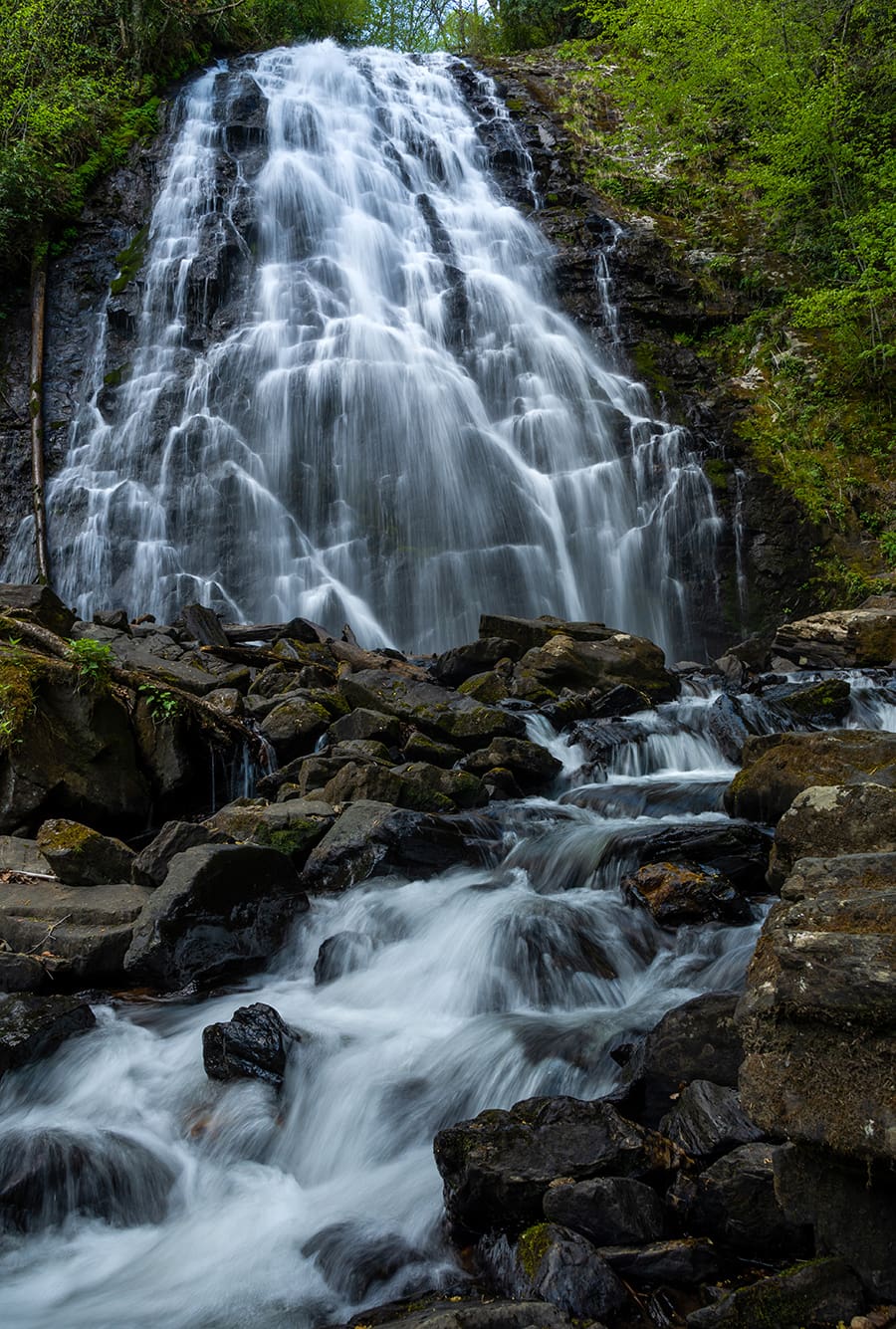
As you start down the trail, it will gradually get rocky; this is one of the strenuous sections I am talking about. There are a couple of sections with stairs, they are very narrow, and the rocks may be loose in sections. Once at the falls, you will have plenty of room to explore as the area beneath the falls is relatively large and a perfect spot to do a bit of photography. If you come in the Spring, you will find plenty of wildflowers, such as painted trillium, iris, and more, that grow along the trail and the banks. Crabtree Falls is a 70-foot waterfall that will instantly demand your attention from the moment you lay your eyes on it.

Once you have had your fill of the falls and have used most of the memory on your memory card, you will have a decision to make. Do you go back the way you came? All uphill, and I do mean all uphill, or do you add on the almost extra mile?

Well, I have done both, and I recommend the longer version. It’s honestly worth it. The trail switchbacks multiple times as you work your way back up the side of the mountain. The hike up out the falls along the switchbacks is rather strenuous but better than the other option. This section of the trail has a different feel to it as well. It’s more wooded and full of vegetation like wildflowers and rhododendrons.
You also start to follow a stream, which opens a door full of photographic opportunities. Once you hit the section where you follow the stream, you will cross it a couple of times and it will flatten out with a gradual incline back. There is a bridge in place to help you cross these spots.
If you take your time and enjoy the hike, you are looking at a 2.5-3 hour adventure. Crabtree Falls offers plenty of places to sit, relax, and take in the view and daydream. It’s one of North Carolina’s most beautiful large waterfalls, and rightfully so. So grab your planner, pencil it in and plan on making a memory that will last a lifetime.
ABOUT THIS SERIES:
“Blue Ridge Waterfall Wednesdays” highlights a different waterfall each month from the Blue Ridge region. For the past two decades, Josh Moore has been exploring and capturing the beauty of this fantastic region he calls home. Josh is a professional photographer who has been published internationally, nationally and everything else in-between, and is widely known for his landscape/nature photography. See more of Josh’s work on his website, YouTube channel or on Instagram and Facebook.