Skip to content

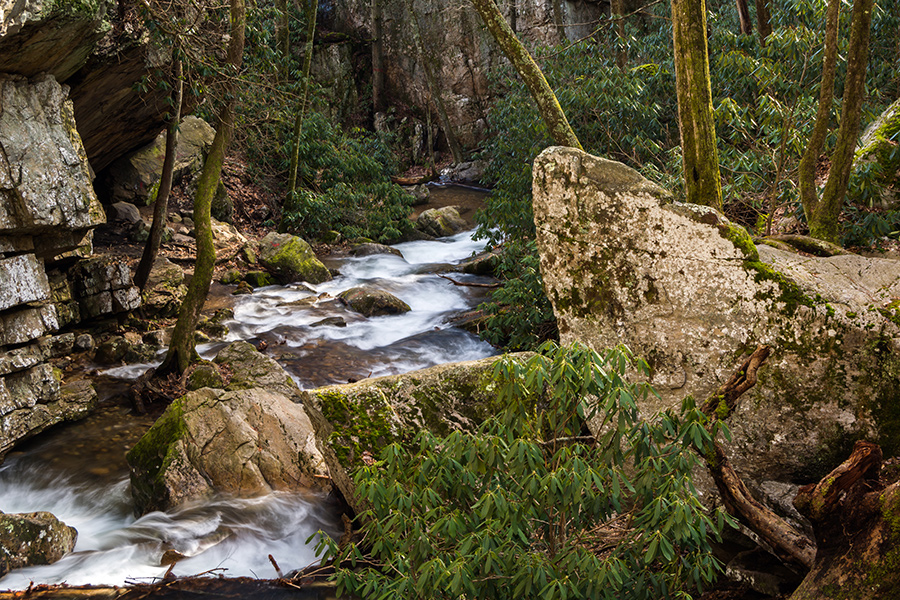
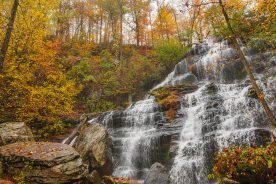
Blue Hole Falls is a series of four beautiful waterfalls that flow into one another tucked away in the Elizabethton, Tennessee section of the Cherokee National Forest.
Article & Photos Courtesy of Joshua Moore

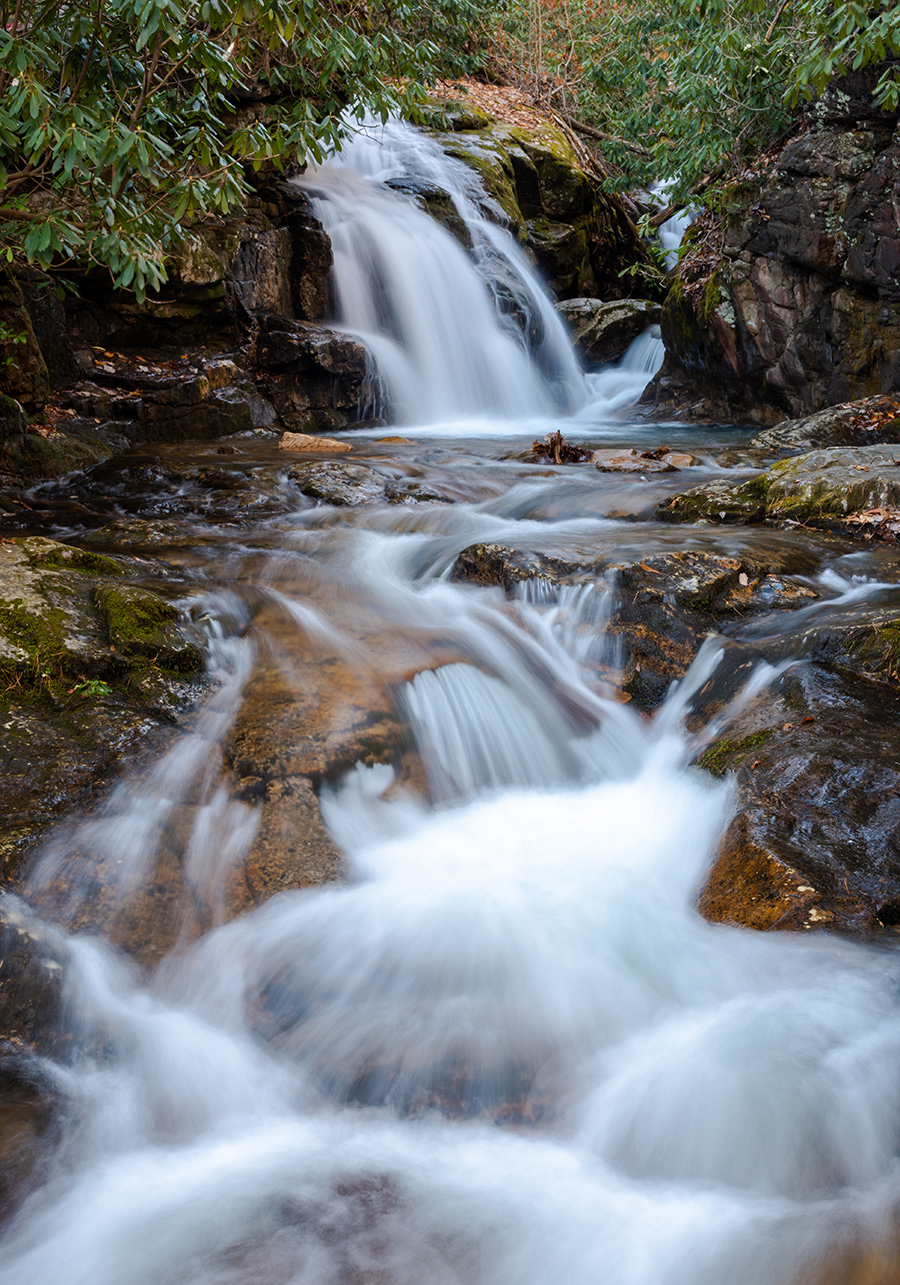
Blue Hole Falls is an easy escape; follow TN-91 Northeast of Elizabethton, Tennessee, roughly 10 miles to Panhandle Road. You will go through a neighborhood until the road turns to the typical Forest Service gravel road, then it will be the first pull-off to the left.
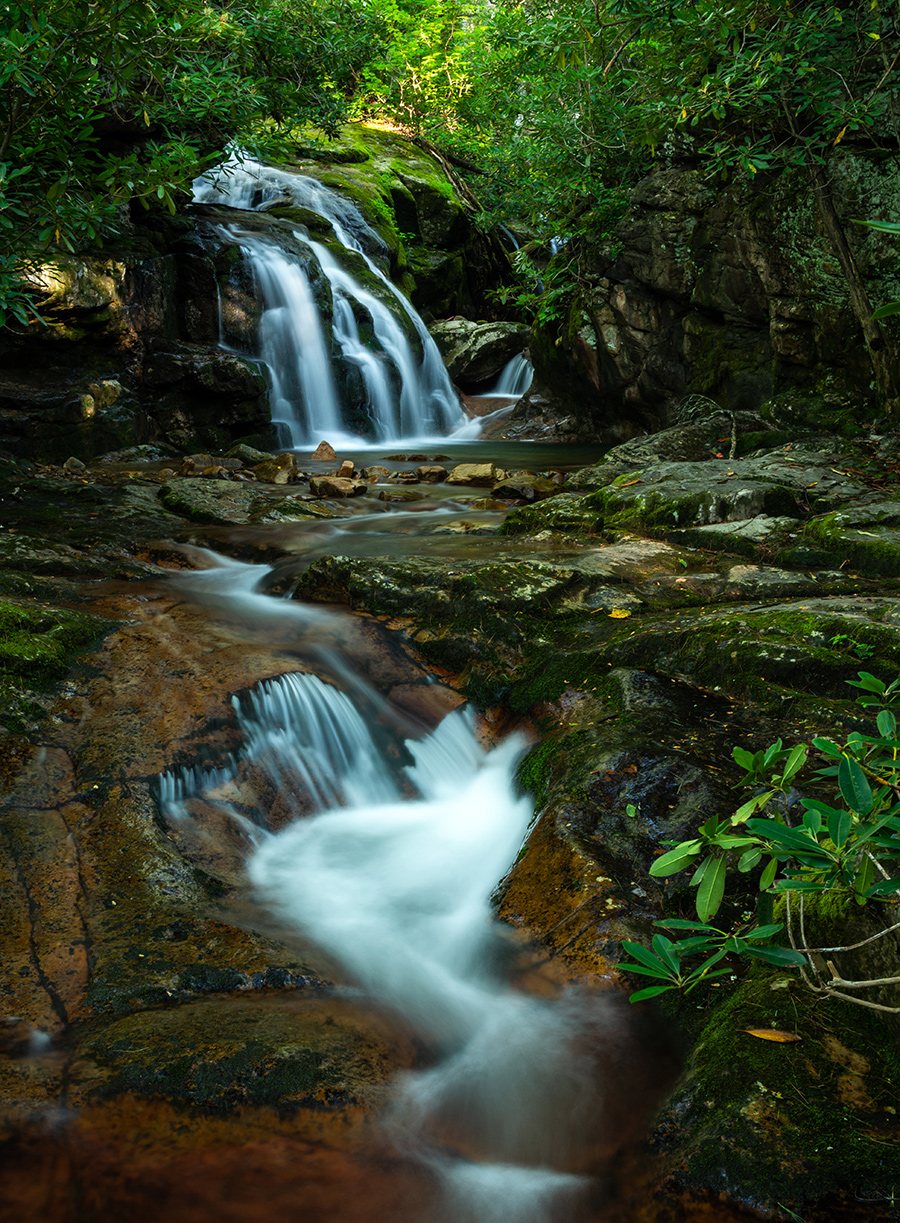
A half-mile hiking loop can be found to the right of the parking area, leading you down to the four falls. Though this is an easy hike, the steep steps can be challenging for those with knee issues, the steps can be up to three feet in some spots, so I recommend bringing a hiking stick to help keep your balance as you make your way down. Unfortunately, these waterfalls are not handicap accessible either.
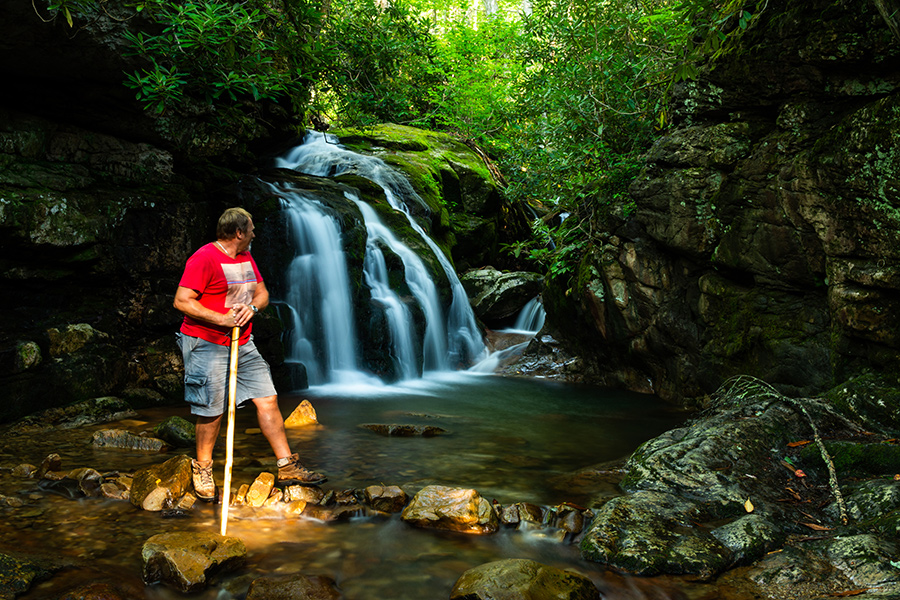
One issue with this area is the trash many visitors leave behind, so remember, if you pack it in, please pack it out! We come to beautiful places to enjoy the natural beauty, not what we leave behind.
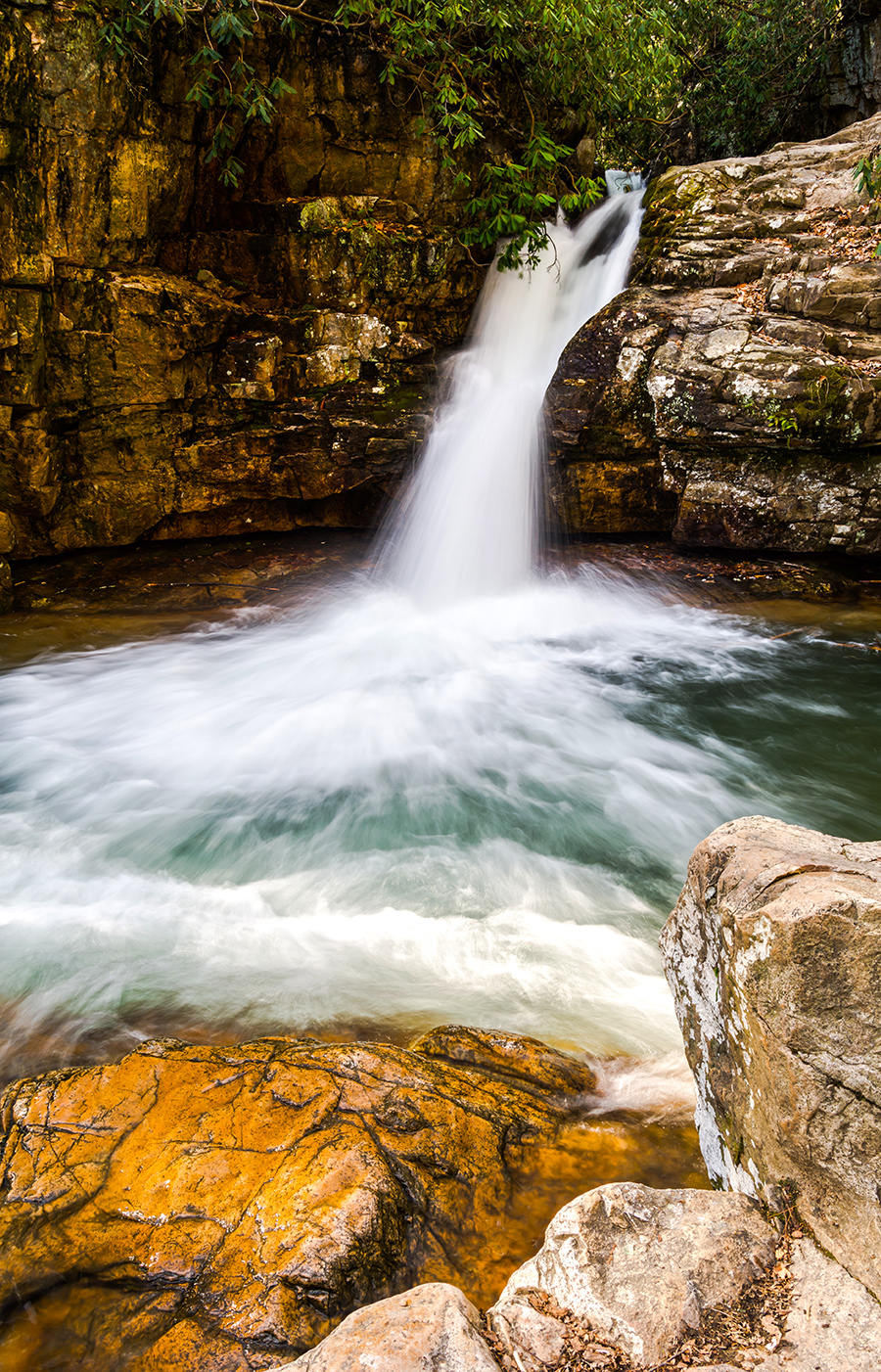
Waterfall number 1 may be the trickiest to get to as it’s tucked away out of sight from the trail. As you make your way down the path and make your first turn to the left, listen for loud water rumbling. That’s the sound of waterfall number 1.
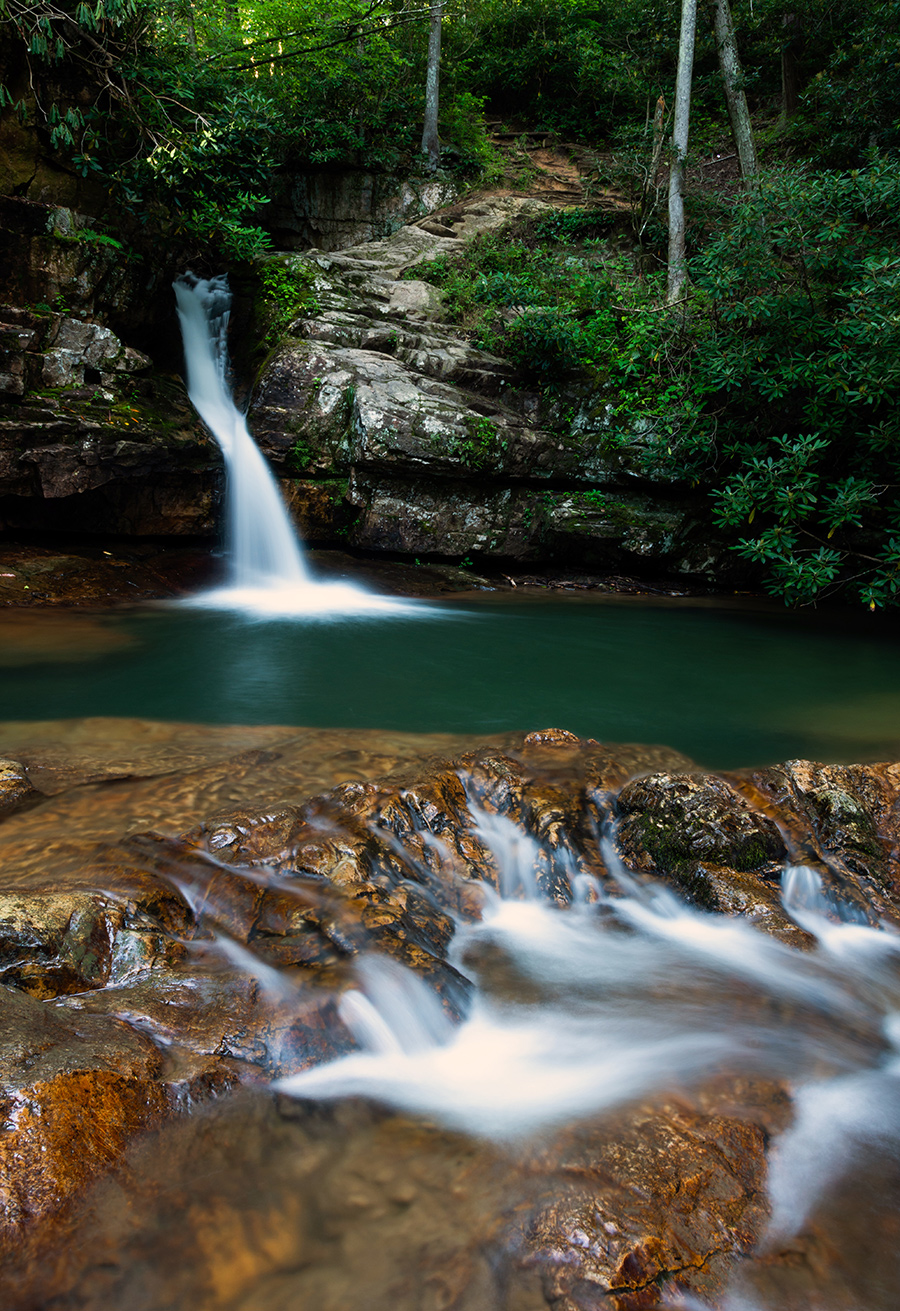
You probably think those are great instructions. I know, I get it, but it’s true, and it never hurts to listen to your surroundings; in fact, it’s good practice. Go past the sound by about 20 feet; you will find a small, worn-out step down along the stream’s edge. You will have to walk back upstream to get a glimpse of this beautiful gem. This waterfall stands out as one of the most beautiful not only because of its width but because most people go past it without realizing it is there. Because it has so much less human activity, it remains better preserved.
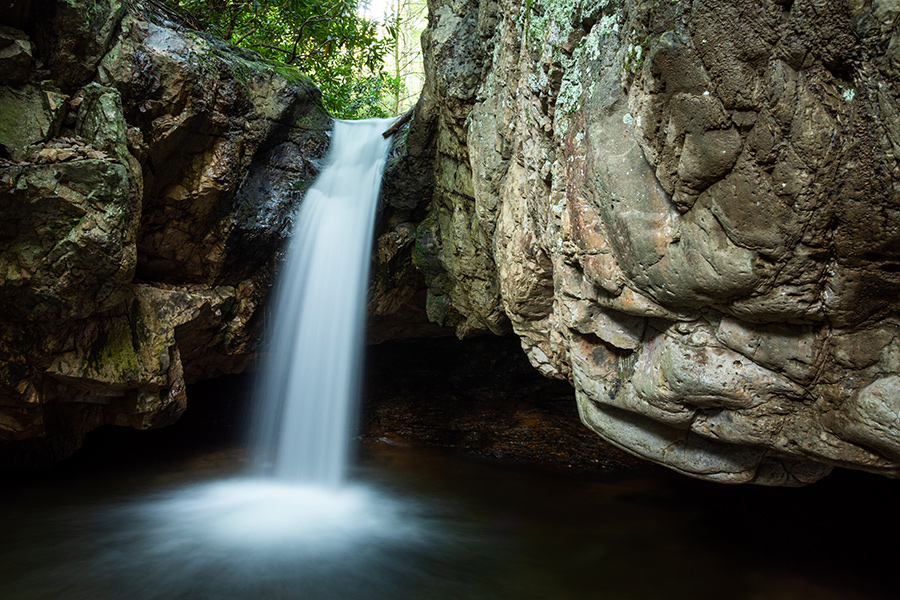
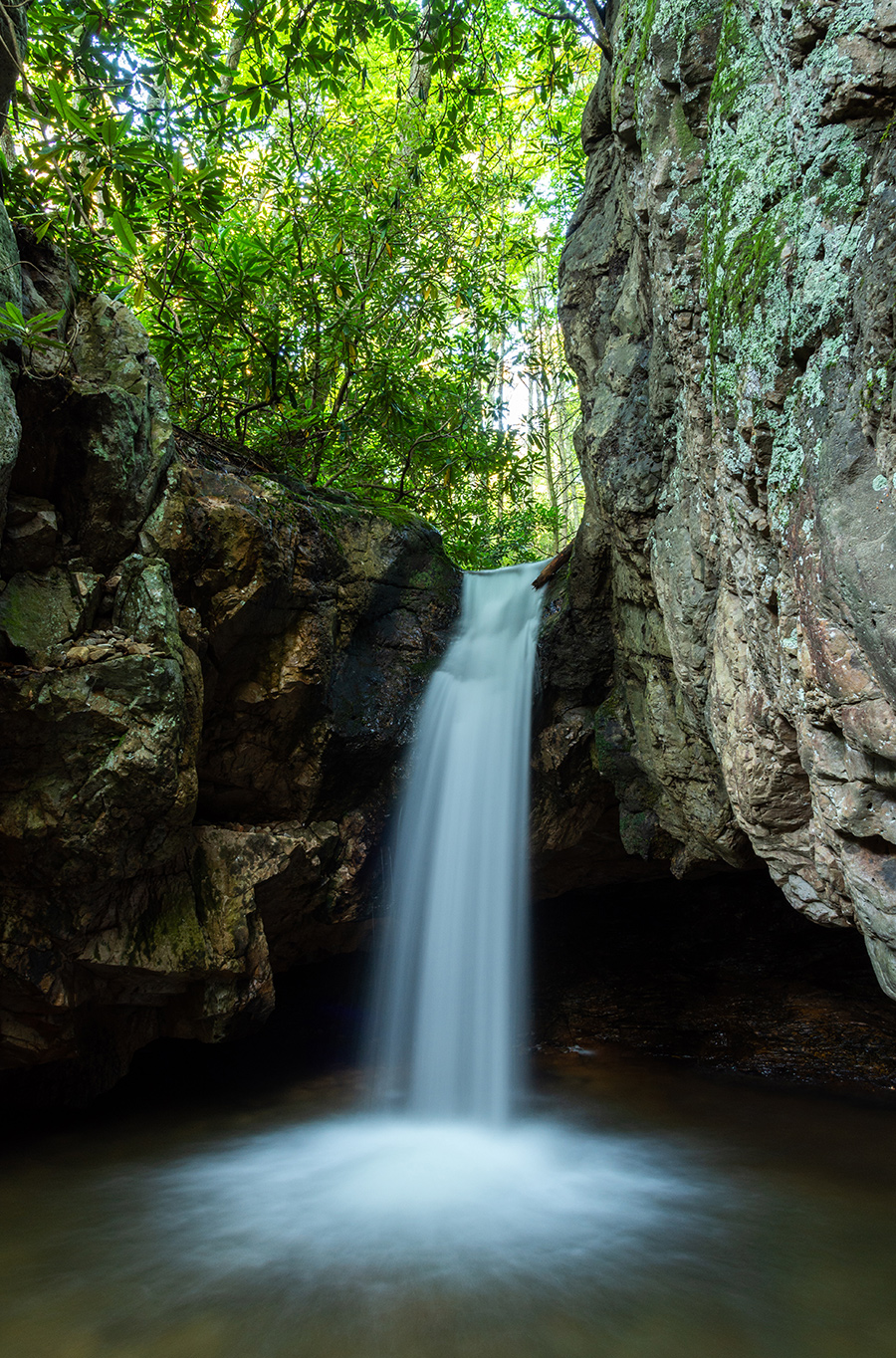
As you make your way down the trail, and you stand even with the top of waterfall number 3 (the prominent waterfall people come to see), you will see a large flat rock that leads to where the stream is, just like waterfall number one; you will have to walk the stream to get to Waterfall Number 2, this time however, your getting wet as the best way to view it is in the middle of the stream.
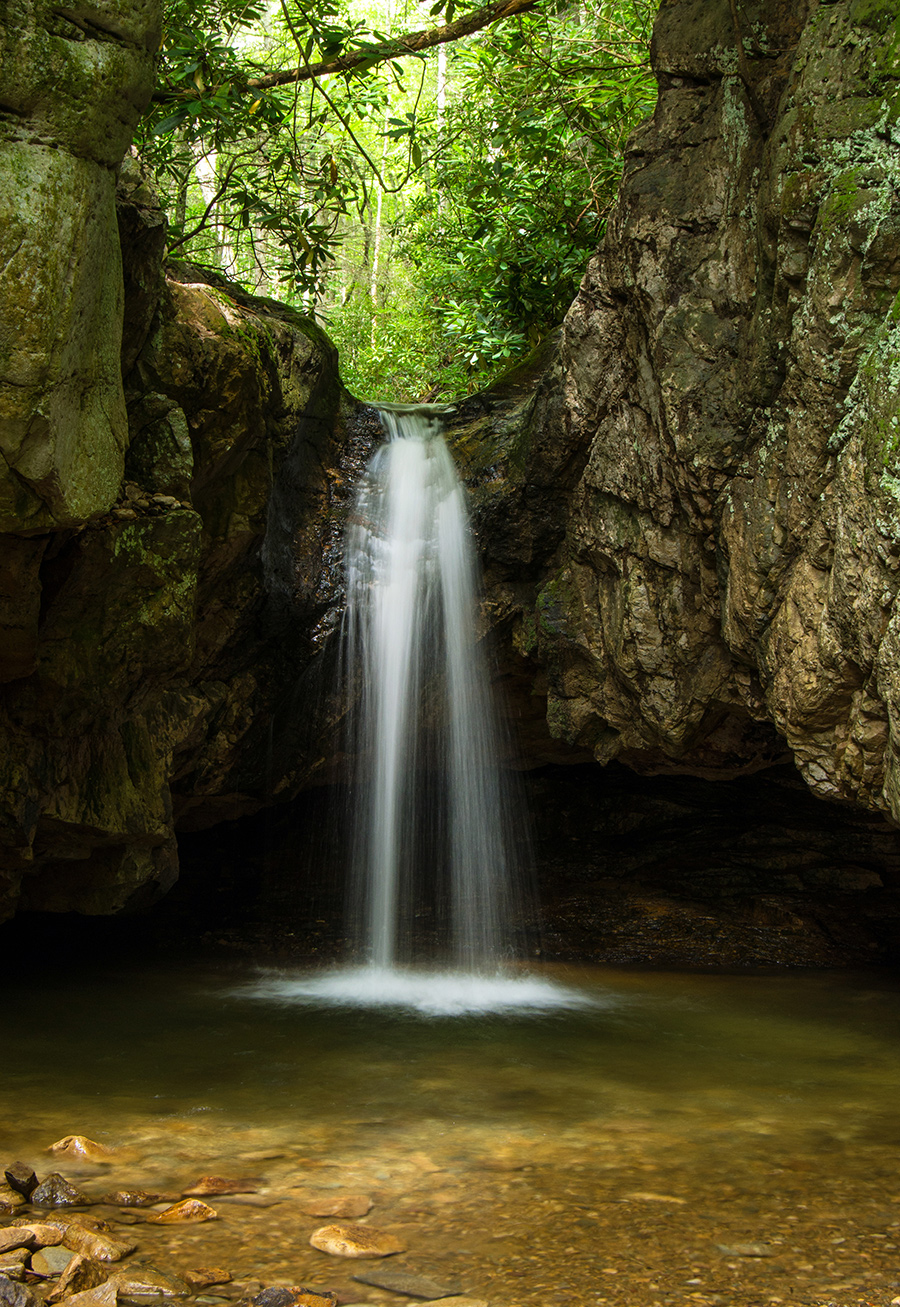
It can get up to 3-4 feet in places; however, use your best judgment if you feel comfortable doing this. Again, there is a place on a rock you can stand to see the falls if you do not want to get wet; just be careful, as it can be slippery.
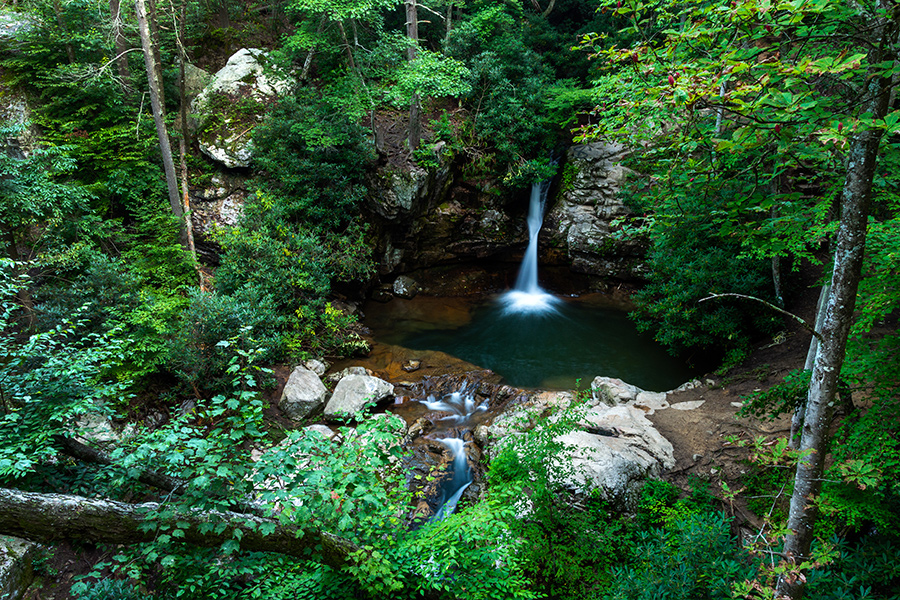
Waterfall number 3 is the easiest, most popular, and the reason for the name Blue Hole Falls. A large pool of clear blue (dark green, really) water approximately 40 feet wide and up to 15 feet deep in places sits along the base of waterfall number 3.
Depending on the flow of water, it can appear as a very large or a narrow waterfall. The 15-foot pool of water attracts many visitors as a unique swimming spot. I do NOT recommend jumping off in any place, as it is still a rocky area.
The last waterfall, number 4, falls from the pool of water, gradually sliding over the worn rock surface. If you plan on going down to the base of this waterfall, take extreme caution as it is steep and has some tree stumps that make getting down very tricky.
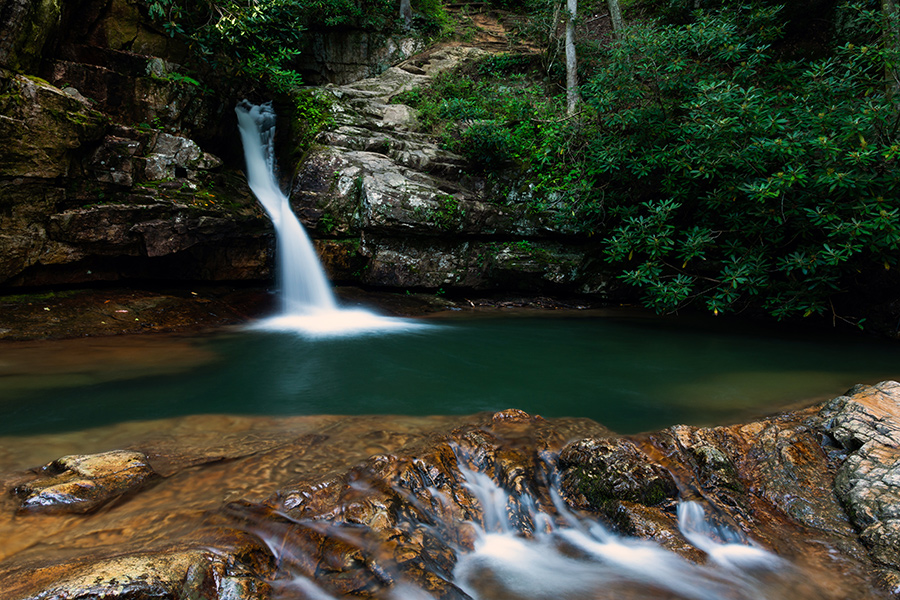
From here, the water flows ever so peacefully downstream into the Cherokee National Forest.
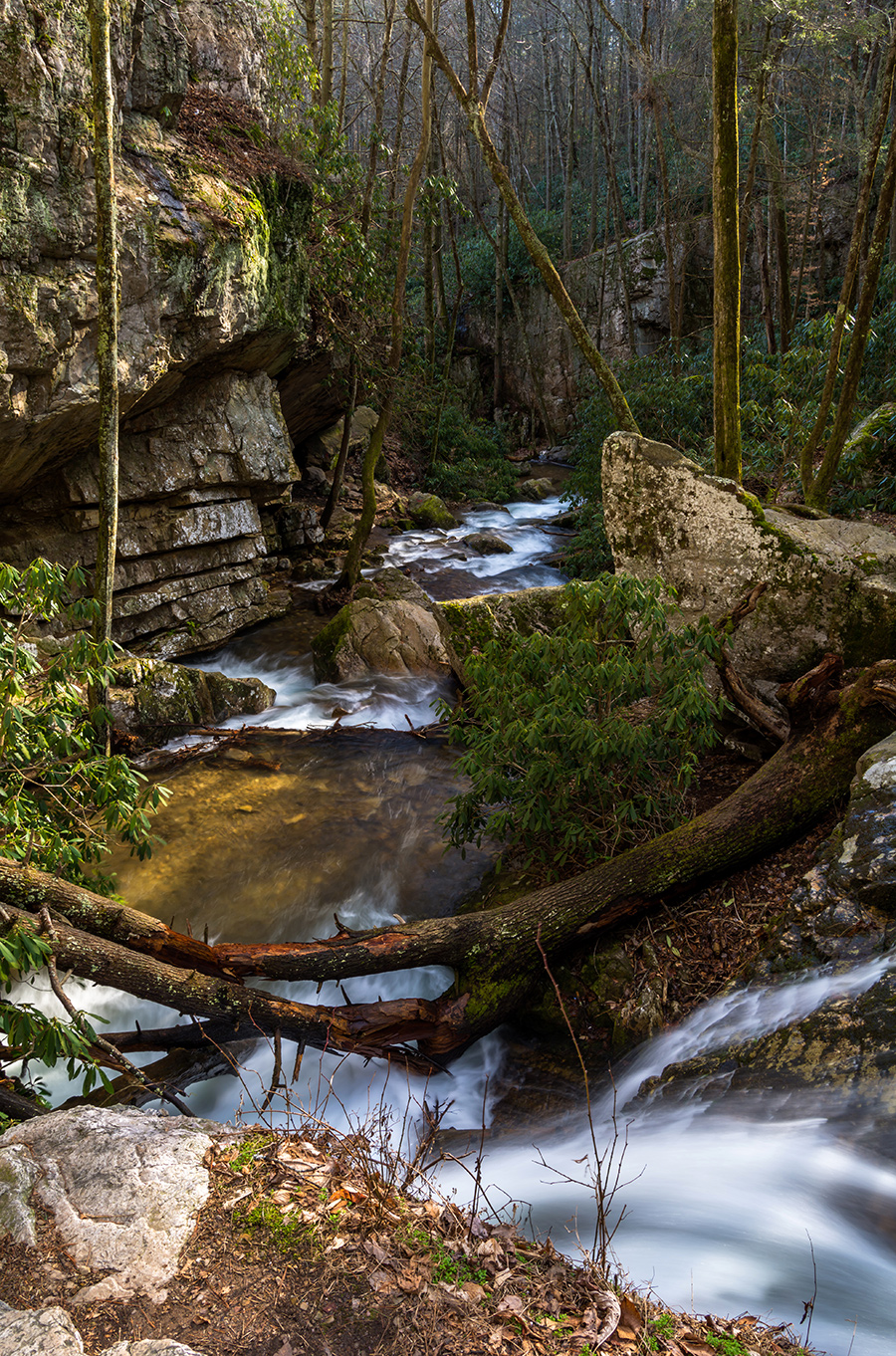
If you would like a good glimpse of an overall shot of waterfalls 3 and 4, make your way back to the car and take the trail to the left of the parking area. This trail will wind down the mountainside and take you to a ledge where you can get a great view of waterfall number 3 and 4. Be very careful here as it is a significant drop, large enough to kill you. Trust me; it would not be a fun time.
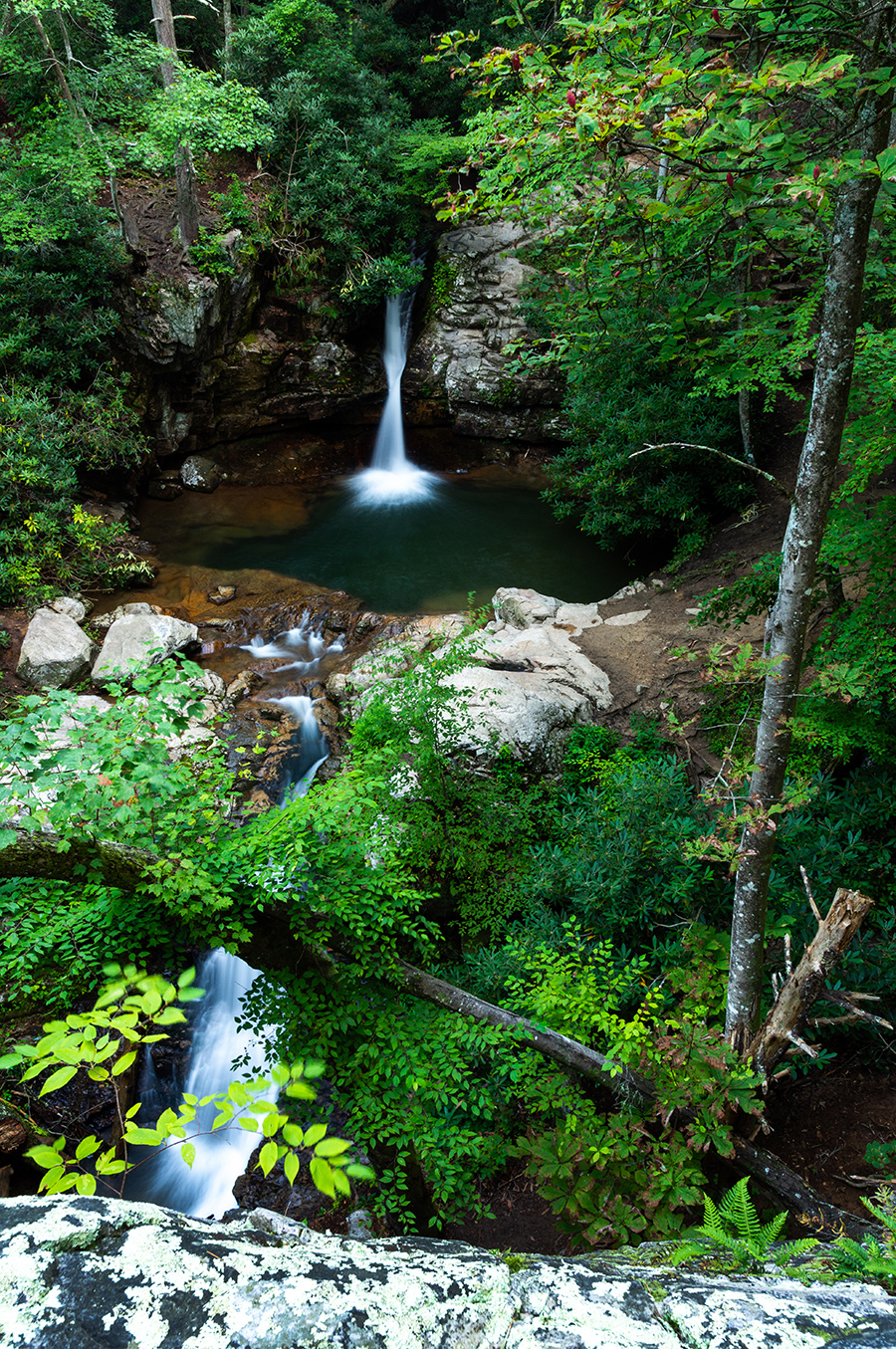
Most people only visit or see waterfall number 3 and part of number 4, so most reviews do not reflect the beauty the falls portray as a “whole unit.” However, if you stand back and take in all four waterfalls, you will begin to see why I call it a “touch of paradise.” How many four-tiered waterfalls can you name with this ease of access? My guess is few, especially in the Blue Ridge Region. Most of the falls are either singular or sometimes in a pairing. Blue Hole Falls is a remarkable beauty and is definitely worth a visit.
ABOUT THIS SERIES:
“Blue Ridge Waterfall Wednesdays” highlights a different waterfall each month from the Blue Ridge region. For the past two decades, Josh Moore has been exploring and capturing the beauty of this fantastic region he calls home. Josh is a professional photographer who has been published internationally, nationally and everything else in-between, and is widely known for his landscape/nature photography. See more of Josh’s work on his website, YouTube channel or on Instagram and Facebook.