October’s Wild Edible: Summer Grapes

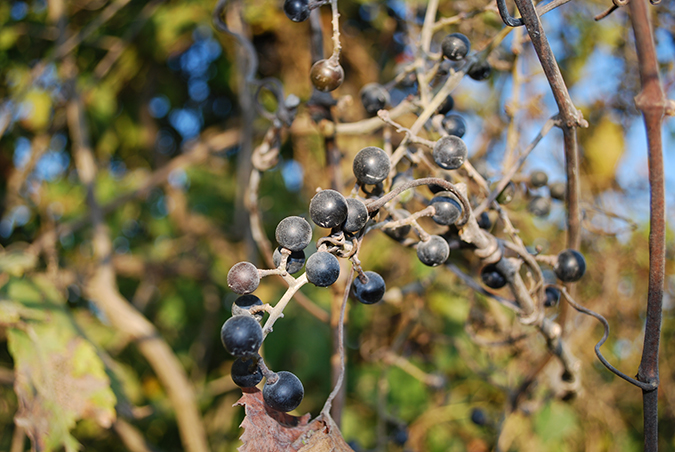
Summer grapes often grow along country roads like this one in Botetourt County, Virginia.

Store-bought grape jelly is okay, I guess, but it pales in comparison to the tangy taste of summer grape jelly. This variety, scientifically known as Vitis aestivalis, is the most common native grape in the Blue Ridge Mountains. Every autumn from late September to mid-October my wife Elaine and I prowl the backroads of Botetourt County, Virginia searching for this fruit.
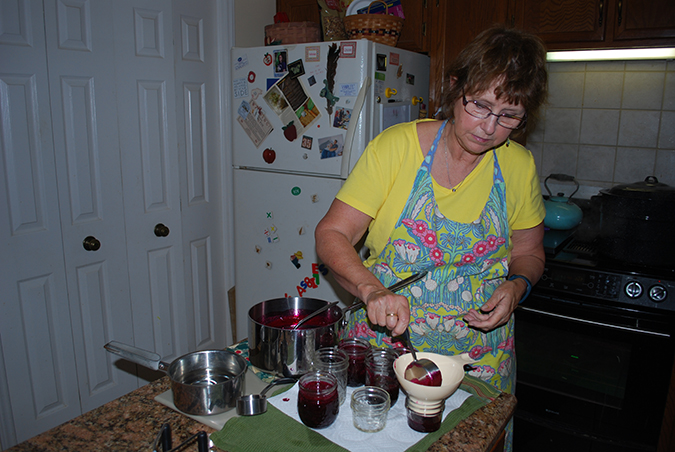
Elaine Ingram putting the finishing touches on a batch of summer grape jelly.

Although we experience little human competition for the purple berries, they are a major source of nourishment for wildlife in our region. I have actually observed wild turkeys, tenuously perched on grape arbors, dining on summer grapes. They are also important foods for such birds as grouse, quail, cardinals, catbirds, brown thrashers, and many of the songbirds that migrate through these mountains come fall. Such mammals as deer, raccoons, opossums, and skunks favor the fruit as well.

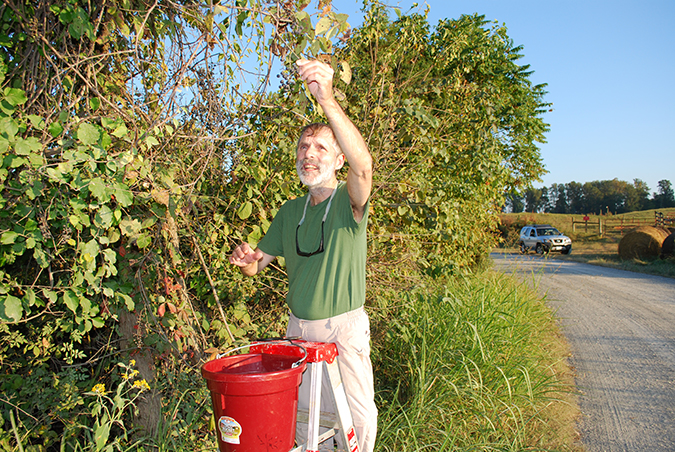
Bruce Ingram picks summer grapes

We pick summer grapes in early fall because we relish the tartness of the berries then, believing that is when the right amount of sweetness and tang exists. But I have gathered them as late as mid-November as a nourishing snack while I rambled through a woodlot. By mid-December, these grapes have metamorphosed into raisins. Though not edible for us humans by then, wildlife will devour them well into January.

Best way to enjoy summer grape jelly? How about as a topping for homemade brown bread, hot from the oven.


Bruce and Elaine Ingram will profile a different wild edible every month. For more information on their book Living the Locavore Lifestyle, contact them bruceingramoutdoors@gmail.com

You Might Also Like:

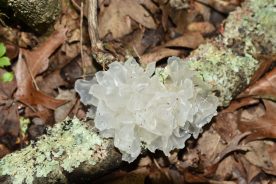
White jelly snow fungus growing in the author’s Botetourt County, Virginia woodlot.

May’s Wild Edible: White Jelly Snow Fungus

“Pass the fungus,” is not common dinnertime conversation in the Blue Ridge Mountains region, but that’s because folks perhaps have not heard of the white jelly snow fungus.
Owner Jennifer Hughes is a constant and comforting presence at Elizabethton’s City Market.

Connecting a Community Through Chicken Salad and Chocolate Pie

City Market in East Tennessee has always stepped up to take care of its neighbors.
Wild garlic growing in Fayette County, West Virginia.

April’s Wild Edible: Wild Garlic

Fayette County, West Virginia’s Mitchell Dech is one of my foraging mentors, and when he wants me to try an edible new to me … I’m ready to learn about it.
The Giovanni is an Italian-American creation born in West Virginia.

Discovering the West Virginia Giovanni

This flavorful sandwich is a product of the rich Italian heritage of the Mountain State.
A May apple in bloom in Southwest Virginia.

March’s Wild Edible: May Apple

Sometime this month in the Blue Ridge Mountains, one of these highlands’ signature spring plants will ease from the soil … the May apple (Podophyllum peltatum).
e1b70596-05c8-11f1-92e0-1248ae80e59d-3-2026rueanemone--credit-Joe-Cook

March’s Mountain Wildflower: Rue Anemone

A member of the buttercup family and found in the open woodlands, rue anemone (Thalictrum thalictroides) has long, thin stems that tremble in the slightest of winds—prompting its other common name, windflower.
Pokeweed growing in Floyd County, Virginia.

January’s Wild Edible: Pokeweed

Pokeweed is one of the wild plants that is most associated with the Blue Ridge Region.
The pawpaw version of Ale-8-One debuted in the summer of 2025, in a limited edition.

Ale-8-One: Welcome to ‘Tropical’ Kentucky

This 124-year-old soft drink company continues to innovate and thrive.
Arkansas Black apples sport an attractive reddish black color.

December’s Blue Ridge Mountain Apple Profile: Arkansas Black

Originating in the 1870s in, obviously, The Natural State, this variety is reputed to be a part of the Winesap family, which includes such esteemed members as the Black Twig, Stayman, and, of course, the Old Fashioned Winesap.
A purple-spored puffball growing in a field in Botetourt County, VA.

December’s Wild Edible: Purple-Spored Puffball

The purple-spored typically grows in this region’s fields, often appearing from October through December and into early January.

CALENDAR OF EVENTS