Skip to content


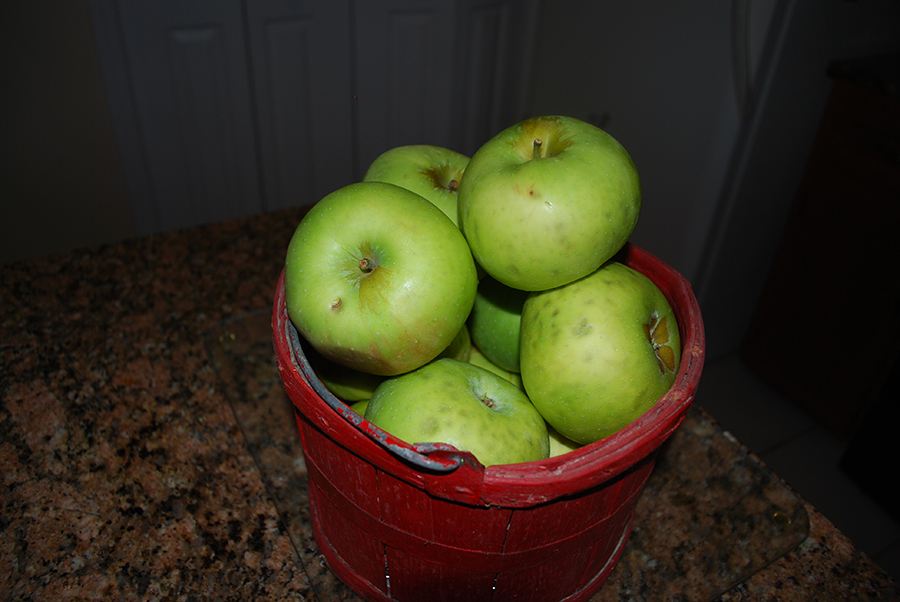
Every August, we start calling various country stores and farms to learn if the Summer Rambos have ripened yet. And when the answer is finally in the affirmative, we can finally enjoy one of our favorite apples, one which usually ripens in August and September depending on elevation and other factors in the Blue Ridge Mountains.
Summer Rambos have an interesting history. Coming into existence in France during the early 1600s and arriving in English by mid-seventeenth century, this variety was probably one of the first fruits to arrive in Colonial America. Indeed, Rambos were important and popular summer apples in our region for centuries until after the two World Wars in the twentieth century. That was when the trend for “pretty supermarket apples” began and practical heritage varieties lost popularity as a result.
The Summer Rambo’s greenish yellow hue is not particularly attractive, and the sides are often tilted. The apple is at its prettiest when it is very ripe and pinkish red mottling breaks out. This seems to help the numerous white dots stand out more visibly. The coarse, juicy flesh is greenish yellow as well, and I would regard it as a little below average as an eating out of hand-type apple. Nevertheless, I don’t mind snacking on Rambos just for the sheer joy of having fresh apples to eat once more.

So just what has this heritage variety have going for itself? The answer is that the Summer Rambo is outstanding for stovetop cooking. The applesauce that Elaine makes with the Rambo is divine. Fried Rambos are similarly a revelation, and a marvelous side dish for breakfast, lunch or dinner. But here’s the simplest – and my favorite – way that my spouse prepares this variety.
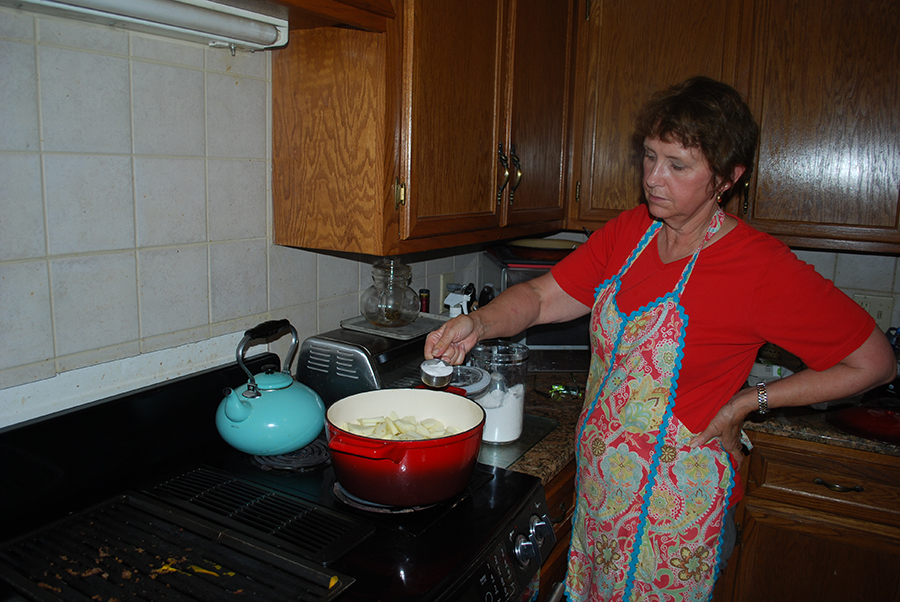
Simple Stovetop Summer Rambos with Sugar and Cinnamon
Ingredients:
- 6 large Summer Rambo apples, peeled and sliced
- ¼ cup sugar or to taste
- ½ teaspoon cinnamon
Directions:
Heat medium pot or skillet over medium heat.
Add apples, cinnamon, and sugar. Stir to mix well.
Cook 2-3 minutes, then reduce heat to medium low.
Cook until desired tenderness. Apples are soft and will turn to applesauce quickly, so watch to avoid overcooking. We prefer them “a little lumpy.”
Depending on the moisture in the apples, you may need to add 2 tablespoons water if fruit seems too dry. However, this variety usually releases moisture once it starts cooking.
Bruce and Elaine Ingram are authors of Living the Locavore Lifestyle, a book about living off the land. For more information, contact them at bruceingramoutdoors@gmail.com.