Skip to content

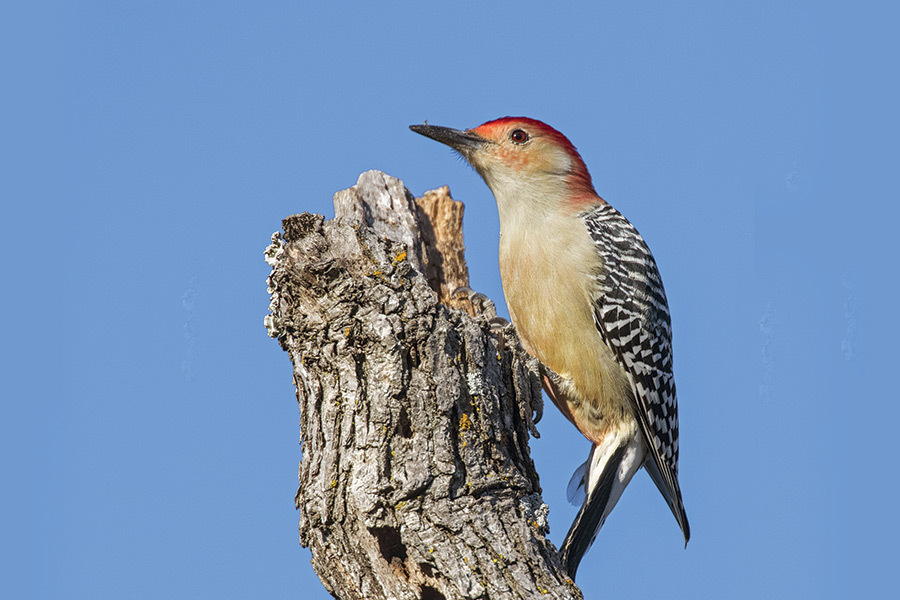
Why have woodpeckers fared better than many other birds in the Blue Ridge region?
The relentless tap-tap-tap was definitely annoying, admits David Wiedenfeld, senior conservation scientist at the American Bird Conservancy in The Plains, Virginia, as he recalls the determined red-bellied woodpecker that once took a liking to the metal flashing beneath the roof on his woodland home.

“It made a lot of noise,” he says. “It’ll wake you up on Saturday mornings when you’re trying to sleep in and a woodpecker’s out there at 6:30 a.m. hammering on your house.”
Even so, he points out, when one of the hard-headed birds appears to be drilling into your wood siding just for the heck of it, it’s really just trying to communicate with its peers through “drumming,” especially during breeding season, which starts around February in the Blue Ridge region.
“They’re actually doing it to make a loud noise that other woodpeckers can hear. They find a tree with a branch on it that makes a good sound. But they also find houses.”
Unlike many native birds that have dwindled or disappeared over the years, woodpeckers in the Appalachian Mountain states are actually thriving, with an 18% population growth nationwide since 1970. One reason, says Wiedenfeld, is that they build their nest holes and look for beetle larvae and other food in large, dead trees or rotted branches, not in the harder, live ones. And there are plenty of decaying trunks and limbs out there.
But that wasn’t always the case. A century ago, manmade farmsteads and pastures covered much of the area; by the 1920s and ‘30s, forest habitat had dipped to an all-time low in the eastern part of the country. Then came the Great Depression, which pushed agriculture westward to the Great Plains. Trees soon began to grow back on sites such as Shenandoah National Park.
“So [woodpeckers] have got more habitat in comparison with grassland birds, which have actually continued to lose habitat,” Wiedenfeld says. “We’ve got a lot more mature forests, and mature forests, of course, have dead trees or trees with dead branches, and the woodpeckers like that.”
Unique physical traits have also contributed to their survival. Bristly feathers cover their nostrils, keeping them from inhaling wood chips as they chisel. Special eyelids protect their eyes. And natural shock absorbers in their bills and around their brains guard against bodily damage.
“All of this is so they can bang their head on wood without being injured. And no, they don’t get headaches,” Wiedenfeld says. “One thing that I’ve always been impressed about woodpeckers is just how well built they are. They are very, very tough birds. Their bones are strong. They have good, solid muscles for hammering.”
And because they rely on big trees, they serve as good indicators of forest health, not to mention effective pest controllers. “They’re really neat birds,” says Wiedenfeld, noting that most woodpeckers don’t migrate in winter. “They’re always out there, maintaining our forests. And that can be very important.”
The story above appears in our January/February 2021 issue.