Skip to content


The story below is an excerpt from our January/February 2018 issue. For the rest of this story and more like it subscribe today, log in to read our digital edition or download our FREE iOS app. Thank you!
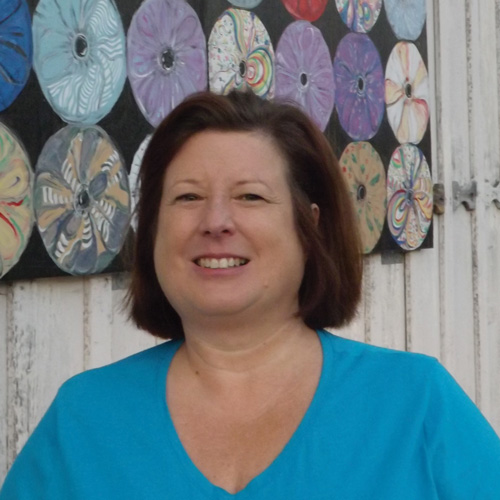
Suzi Parron is the author of “Barn Quilts and the American Quilt Trail Movement” and “Following the Barn Quilt Trail.” She and her husband, Glen Smith, left Georgia in 2013 in a converted bus RV for Suzi to give talks on barn quilts to quilting groups, libraries and other organizations. They return home each year to celebrate the holidays with family and to kayak on Georgia and Florida rivers. For more: barnquiltinfo.com.
I was two days into a cross-country camping trip when a flash of color on a Kentucky roadside compelled me to stop and inquire: “Why do you have a quilt on your barn?” Nine years later, I still ask that question every chance I get.

The owner of that first quilted barn shared with me that the painting was a barn quilt, a quilt pattern painted on wood to honor the work of farm women and their quilting artistry. Soon I was armed with a list of addresses and ready to embark on an impromptu tour of the county. Each barn along the path was home to a new discovery—some simple geometric patterns painted in bold colors, others more intricate and detailed. By the end of that June day, I was hooked.
A bit of investigation led me to quilt trail founder Donna Sue Groves, a West Virginia native, who conceived of the idea of decorating barns with wooden quilt blocks as a community project. The project she started in Adams County, Ohio, quickly spread to the hills of Tennessee and Kentucky and has become a nationwide phenomenon, with over 13,000 painted quilts.
I was eager to write about barn quilts but was not certain that I would find a book’s worth of material. I could not have been more wrong. My first foray into rural Tennessee left me already overwhelmed with stories to tell. One quilt block hung on a farm founded in 1848, with the pattern taken from a cloth quilt still on the premises. A county over, a Dutch Boy and Dutch Girl quilt block marked the oldest business in the state, a mill that had been in continuous operation since Colonial times. The owner regaled me with tales of the soldiers who had once occupied the property and showed off the original grant documents for the land.
Often the names of the quilt blocks were significant. A Virginia family chose the pattern Jacob’s Ladder to honor the founder of their property and the prosperity he brought to the community. A North Carolina farmer chose a Texas Bluebonnet quilt, as a tribute to Ladybird Johnson’s wildflower initiative.
My favorites were the painted quilts that were replicas of cloth quilts. A Kentucky farmer shared with me the significance of two quilt blocks on either end of his barn: One was taken from the first quilt that his mother had made as a young bride, while the other represented a quilt made by his paternal grandmother for his dad. His mom still had the two quilts in her home and was pleased to be able to share them with her neighbors since her advanced age made it difficult to entertain visitors.
Each painted quilt both decorated a barn and served as a reminder of something that was important to its owner. Whether painted in school colors to designate loyalty to a team or taken from a vintage quilt passed down for centuries, each design was significant.
Barn quilts serve as visible reminders of our origins. They celebrate connections to family and to places that speak to our souls in a digital age. Since the publication of my second book, I no longer have a professional reason to wander the back roads in search of painted quilt squares. But every now and then I give in to the impulse and make a detour into the rural countryside, knowing that a hand-painted gem and a grounding in the ways of the past are just around the corner.