Waterfall Wednesday: Double Falls – Kentucky’s Best-Kept Secret

Double Falls

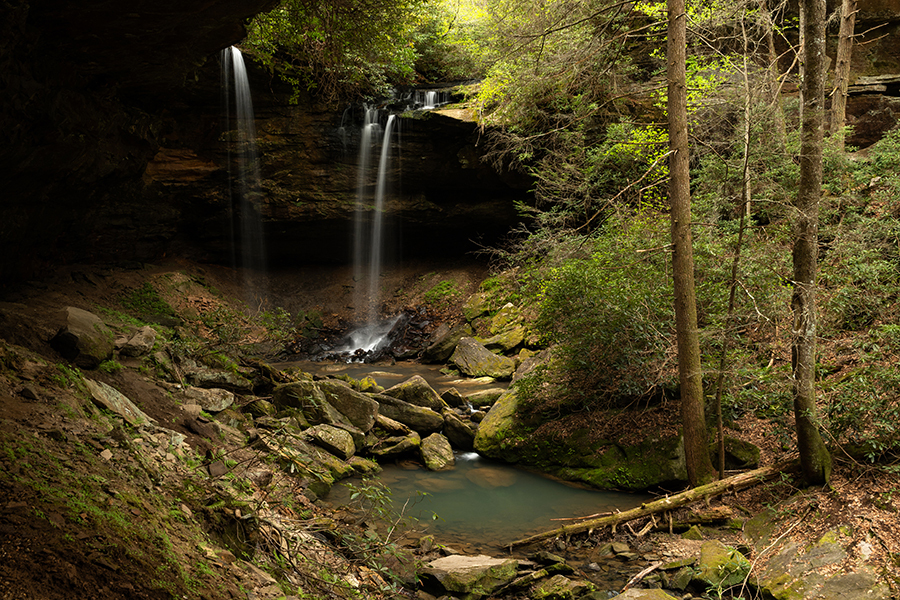
Hidden deep in the Daniel Boone National Forest, tucked away in London, Kentucky, resides Kentucky’s most beautiful waterfalls. That’s right, waterfalls — two specifically and rightly named Double Falls.

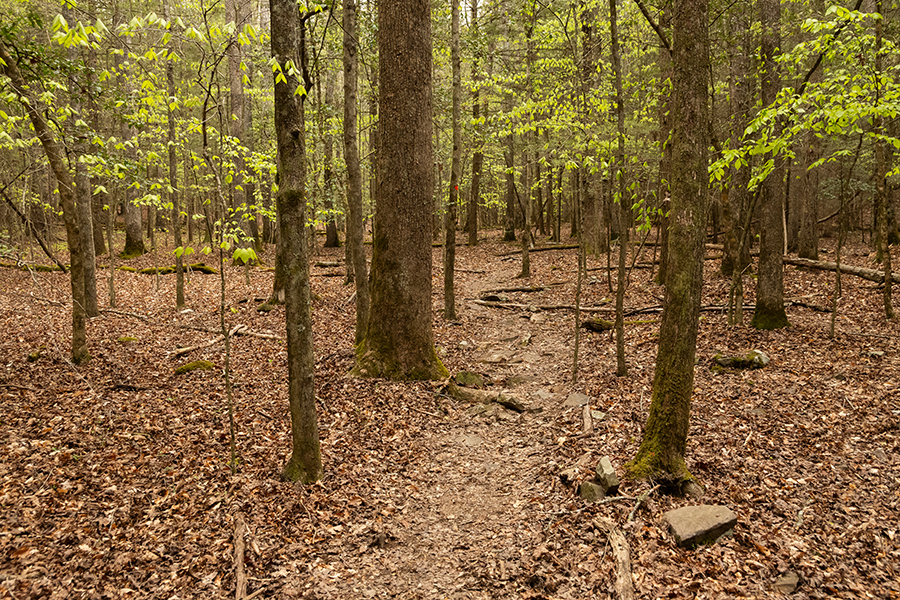
Path to Double Falls.

Double Falls can be very hard to find; if my buddy Nick had not researched the starting point very well, we would have never found it. No official trail exists that leads to the falls, and there is only one place to park. That also leads to my following statement: It is pristinely beautiful. Little foot traffic over the years has kept this place almost surreal. While finding the falls can be very challenging, using the coordinates 37.0754-84.2888 will put you where you need to be.
Double Falls
Double Falls

Since there is no trail, you will have to leave where you park your car and start walking downhill; you will find a creek to your right. You will follow this creek until it falls, cross the creek, go through the rhododendron bushes, and follow a light path until you run into the falls.

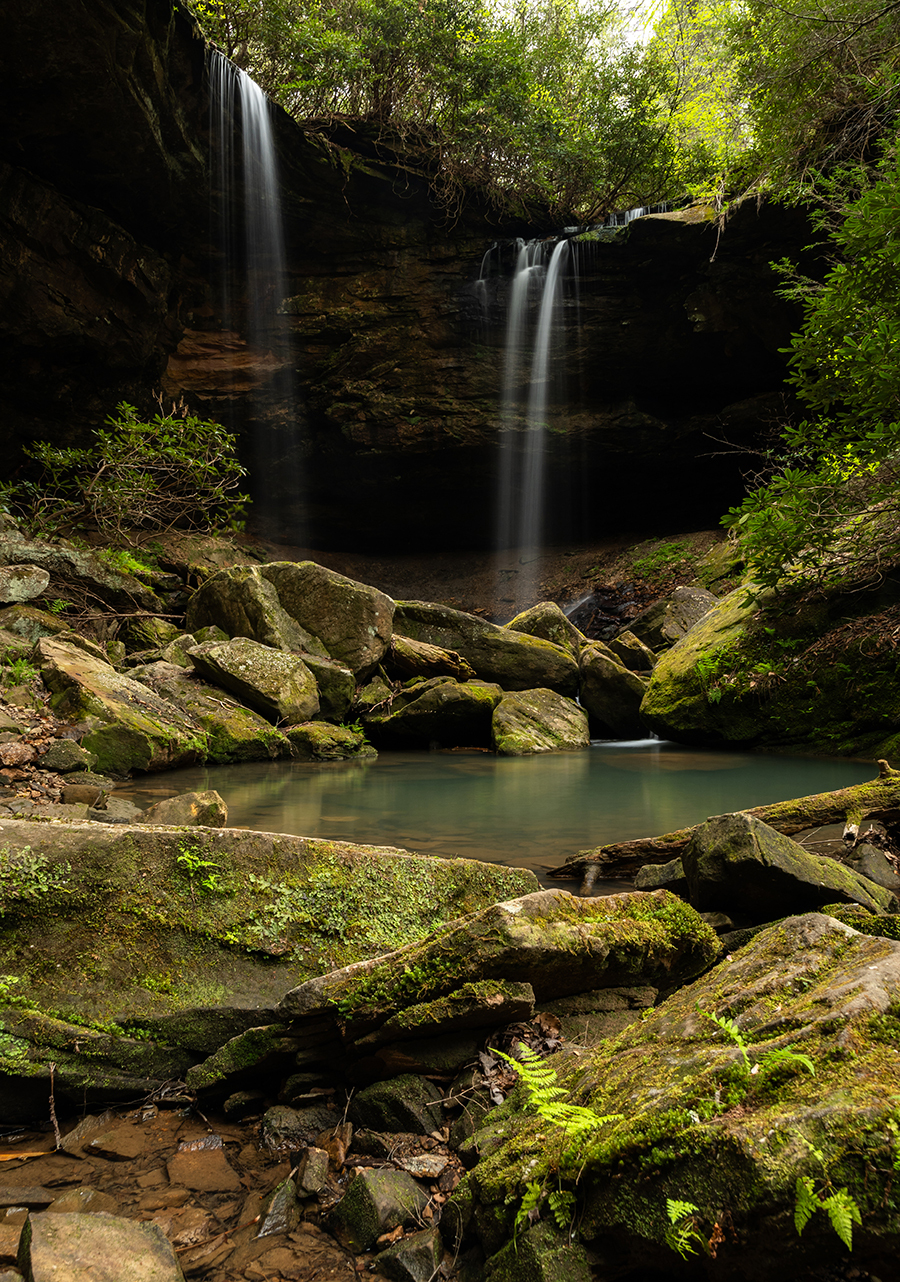
Double Falls flows into a beautiful pool with nice cliff overhangs surrounding you. The rock features will stand out, and you will get a whole experience of what the Daniel Boone National Forest offers, as it is known for its many rock features.

The unofficial trail/path is roughly 1.4 miles and is strenuous in many places but very easy in others, including the beginning. The creek is not deep along most of the trail, but it also depends on how much rainfall there has been. The best time to visit would be after a good rain, and I would also recommend bringing a hiking stick as it is slippery in spots. Also, let someone know where you plan on going, just in case. There are rocky ledges, and it is better to be safe than sorry.

Bonus location tip: Double Falls is near Double Arches, so watch for these as you drive to the parking area. They sit along the side of the road.

ABOUT THIS SERIES:

“Blue Ridge Waterfall Wednesdays” highlights a different waterfall each month from the Blue Ridge region. For the past two decades, Josh Moore has been exploring and capturing the beauty of this fantastic region he calls home. Josh is a professional photographer who has been published internationally, nationally and everything else in-between, and is widely known for his landscape/nature photography. See more of Josh’s work on his website, YouTube channel or on Instagram and Facebook.

You Might Also Like:

RIVERSIDE ROCK Housed in a former cotton mill, the Haw River Ballroom is a place that connects you not only to music but to the land itself.

Where the River Meets Revival

From the Haw River Ballroom to Saxapahaw Island Park, charming North Carolina town is a haven of creative expression, community spirit and natural beauty
Classic Preacher Cookies

Classic Preacher Cookies

In a season when we’re opening windows, tidying porches, and welcoming people back into our homes, they feel especially fitting.
e1b70596-05c8-11f1-92e0-1248ae80e59d-3-2026rueanemone--credit-Joe-Cook

March’s Mountain Wildflower: Rue Anemone

A member of the buttercup family and found in the open woodlands, rue anemone (Thalictrum thalictroides) has long, thin stems that tremble in the slightest of winds—prompting its other common name, windflower.
Pokeweed growing in Floyd County, Virginia.

January’s Wild Edible: Pokeweed

Pokeweed is one of the wild plants that is most associated with the Blue Ridge Region.
Arkansas Black apples sport an attractive reddish black color.

December’s Blue Ridge Mountain Apple Profile: Arkansas Black

Originating in the 1870s in, obviously, The Natural State, this variety is reputed to be a part of the Winesap family, which includes such esteemed members as the Black Twig, Stayman, and, of course, the Old Fashioned Winesap.
A purple-spored puffball growing in a field in Botetourt County, VA.

December’s Wild Edible: Purple-Spored Puffball

The purple-spored typically grows in this region’s fields, often appearing from October through December and into early January.
Kurt and Gail atop Cascade Mountain, Adirondacks New York, July 22

Kurt’s Hikes: The Last Dispatch

As I conclude my tenure with Blue Ridge Country magazine, which began with its founding in 1988, I will not conclude the weekly woods walks with The Greatest Day Hiker Of Them All.
d289022c-696f-11f0-a179-1248ae80e59d-CGZ_0845-011

Ride the Rails, Explore Rockbridge County: Make a Weekend of the 611 in Goshen!

This fall, one of America’s most iconic steam locomotives is making tracks and memories.
The compound, lancelike leaflets of the bitternut are a good identifier.

November’s Wild Edible: Bitternut Hickory

Frankly, this native species to the Blue Ridge mountains comes by its name honestly.
Mullein growing in Ingram's backyard.

October’s Wild Edible: Mullein

Earlier, this year, a lone mullein plant appeared along the fence that encloses my garden, which made me curious about this plant.

CALENDAR OF EVENTS