Skip to content


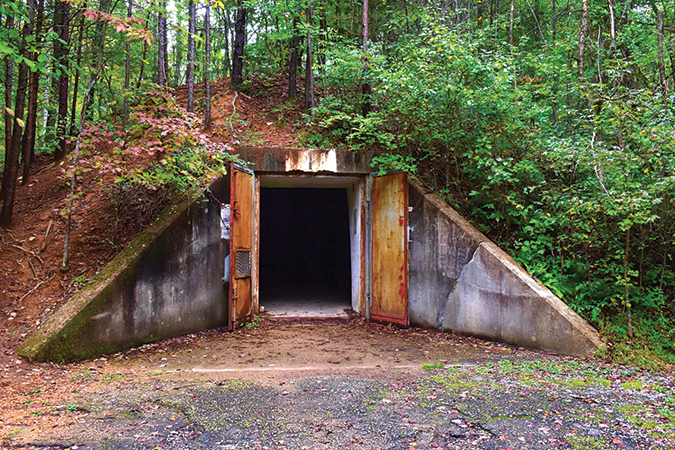
Trees have grown over many of the 1940s-era concrete bunkers at what is now Enterprise South Nature Park, near Chattanooga, Tennessee.
The Chattanooga preserve offers an odd combination of great birding and wildlife watching with 100 tree-topped concrete bunkers.

Enterprise South Nature Park, near Chattanooga, Tennessee, opened in 2010 with the usual array of offerings for a natural area: some 2,800 acres of wooded park land with trails, driving loops, overlooks and viewing platforms, picnic areas, a hidden lake, streams and a visitor center.
But this park also had an asset like no other: 100 large concrete bunkers standing within the vegetation.
The bunkers date to the early 1940s and had a singular purpose—to store crates of TNT flakes produced by what became known as the Volunteer Army Ammunition Plant (VAAP). Technically called Corbetta magazines, these domed bunkers were constructed in a “beehive” design. This facilitated a camouflaging strategy of covering the tops with soil and vegetation should any potential enemies fly over during the war.
Originally located across 7,300 acres, the VAAP munitions facility manufactured explosives for World War II—800 million pounds of it by the end of the war. It was reactivated for the Korean and Vietnam wars; and “laid away” in 1977.
Throughout the decades this facility was ahead of its time in pollution abatement efforts. Rather than pouring toxic production waste onto the ground, as was the common practice of the day, a treatment plant was built to protect the soil and water in the area.
Beginning in the late 1990s, site remediation and reclamation began, which successfully culminated in the opening of Enterprise South Nature Park.
Over time, the bunkers have become integrated into the landscape, complete with trees growing on top. Three bunkers are open to the public. With a single entrance, these structures feel like human-made caves with a distinctly parabolic dish quality. Go inside and whisper, sing or even tap dance to hear what it’s like to actually stand on the inside of an echo!
Woven amongst these unusual remnants of history are 10 miles of mountain bike trails, nine miles of paved pedestrian/bike trails and nine miles of walking paths. Placed strategically throughout are benches, water fountains, information kiosks, restrooms and ADA accessible picnic areas.
“There can be hundreds of people in the park at any given time, yet you can go down some trails and not a single other human will be around,” says local birder Kaye Fiorello.
So bring your binoculars to the three recognized birding hotspots in and around the park. Recent data reveals 145 species in ESNP; 96 species in the equestrian area; and 191 species in the park-adjacent wetlands.
“Winter is the best time to see all the ducks and waterfowl,” Fiorello says. “One year, we had over 100 snow geese come in! The most exciting time is spring, when you not only get to see so many species migrating but also get to witness courting, nest building and then the hatching and fledging of so many birds.”
Wildflower walks offer the chance to see two protected fauna species—the large flowered skullcap and pink lady slippers. Watch for deer and small mammals while spending the day at this local nature preserve dotted with global history.
The story above first appeared in our January/ February 2021 issue.