Skip to content


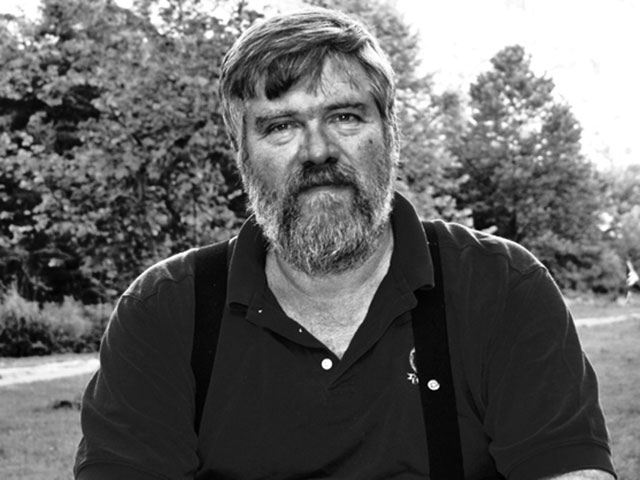
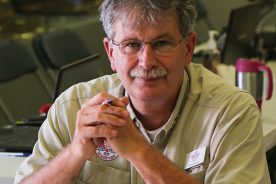
Art Menius, director of Appalshop in Whitesburg, Ky., was marketing and sponsorship director for N.C.’s MerleFest for 10 years. His career spans music, writing and research; he is a founder and former executive director of the International Bluegrass Music Association and was recently inducted into the Bluegrass Music Hall of Fame.
Dr. Nina Simone, “high priestess of soul,” was a hillbilly from Tryon, N.C.

That’s what I was thinking, driving on U.S. 119, hearing her unmistakable voice deliver “To be Young, Gifted, and Black” on Appalshop’s WMMT.
I thought of the obstacles she faced as someone young, gifted, and black in mid-20th-century Appalachia. With the help of her community, she got herself to the Juilliard School of Music and then Carnegie Hall. The diva’s story encompasses identity, strength and resilience – factors that continue to play a role in the region where she was born.
At Appalshop we tell other peoples’ stories, mostly from Appalachia. That suits me since even when I talk about my own experiences, I keep the focus on others. This tale is no different.
Exactly 25 years ago, I approached the mountains neither as a tourist nor a passer-through for the first time. Guided by musician David Holt, I went deep into Madison County, N.C., climbing to Sodom Laurel. I saw a fresh bear hide nailed to a barn for the first time just minutes before we arrived at our destination, the home – wedged between road and creek – of octogenarian ballad singer Dellie Norton.
Dellie’s relatives had sung in 1917 for English song catcher Cecil Sharp. Song hunters of different stripes had found their way to Sodom ever since, recording Dellie, Dillard Chandler, Cas Wallin and others there who sang versions of ballads once popular “across the waters,” as Dellie put it. For a 20th-century mountain singer, Dellie couldn’t have been more different from Simone’s jazz, classical and pop fusion. Dellie sang the old songs unaccompanied, using the twists and turns of her voice to bring the stories of “Matty Groves” and others to life.
In minutes, Dellie taught me never to stereotype mountain folks. Knowing we were hungry from the drive, she offered us a “traditional” lunch of frozen mini-pizzas. The most important meal of my life, its enlightenment outweighed even her announcement that advanced age had caused her to abandon moonshining for pot growing.
Only then did I start to ponder Junior, the true point of this story. In Sodom you could say he looked like a hillbilly, but in a city he’d look like a hippie. All cleaned up he resembled young Bob Dylan. Sometime around 1950, Junior’s father had died, and his mother distributed the children around the community. Junior, who wasn’t quite right, came to live with Dellie who sent him to school and taught him how to work. In their lovely symbiosis, she taught him well enough that he has now survived some 20 years without her.
All this happened without social workers or agencies. A family in the community had a problem. It was solved creatively, just like Nina Simone’s community helped her. This is what Appalachian communities do best – solve their own problems.
I envision Appalachia taking responsibility for itself. I see an Appalachia where we tell our own stories, shape our own future, educate our youth to the highest standards, preserve and use our environmental and tourist resources and demand to be the best.
Nina Simone knew everything about self-determination and overcoming obstacles. She was a hillbilly, you know.