Skip to content

Tennessee’s second oldest town has a story you won’t forget—and they tell it really well.
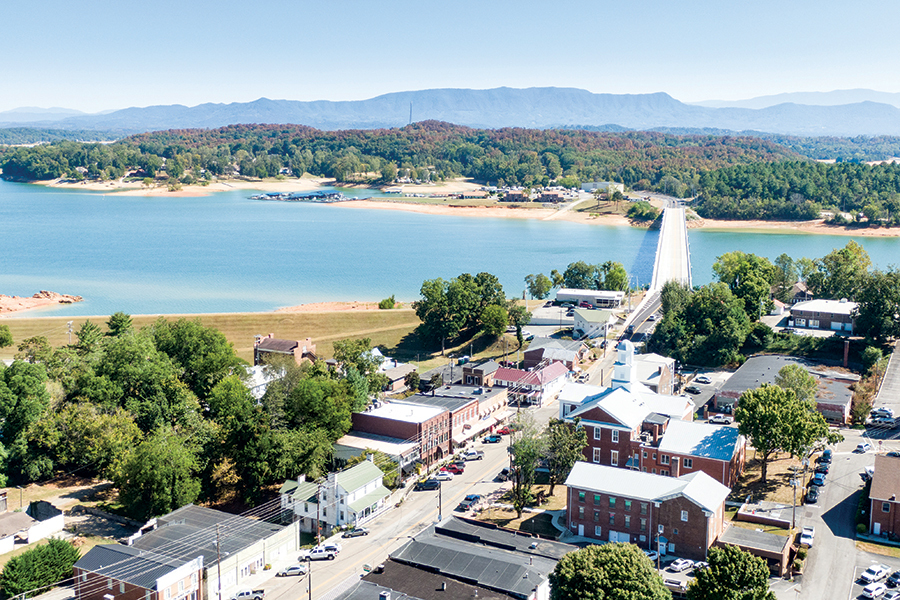
Photo Above: TVA’s Douglas Lake meets downtown Dandridge, with the Great Smoky Mountains a distant blue border. © TN Tourism | Jeremy Rasnic.
It’s on just about every visitor brochure featuring Dandridge and Jefferson County, Tennessee: “We Saved a Place for You.” A curious choice, I thought when I first saw it—rather generic, quite vague—and it raised more questions than answers. Who did the saving, and why? What got saved, and from what?

And so I found myself in Dandridge—it bills itself “the Heart of East Tennessee” on “the Lakeside of the Smokies”—listening to well-told and well-lived stories from a long time ago. Listening to the official Jefferson County historian “with a talent for working with deeds in the County Courthouse.” To a descendent of a family removed from their homeplace when the Great Smoky Mountains National Park was built. And yes…to the story of how, 80 years ago, Dandridge saved its historic downtown from a watery grave.
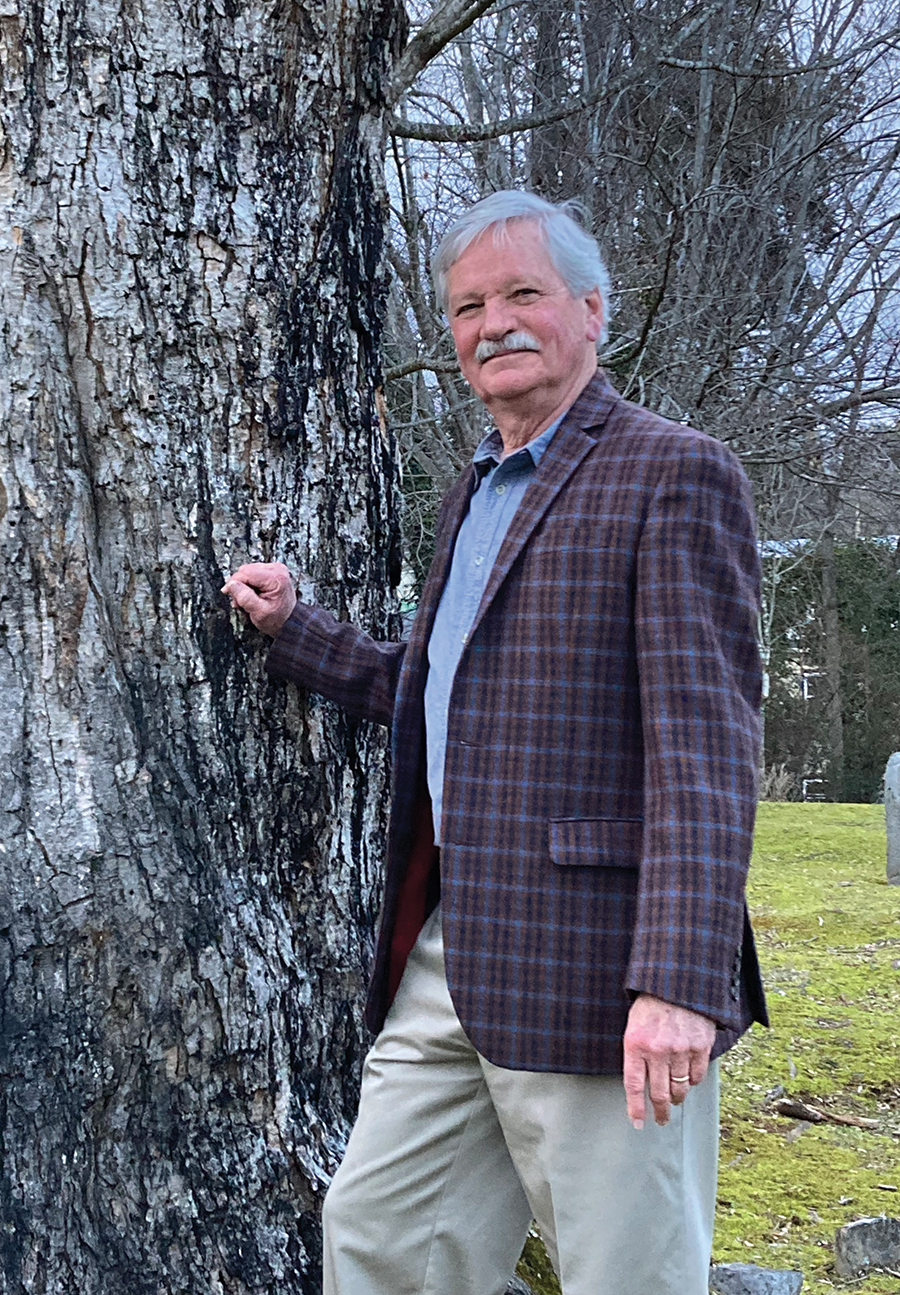
As a seventh-generation Jefferson County resident, Bob Jarnagin’s passion for his place runs deep. His grandfather was mayor of Dandridge from 1930 to 1970, and Jarnagin now owns the longstanding family insurance business on Main Street. “My ancestors came at the close of the Revolutionary War, in 1783. They built the first gristmill in the area.”
© Joan Vannorsdall
Dandridge is located along the French Broad River, and on a major north-south migratory route.
“People came by stagecoach and steamboats to Dandridge,” Jarnagin says. “So we had a lot of early inns and taverns here—and four of them are still standing and occupied.”
One of those, the Shepard Inn bed and breakfast, boasts of three sitting presidents—Andrew Jackson, James K. Polk and Andrew Johnson—having stayed there. Jarnagin steps across the graduated rise of stepping blocks near the entrance and balances above the gravel lot. “This,” he grins, “is how the ladies mounted their horses and got into their stagecoaches.”
It’s in the nearby Revolutionary War graveyard that Jarnagin tells the story of how Dandridge got its name. “The County of Jefferson was designated in 1792,” he says. “And a year later, the first commissioners of the county elected to name the county seat after George Washington’s wife, Martha Dandridge Custis Washington. That’s pretty amazing, a group of 18th-century men naming this place after a woman!”
The graveyard was the site of the first Presbyterian church in the area, organized in 1785. The log structure is long gone, but many of the cemetery stones remain, most unreadable, some little more than native rock buried in earth. If you wander down the hill, a strong spring still flows, one of the draws for settlers, Jarnagin says.
He’s understandably proud of his place, where Greek Revival and Federal Style architecture abound and still house functioning businesses and government offices. “Our downtown buildings are more than museums—we’re a working, living town.”
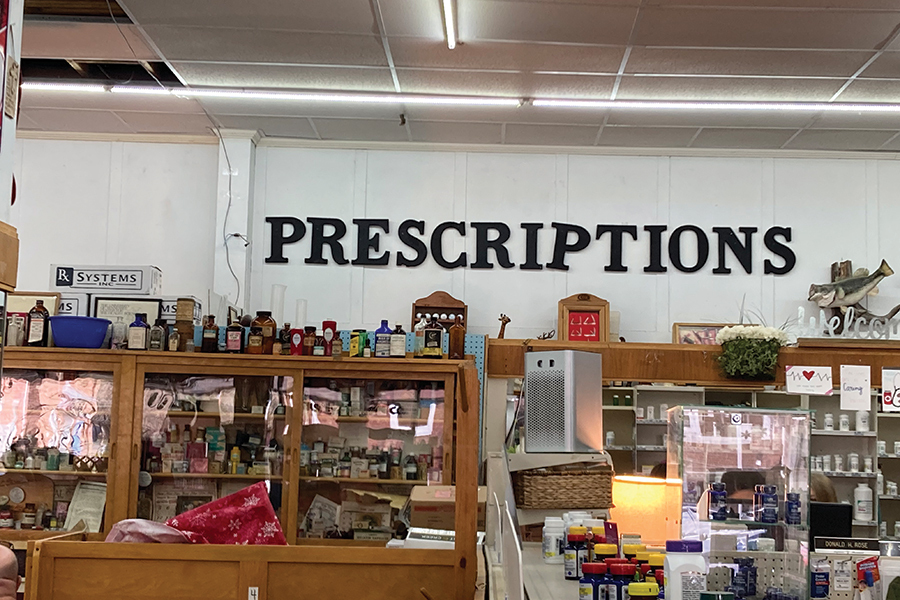
(Nowhere is this more evident than in Tinsley-Bible Drugs, where an old-fashioned lunch counter/soda fountain and a functioning pharmacy with a new, young owner draw both long-time residents and thousands of visitors. Dating back to 1911, Tinsley-Bible is a must-see.)
The visitor center is housed in an 1820s coach house, and it’s where you can pick up a well-documented Dandridge downtown walking tour guide that also includes a driving tour of outlying areas. (It speaks volumes about this place that the maps were made in conjunction with Jefferson County Schools’ Service Learning Class, including QR codes for audio narratives.)
Roger Kelley works the visitor center desk, and tells stories as willingly as Bob Jarnagin. Kelley’s family was removed from the nearby Cosby area (which he calls “the quiet entrance to the Smokies”) during construction of the park. And he tells the story of how Dandridge saved its downtown as well.
“We almost lost our downtown in 1942,” Kelley says. “It was all part of the Manhattan Project, 50 miles northwest of us in Oak Ridge. Plutonium and uranium were being tested in order to develop the first atomic bombs. Douglas Lake was being built to provide hydroelectric power for the project. Top secret, all of it.”
© Joan Vannorsdall
Because downtown Dandridge lay below the proposed water level, it would have gone underwater. So the town quickly put together a six-member planning commission that went to Washington to plead their case. The plan: to build a massive earth-and-stone dike to keep the lake above Dandridge.
Some say it was Eleanor Roosevelt who made that happen; others attribute it to FDR. Whoever managed to negotiate the saving of this place, the Army Corps of Engineers came and built “the dike that saved Dandridge,” rising high above Main Street and shadowing Town Hall in the late-afternoon light, an inescapable reminder of what almost was.
The rest is history. Forty-three-mile-long Douglas Lake filled, displacing 525 families and covering rich, multigenerational farmland. “History lost … and history made,” Jarnagin points out.
Can Dandridge keep what makes it special? It’s far enough from Pigeon Forge and Gatlinburg that its quiet, natural beauty and functioning historic downtown make it unique in that part of Tennessee. But both Jarnagin and Kelley point out that their town “has been discovered.” Over the past couple of years, they’ve seen an influx of urban refugees seeking small-town quiet, and real estate is selling fast.
I’m thinking that a town savvy and determined enough to save itself from drowning—and makes its slogan, “We Saved a Place for You”—will likely hold its own nicely.
If you want to know more about the Dandridge and Jefferson County story, go to projectletschat.org. Organized by three young Dandridge residents, the project records and posts oral histories with the slogan “Our town through 10,000 stories.”
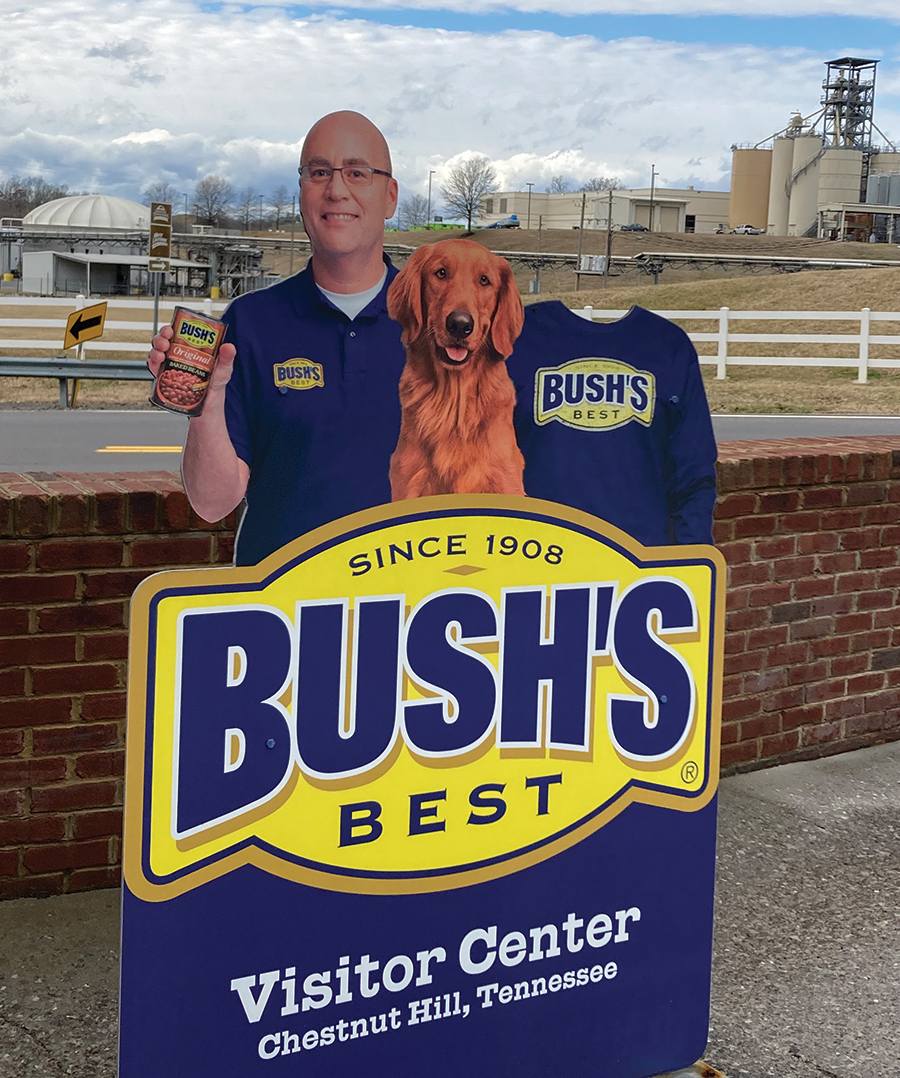
Bush’s Beans: A Don’t-Miss in Jefferson County
Ten miles south of Dandridge sits the largest producer of baked beans in the world: Bush’s Baked Beans. Still run by the Bush family, the factory and adjacent visitor center, museum, gift shop and café sprawl over dozens of acres in tiny Chestnut Hill, Tennessee, within view of the Smoky Mountains. Redone in 2022, the museum is dedicated to, yes, beans. Catchy phrases like “our beautiful bean story” and “the beautiful bean harmony” are scattered throughout the documentary chorus, and the thing is . . . you leave there feeling the love. After more than a century, the Bush’s Baked Bean story is still rooted deep in family and community, and the company is known for its employee loyalty. It’s, well, beautiful.
The story above first appeared in our May / June 2023 issue.