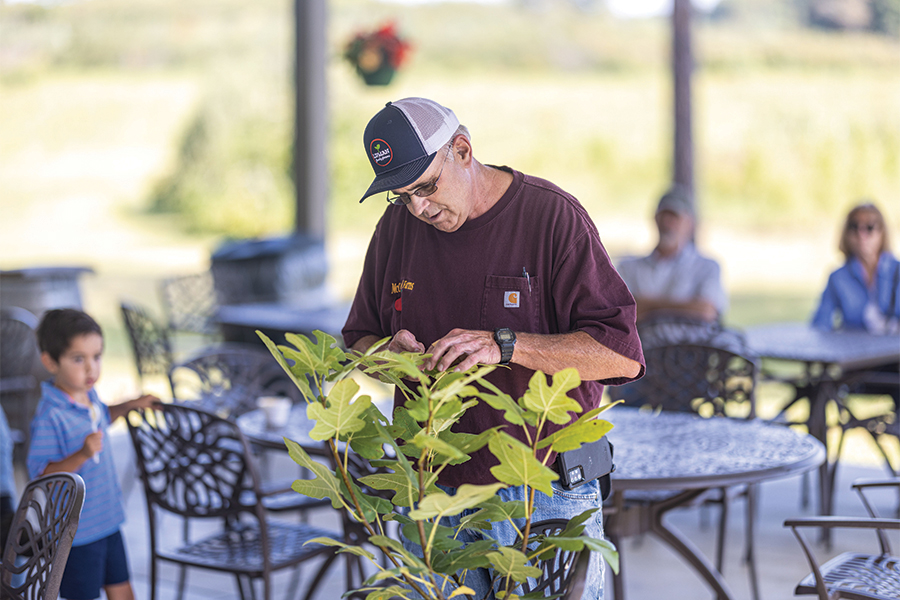
Danny McConnell grows figs and other unusual produce in the North Carolina mountains.
Photo Above: Danny McConnell is a huge fig fan, selling fig jam, fig pan pies and more. © Jared Kay.
Danny McConnell was selling his fruits and vegetables at a tailgate market one Saturday when two women started squabbling over the last little cup of figs on the table.

“So we started planting more and more and more, and it really has worked out well for us,” says McConnell, who owns McConnell Farms in a valley rimmed by the Blue Ridge Mountains in Hendersonville, North Carolina. “I tell people that’s the only crop I’ve ever grown where I have people fighting over them.”
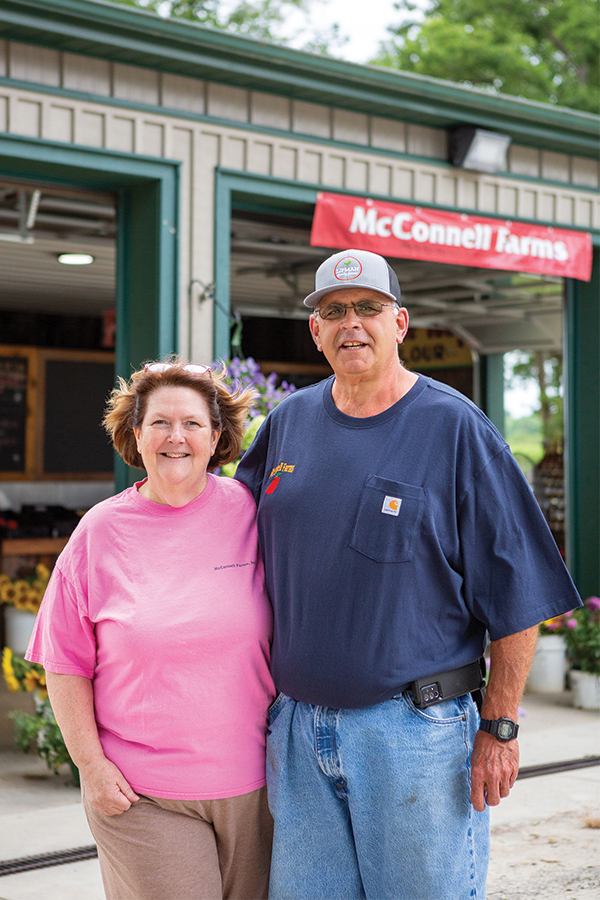
©Tim Robison
Farming is no doubt in his DNA, but that doesn’t mean McConnell, a third-generation farmer with a degree in fruit and vegetable science, has precisely followed in each family footstep. The tobacco crop his grandparents cultivated two miles away went up in smoke a long time ago, and the dairy operation his mom and dad maintained is no more. Although he still grows some of the traditional fruits and vegetables his parents later planted on these 125 acres — they also provided peas, pumpkins and apples to Gerber for baby food — McConnell has followed his own path, adding a greenhouse, a nursery and a variety of specialty produce.
Still, he credits those who came before him with his sense of agricultural adventure.
“My father and I used to farm together, and my mother’s 96 and she is still active. They’ve always really given me leeway to do something I wanted to do. … I’m continuously hunting new things to grow, and in different ways.”
Fig shrubs now line both sides of the road leading into the farm’s driveway, while fast-selling “baby” ginger is harvested from the same pots in which it grows. Rhubarb is becoming increasingly popular with customers.
“It’s an old vegetable that’s been around for years,” McConnell notes. “We have a lot of population that has moved here from the northern part of the United States, and they know what rhubarb is. In this area, rhubarb was not a big thing back in the day. But now children are leaning to wanting something tarter. So that’s a trend now.”
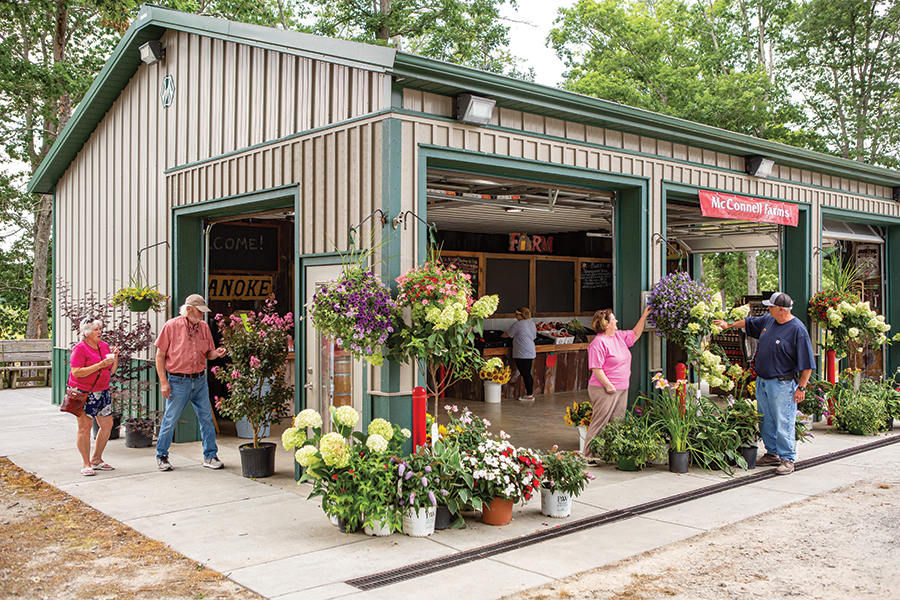
McConnell, who once sold wholesale items to grocery giants like Walmart, Harris Teeter and Ingle’s, now showcases a wide range of products, from tomatoes and corn to blackberries and peaches, at his on-site retail store and at a few tailgate markets and festivals. (His apples are available at Hendersonville’s North Carolina Apple Festival on Labor Day weekend.) The market’s cider bar features a half-dozen flavors, most with at least a hint of apple, and the bakery offers doughnuts, fritters and more, all seasoned with fruit from the farm.
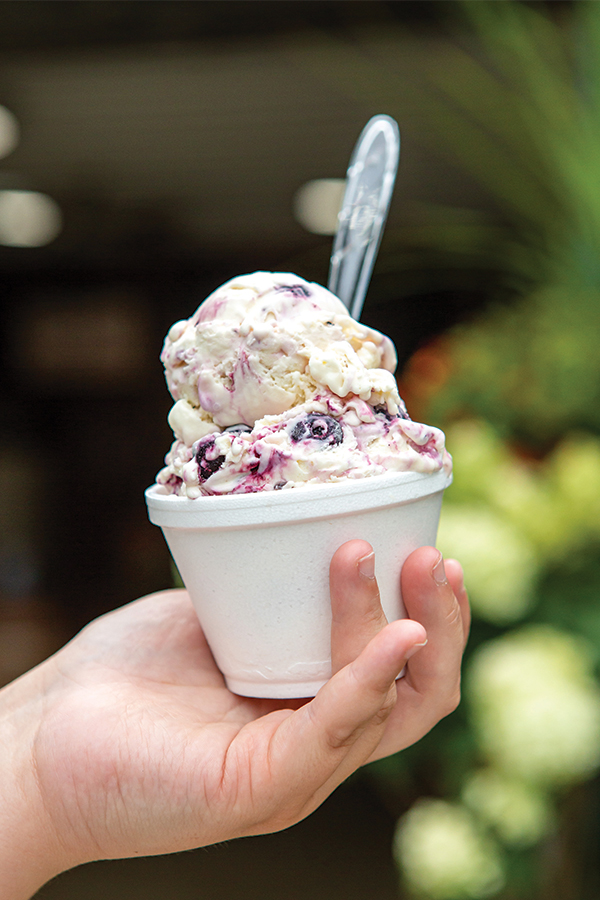
©Tim Robison
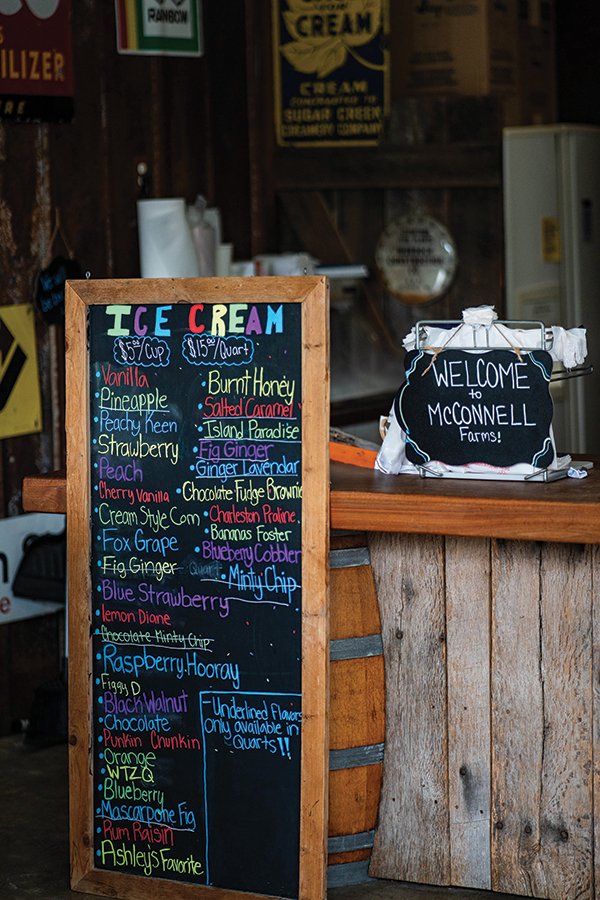
After making fresh ice cream off and on since 1999 as a way to use excess fruit, a while back McConnell Farms stepped up production, traded its “hit-or-miss” five-gallon wooden churn for a more efficient batch freezer and now offers as many as 20 flavors at a time, including unusual combinations like blackberry chocolate chip and fig mascarpone. Lucky 13, blended with 13 fruits grown on the premises, is a popular gluten-free, sugar-free, keto-friendly option for health-conscious visitors with a sweet tooth. McConnell’s personal favorite, however, is still strawberry, the first flavor he introduced.
“I feel like we’ve pretty much perfected it,” he says.
His fig fascination began with a couple of plants in 2007. It took two years to harvest the first batch, along with a lot of trial and error to find a type that would grow well in the mountains, far removed from the hotter climates that generally produce more, and plumper, fruits. Eventually, McConnell landed on Chicago Hardy, a deep-purple, smaller variety that is believed to have come from the Mediterranean region and showed up on the outskirts of the Windy City in the 1980s.
© Jared Kay
When rattling off the farm’s fig-inspired foods, McConnell sounds a bit like Forrest Gump reciting his memorable shrimp dialogue: Fig cider. Fig ice cream. Fig pan pies. Fig jam. Fig Fest, which he hosts on his farm in September each year.
The juicy treat is often overlooked, at least in the Blue Ridge area, he says. “Most people — the only experience they’ve had with a fig is in a Fig Newton. And those figs are all grown in California. There are probably over a thousand varieties of figs worldwide. I’d say there are at least 400 grown in the United States.”
Fig research in this country is scarce, he points out. “For apple production, peach production, we’ve got different universities that are continually releasing new varieties of everything. The one exception is figs. Universities don’t feel like there’s enough volume of growth there for the millions of dollars it would take to breed new varieties, so a lot of fig varieties come from hobbyists. They have fig clubs where people get together and trade fig cuttings.”
When Hurricane Helene hit the area last September, the farm buildings thankfully dodged the worst. But McConnell’s home sustained quite a bit of damage.
“All around us, it sounded like there was a timber operation going on. Trees were breaking everywhere.”
To make matters worse, because of the two-week power outage, McConnell lost most of the refrigerated cider, ice cream and other products destined for wholesale customers across both Carolinas during what is normally the busiest retail season of the year. For the first time ever, the farm market closed to the public for several months after recovery officials warned guests to stay away from the affected area.
© Tim Robison
“We had all this product and we just didn’t have anywhere to go with it,” McConnell recalls. “It took eight people three days after the power did come back on, finally, to dump everything.”
A chef at heart, McConnell sometimes wonders what it would have been like to choose culinary arts over crops.
“I love to cook,” he admits. “If I had my druthers, I think I’d probably be in a restaurant now, getting ready for the dinner crowd.” Even so, he’s happy growing the fruits and veggies that end up on tables in homes throughout the region — as long as he gets to introduce new ones along the way. “I’ve always said, ‘If you don’t keep up with the times, you fall behind, and you will soon be forgotten.’”
For more info and hours of operation, see facebook.com/McconnellFarmsInc.
Danny McConnell: 3 Things That Might Surprise You About Figs
- No native figs grow in the U.S. “Absolutely none. Every fig tree in the United States originated in another country, in Spain, Portugal or the Middle East. We hear stories all the time of immigrants that came over during the last century and they brought a fig plant with them.”
- Figs don’t need pollinators. “In the Far Eastern and Middle Eastern countries, there’s a little insect called a fig wasp, and they can grow different varieties of figs than we can because those figs are pollinated by fig wasps. But some figs are what we call perfect flowers … just like a strawberry. They have both male and female parts in the same plant, so they don’t need anything to pollinate them.”
- It really isn’t a fruit. “You’re eating a modified flower. When you break the fig open, a green fig especially, it’s got the parts of the flower inside it. As the fig ripens, when the sugars get up in the fig, that kind of goes away.”
The story above first appeared in our July / August 2025 issue.