The stand of chestnut and scarlet oaks on my 140-acre mountainside tract in the Sinking Creek Valley of Craig County, Va. spoke volumes about the devastation that gypsy moths can wreak. Three of the chestnut oaks stood like gaunt, lifeless sentinels at the perimeter of the stand while two others sported only a few, small leaves although the time was late May.
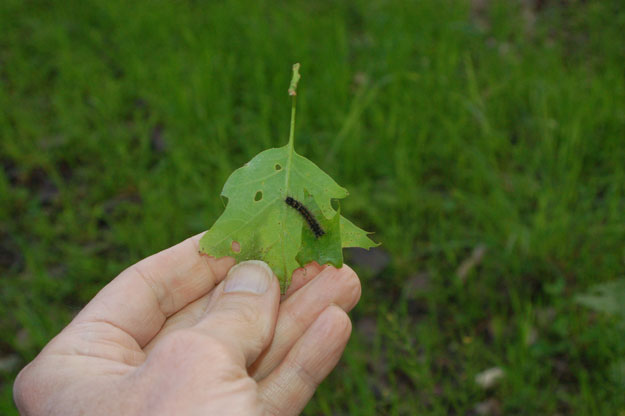
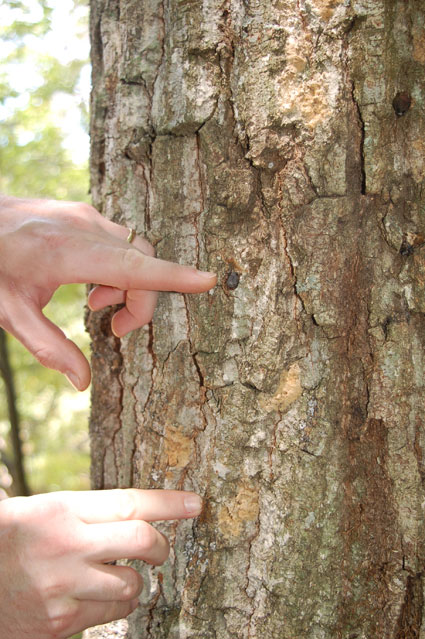
The scarlet oaks, sick as well, looked incapable of lasting the summer as their malnourished leaves, what few there were, hung limply in the breeze. Moving closer, I noted the dried out brown husks of hundreds of last year’s gypsy moths lining the crevices of the chestnut oaks. Meanwhile, this year’s caterpillars could be seen rapidly consuming what few leaves grew on the hardwoods.

Gypsy moths have savaged forests as far south as North Carolina. Since their escape from a lab in Medford, Mass. in the 1860s (where Professor E. Leopold Trouvelot had hoped to make his fortune by breeding a hardier silkworm) they have been on a relentless march toward our region. Sadly, it seems inevitable that they will soon reach all the states of the Blue Ridge as these Asiatic invaders favor trees common to our mountains such as oaks, hickories, maples, and apples.
What can be done if you find gypsy moths on your property or on public or private lands that you visit? Certified Forester Duane Means, who operates Arrow Forestry in Craig County, offers these points to ponder.
• Is timber stand improvement (TSI) or timber cutting an option?
• Is spraying an option? Cost varies but may run $50.00 an acre.
• What is the current level of infestation? (minor infestations sometimes fizzle on their own; major outbreaks can kill every hardwood on a property)
• What is the forest’s age and health? (older forests, for example, are much more susceptible)
For more information: Arrow Forestry, 540-544-3082, arrowforestry.com.
Gypsy Moths: The Life Cycle
• Between July and September females lay between 500 and 1,000 eggs (eggs are in tear-shaped, yellowish egg masses about 1.5 inches long) on everything from trees to cars to firewood. Any outside object is a potential host. This propensity helps explain why the moths spread so easily.
• The larvae hatch in mid spring, often April. The dark-colored 1.5- to two-inch caterpillars sport dense hairs and five pairs of blue dots followed by six pairs of red dots on their backs. They have evolved to feed mainly at night when they escape bird predation.
• In early summer, the caterpillars enter a pupa stage where they are two inches long, dark brown, and sparsely covered with hairs. The caterpillars employ silk to attach themselves to objects.
• Several weeks later, the adults emerge with the dark brown males having a 1.5-inch wingspan and the slightly larger females flaunting white wings with black wavy markings. Both sexes feature inverted V-shaped wings that lead to a dot on those wings.
For pictures of the various stages: fs.fed.us/ne/morgantown/4557/gmoth/cycle. For more information on gypsy moth biology and life cycle: urbantext.illinois.edu/gypsymoth/biology.