Skip to content

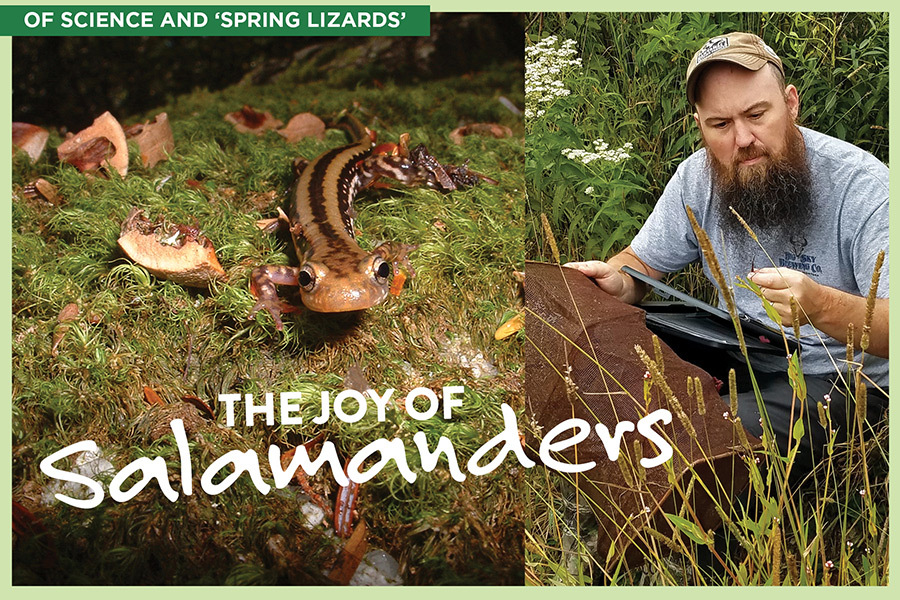
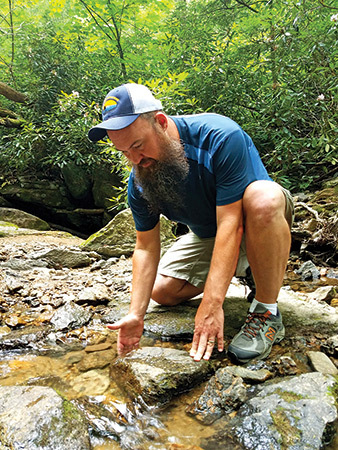
Jon Davenport: “I am kind of biased with salamanders. I mean, they are everywhere, but people just don’t realize how special it is to find one, and to see so many different ones, especially in the Appalachians.” Courtesy Jon Davenport
Jon Davenport is so enamored with the amphibians that he has his three daughters on a life quest to find a 10th species at their own house.

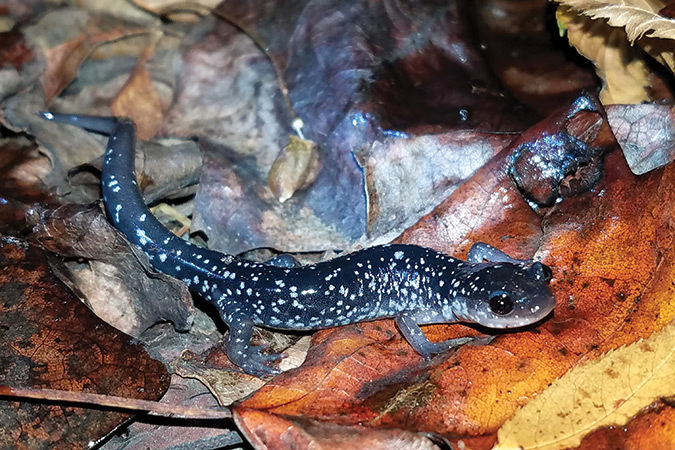
Jon Davenport is still a bit giddy from this morning’s field trip and the wriggly critters his students from Appalachian State University in Boone, North Carolina, discovered on the trail. Socially distanced and wearing masks, the small group met at Davenport’s house near the Watauga River and drove to Beech Mountain in search of the elusive Pinkney salamander found only at high elevations.
“When it gets close to freezing, some species like this one tend to disappear for the year,” he says. “But we thought they would probably be there. And sure enough, there they were. Once temperatures warm up, maybe next week, we’re going to try to go back.”
For the gregarious Davenport, an amphibian researcher and assistant professor who travels the world studying various species, sharing moments like this with his young proteges is the best part of the job.
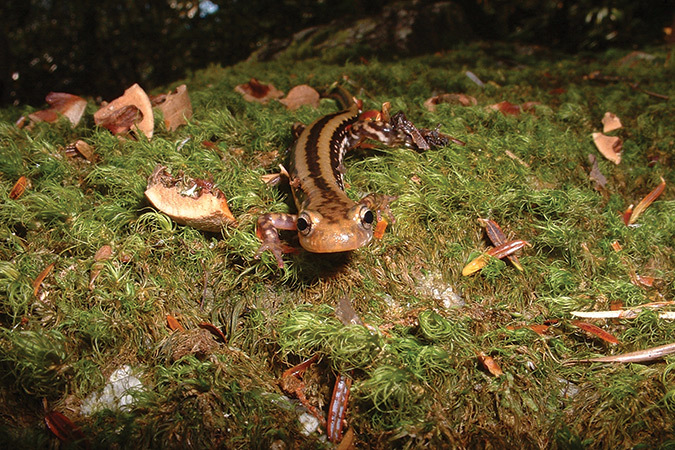
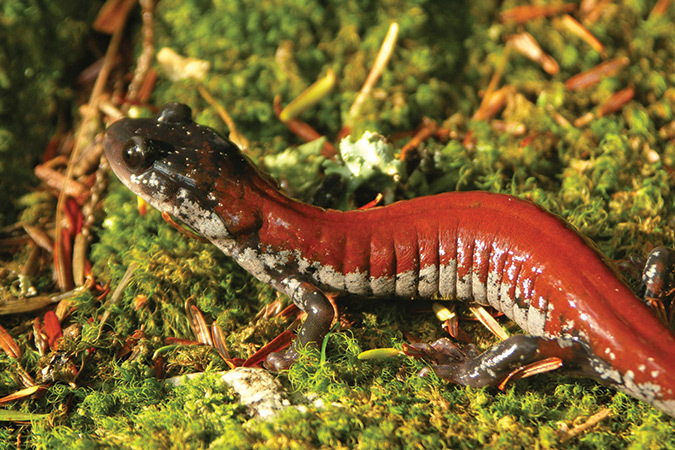
“I am kind of biased with salamanders,” he says. “I mean, they are everywhere, but people just don’t realize how special it is to find one and to see so many different ones, especially in the Appalachians. The southern Appalachians have the highest diversity in the world, rivaled only by a few places in the tropics.”
Davenport, 40, has spent his whole life practicing what he teaches, which currently runs the gamut from herpetology to community ecology and conservation biology. Growing up in a trailer park on the Little Pigeon River in Sevierville, Tennessee, he spent many days hunting and fishing with his dad at Douglas Lake and the Cherokee National Forest, attending family reunions in the Smokies, and fly fishing with his dad’s relatives near Copperhill.
“I’m trying to make up for past sins,” Davenport admits. “We used to use salamanders as bait. We called them spring lizards back then.”
Like many young boys, he dreamed of being an astronaut, or maybe a cowboy. In middle school, he thought about becoming a veterinarian but ultimately decided, “I would struggle not being able to talk to the patient.”
At Maryville College, Davenport initially wanted to focus on fish, but his “eureka” moment came when an amphibian-reptile professor invited him to help out with a few projects.
“The amphibians were the most enticing, and growing up near the Smokies I was in amphibian heaven,” he says. “What was appealing to me is that they specifically have to come back to water to lay their legs, so they actually spend a fair amount of time on water and on land.”
As if he needed any more nudging, a couple more experiences—one observing differences in salamanders as an intern for the Tennessee Wildlife Resource Agency between earning his undergrad degree at Maryville and his master’s at Austin Peay State University in Clarksville, another while researching frogs for his PhD in the coastal plain of North Carolina—sealed the deal.
“That really has stayed with most of my student themes,” he says. “We try to figure out: Why are these animals here and how are they affecting each other and their environment?”
Near the end of his doctorate studies at East Carolina University in Greenville, North Carolina, he dipped his toe in the teaching waters.
“I like talking,” he jokes. “I really liked interacting with students and I knew then that I wanted to continue. Some of the best research we do is through teaching. And they also come up with questions that I never would have thought of, so they’re great collaborators for us, the faculty. They always keep you on your toes.”
After completing a postdoctoral fellowship in Montana and joining the Tennessee Aquarium Conservation Institute in Chattanooga as an affiliate scientist, in 2014 Davenport embarked on his first teaching gig at Southeast Missouri State University at the edge of the Ozark Mountains. Two years ago, he joined App State, where he is known for his laidback, approachable style.
“I’m here to hopefully help [students] succeed,” he says. “I’m pretty lenient with most deadlines as long as we get a solid reason. I like to have my door open so students can drop by at any time and I try to be fairly casual and walk around and do small-group work and brainstorm. Being accessible is really important for the younger generations now.”
Not surprisingly, COVID-19 sidelined several class projects. Last spring, just as the students finished filling the fenced-in, outdoor stock tanks with salamanders from three states and were about to study how the different populations responded to pond drying, the university went into lockdown.
“And then it all fell on me,” Davenport quips. “I got a good workout because the way that we mimic pond drying is to bail out water. So my back got stronger, for better or worse.”
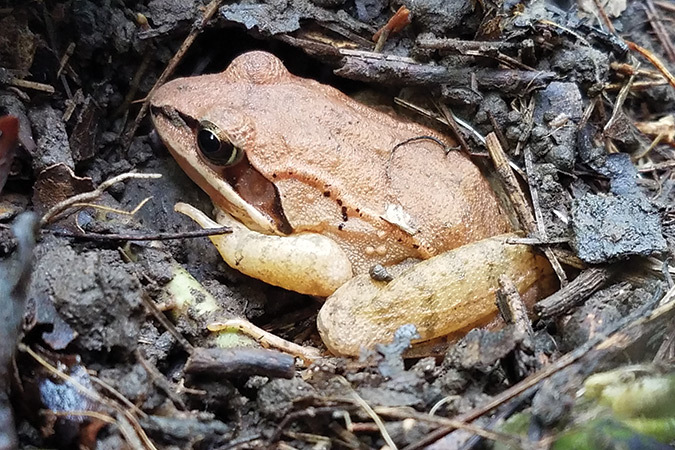
To Davenport’s disappointment, last year’s scheduled trek to the Arctic—part of a nine-year study on the impact of climate change on wood frogs—was also sidetracked. At the edge of the boreal forest in northern Manitoba, the landscape fades into mostly-flat, treeless tundra filled with ponds where the adaptable amphibians freeze solid to protect themselves in extremely cold temperatures. Because the permafrost there is melting at a faster rate than elsewhere in the world, “drunken” trees tip to the side.
“You also get to see beluga whales, polar bears, caribou, amazing shore birds,” he says. “And there are three different indigenous tribes that come in there next to the river that they can interact with, the elders. It’s just a bummer we didn’t get to go [in 2020].”
For now, though, the admitted barbecue snob—he sometimes chooses a field site for its proximity to a good pulled-pork joint—is satisfied to scour the ponds and streams in his back yard for salamanders with his girls, Idabelle, age 5; Estalee, 8; and Leoria, 10. (His wife Jenny, a biologist specializing in bats and birds, also encourages their scientific exploration.)
“We found nine species at our house here and there’s an open challenge to my three daughters to find a 10th one,” says Davenport. “And there’s a prize.”
To Blue Ridge residents lucky enough to discover salamanders on their hikes through the woods, Davenport urges, “[Flipping logs] to look for them is great because that’s how you can appreciate some of these guys. But make sure you put their home back.”
3 THINGS JON DAVENPORT LOVES ABOUT WORKING WITH AMPHIBIANS
1. They live on both land and water.
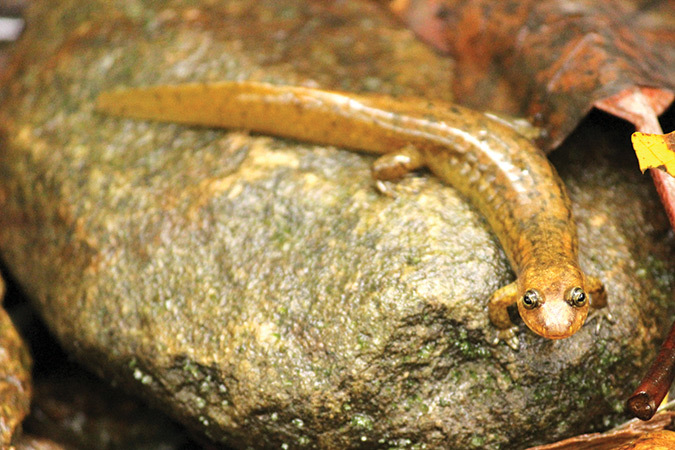
“Once they leave the water, there’s a whole other life that we need to explore. I like that kind of double life. That’s what ‘amphibia’ means: double life. One of my favorites is Plethodon yonahlossee, a large terrestrial salamander.”
2. Salamanders are extremely resilient.
“A lot of these forests around here have been cut 80, 100 years ago and they still seem to be doing pretty well in most places. [The salamanders] just spend time underground and come back up. They can regenerate limbs. That seems so alien and something out of a science fiction movie. “
3. Wood frogs can safely freeze in winter.
“We joke with our Canadian friends that they’re basically like little frozen hockey pucks for nine months of the year and then they crawl up out of the ground and hop off and do normal things, then come back and are basically frozen again for another nine months. That’s just fascinating to me.”
The story above appears in our January/February 2021 issue.