Skip to content

One weekend in May, 1953, a group of southwest Virginia thespian “thieves” raided a New York theater and came back with the goods.
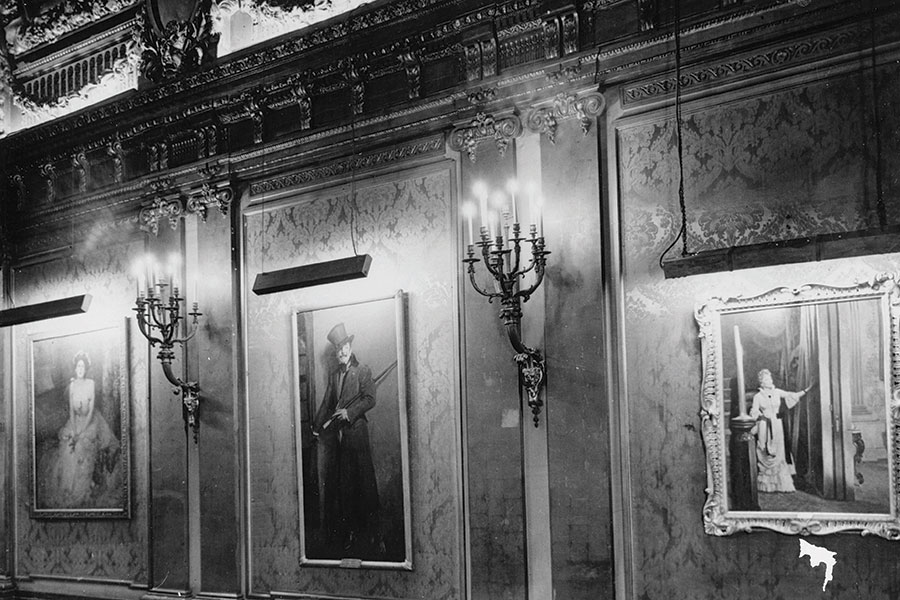
Photo Above: While seats were the primary treasure from the Empire Theatre, the Barter people also brought back chandeliers, artwork and lights.
Photos Courtesy of Barter Theatre.
Robert Porterfield and his Barter buddies had only one weekend in 1953 to grab goodies from New York’s Empire Theatre before the beloved Broadway beauty faced the wrecking ball.

So off went Porterfield, the founder and mastermind of the Barter Theatre in Abingdon, Virginia, loading up six trucks with 12 good men just as soon as owner Lady Astor gave the personable, penny-pinching Porterfield permission to pilfer all that he could find on the last weekend of May 1953.
“A lot of his friends in New York also showed up to help,” says Katy Brown, Barter Theatre’s producing artistic director. “Everybody helped over the weekend.”
Porterfield had been a Broadway actor on stage in New York in the 1920s prior to the Great Depression. Then, when the economy crumbled after 1929, Porterfield retreated to his native southwest Virginia, where he had ties to Austinville, Saltville and Glade Spring. Yet his brainchild “Barter Theatre” arrived at Abingdon in an old church that had once been an opera house on Main Street. And it boasted a motto appealing to the region’s mountain farmers: “With vegetables you cannot sell, you can buy a good laugh.”
The Barter Theatre, which opened on June 10, 1933, accepted all kinds of barter in its earliest years—from cottage cheese and corn to beans, bacon and a glass of milk from a cow milked on Main Street.
Still, it was not easy keeping the doors open during these cash-strapped times. Making do with hand-me-downs became both natural and necessary. One example: The stage set for one show featured an actual moonshine still confiscated by a local sheriff during a nearby raid.
“At the time,” Brown says, “Barter didn’t have a lot of money.”
So, 20 years after opening, the theater had survived a shutdown during World War II and had, by this time, also fostered the early careers of acclaimed actors Gregory Peck and Patricia Neal.
But it still needed help to keep afloat.
Up in New York, meanwhile, the Empire Theatre opened in 1893, but curtains dropped on its final show, “The Time of the Cuckoo,” in 1953. Next, the clock struck a sprint for Porterfield’s posse.
These Barter Theatre thespians carefully carted chandeliers, chairs, artwork and amber lights with angels, says Brown. “A lot of paintings around Barter Theatre came from the Empire. They took the fabric from across the walls and rugs off the floors.”
In total, these salvage kings walked out with about $75,000 worth of stuff, says Brown. “They carried out everything that they possibly could.”
Comically, too, an elevator operator charged the scrappers each time they took a ride. And, as the weekend progressed, he charged more and more, Brown says.
Back in Abingdon, the colors of the Empire soon became the colors of the Barter Theatre in the 1950s, Brown says.
“That’s why our colors are maroon and gold; that was the Empire’s colors.”
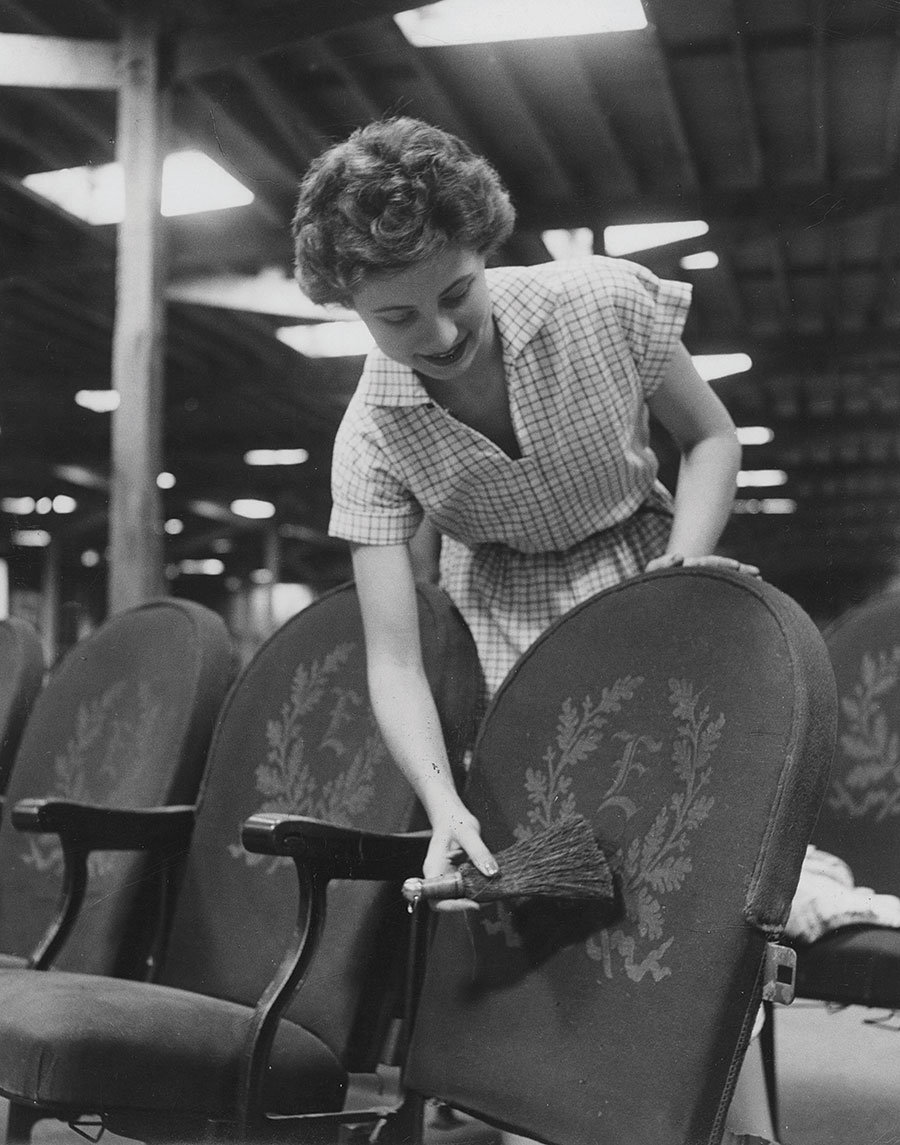
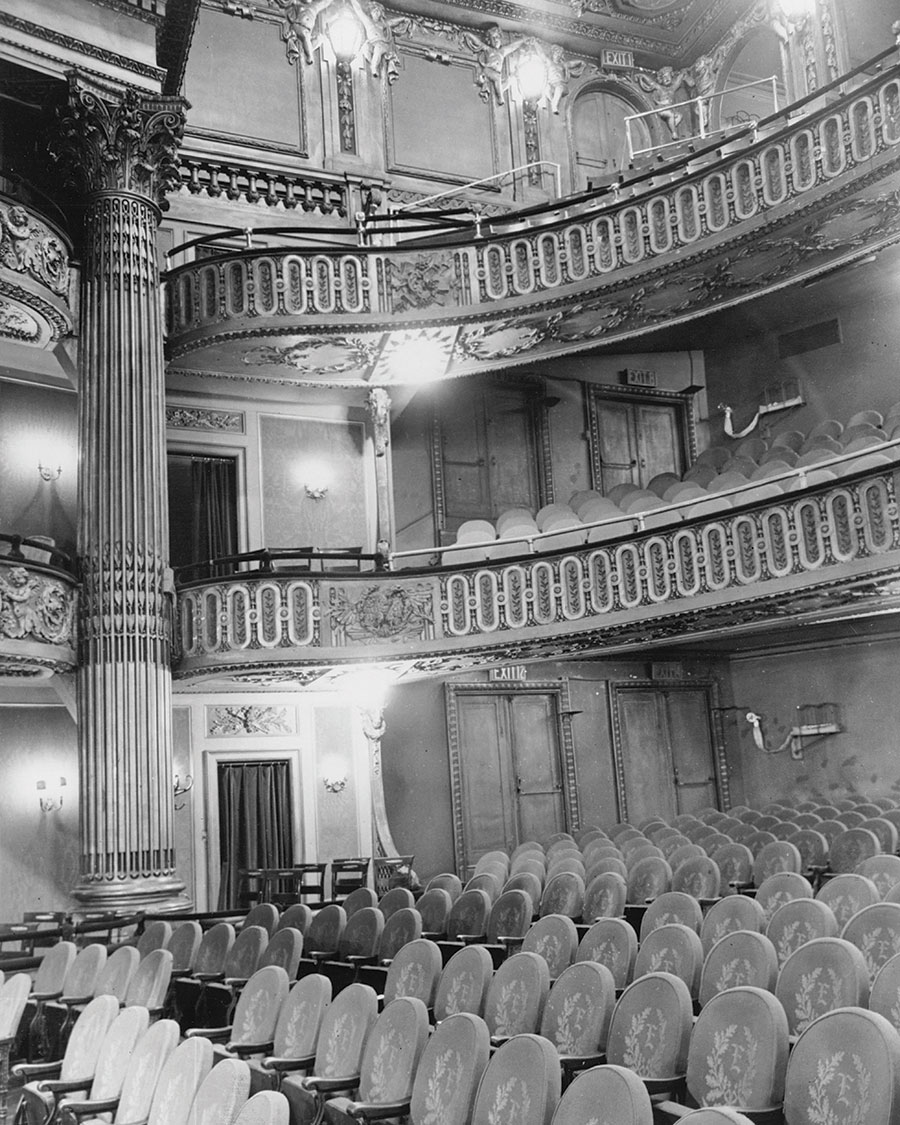
Perhaps most impressive, the Barter barons walked out with 398 of the Empire’s 1,100 seats. All were emblazoned with an ‘E’ for Empire—and those E’s remained for more than four decades at Barter Theatre—until losing many chairs to a 1996 renovation, with some chairs given to a school and several more scrapped, Brown says.
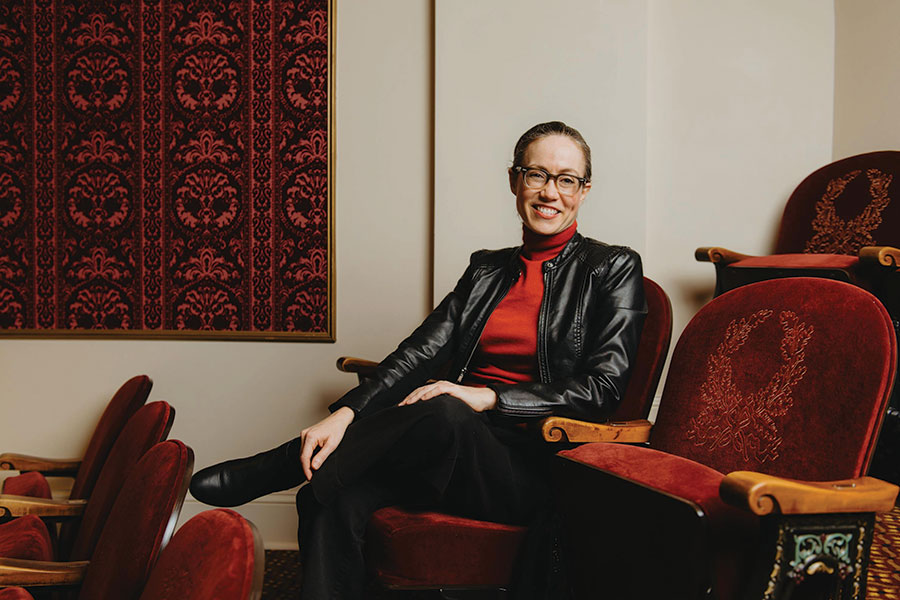
Today, 18 Empire seats are still intact at the Barter Theatre, all situated in the boxes of the balcony.
“We had them re-done so they’re nice and comfy,” says Brown.
Still saving these seats in 2024—seven decades after the Empire was razed—became Brown’s directive in the Barter’s most recent renovation.
“They are a part of our history. We took great care to have them sent away to be recovered and refurbished, then put back into the theater,” Brown says.
“They’re an important part of what makes Barter special,” Brown says. “Barter is always about honoring our past and moving forward in the future. And when we are at our best, we are balancing those two things.”
The story above first appeared in our January / February 2025 issue.