Skip to content


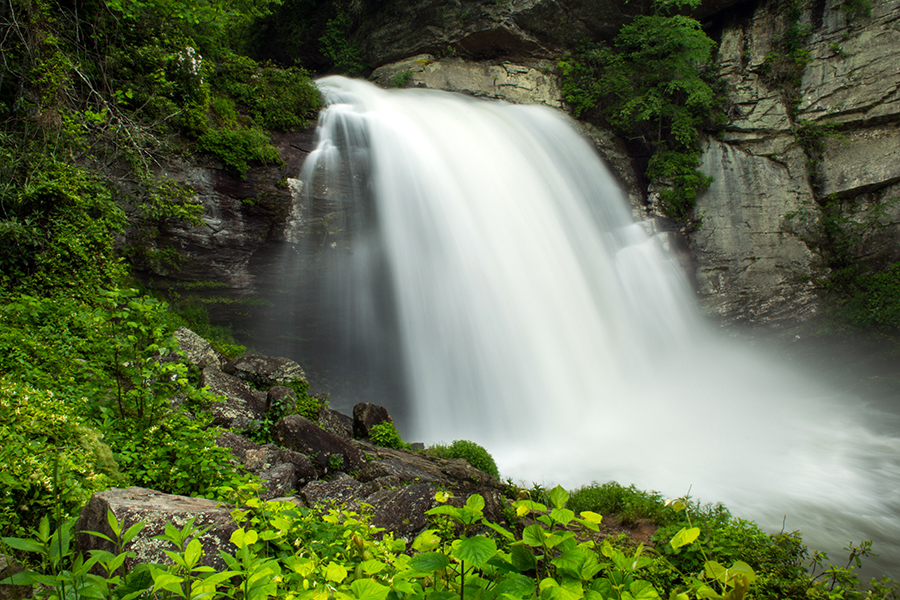
Nestled along the side of Looking Glass Rock, tucked away in the Pisgah National Forest, sits one of North Carolina’s most visited waterfalls, Looking Glass Falls.
This 60-foot waterfall draws people from all over due not only to its natural beauty but thanks in part to its easy access. Looking Glass Falls can be accessed along U.S. 276, the Forest Heritage Scenic Byway near Brevard, North Carolina, and just below the Blue Ridge Parkway. From Brevard, take U.S. 276 north, roughly five miles past the entrance to Pisgah National Forest. Looking Glass Falls is also open all year, with no admission fees. It’s free, free, like zero dollars free.

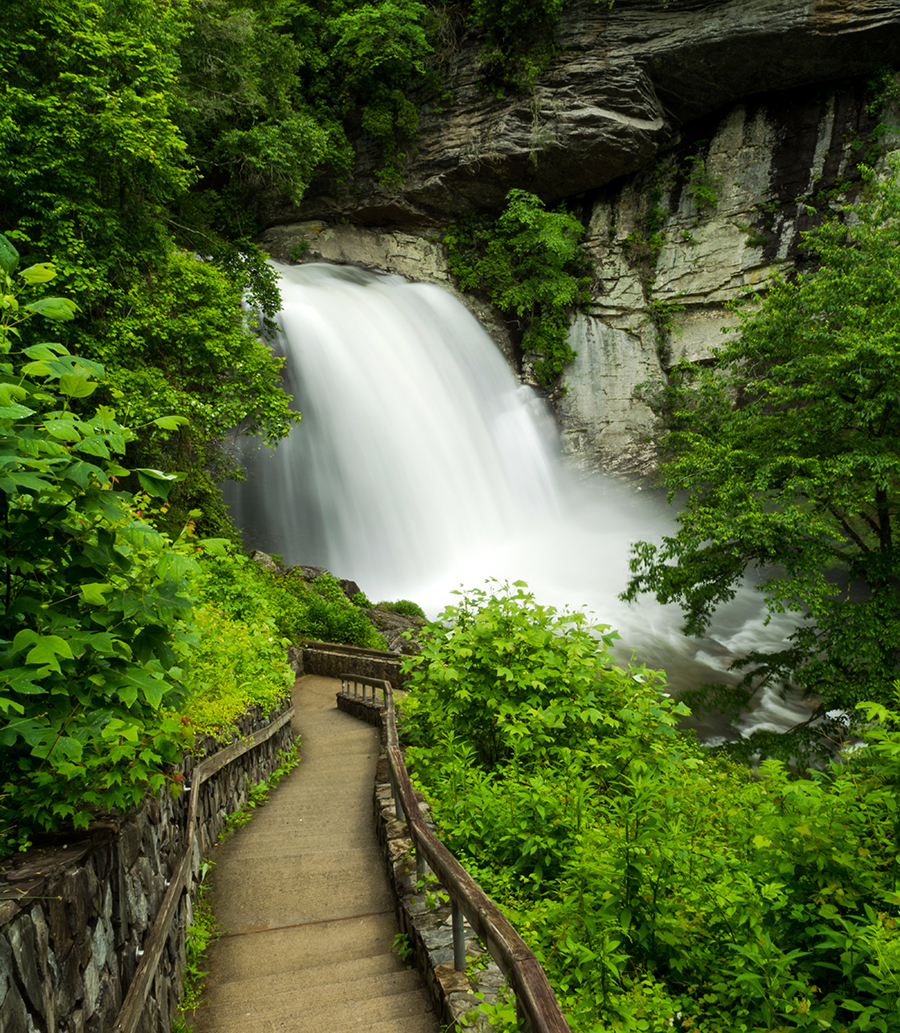
Looking Glass Falls can be viewed from the top parking area as it does have an overlook available, and for those with handicap needs, this will be where you can view the falls. If you want to get closer, you must take the stairs to the bottom along Looking Glass Creek.
In the warmer months, you will find this to be a trendy swimming hole, and it does get crowded. Suppose you are trying to visit the falls for a photographic opportunity. In that case, I suggest coming very early in the morning as it will get busy throughout the day, even though most nights in the summer can be rather crowded.
Parking is readily available, and you should be fine parking along the side of the road. However, be cautious as you walk to the falls, as this scenic byway is very busy. If parking is full, come back in ten minutes, as people come and go rather frequently.
Looking Glass Falls gets its name from Looking Glass Rock, the mountain in which the falls flow. The “Looking Glass” name comes from water that freezes along the side of the mountain. They say it glistens like a mirror when it freezes.
Looking Glass Rock is also one of the most photographed mountains along the Blue Ridge Parkway, well, next to Grandfather Mountain. So if you’re looking for a fun family outing, go check out the falls, swim a little and jump up on the Blue Ridge Parkway, which is just 10 miles north of the falls and take a gander at Looking Glass Rock, maybe even stop for a picnic. If you go swimming, swim at your own risk, and avoid climbing the rocks surrounding the falls as they are very slippery.
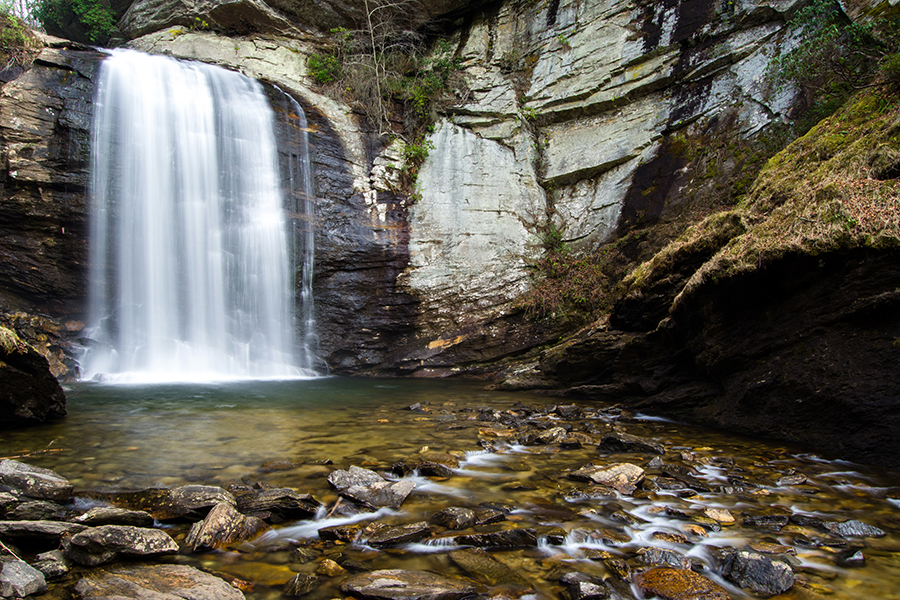
Looking Glass Falls is one of those waterfalls you can visit in every season, and its natural beauty will leave a lasting impression. This roadside waterfall is fun for the whole family. It is in a perfect location to enjoy other opportunities, whether a scenic drive along the Blue Ridge Parkway or in Brevard, eating at some of the best local spots. It’s also a short drive to and from the Asheville area at roughly 35 miles.
ABOUT THIS SERIES:
“Blue Ridge Waterfall Wednesdays” highlights a different waterfall each month from the Blue Ridge region. For the past two decades, Josh Moore has been exploring and capturing the beauty of this fantastic region he calls home. Josh is a professional photographer who has been published internationally, nationally and everything else in-between, and is widely known for his landscape/nature photography. See more of Josh’s work on his website, YouTube channel or on Instagram and Facebook.